Dubai's Transport Pioneers Cashless Revolution
The New Era of Nol Card: Dubai's Transport Nears a Cashless Future
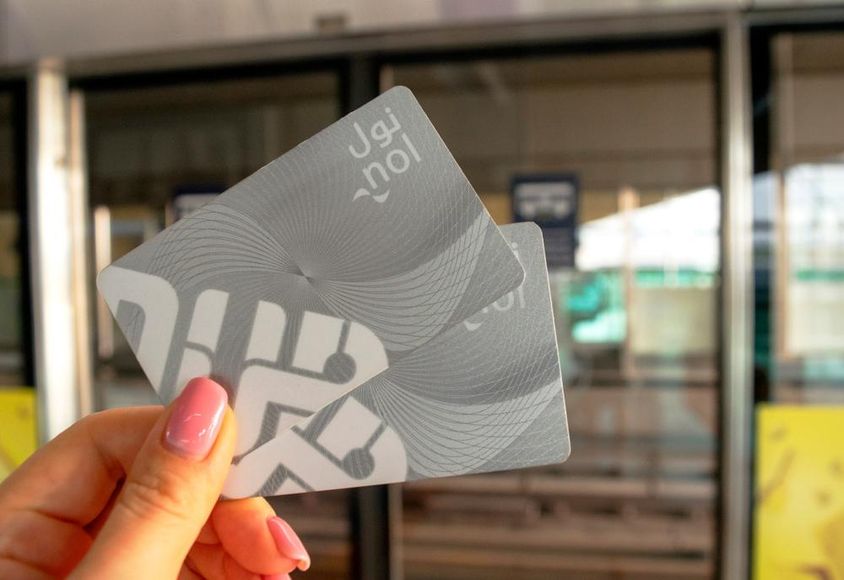
Dubai's transportation system has seen tremendous growth over the past fifteen years, and one of its most well-known elements is the Nol card. For residents, workers, and regular travelers in the city, this card has long been more than just a simple transportation tool; it is a foundation for everyday movement. Metro, bus, tram, water transport, taxi, parking, and several digital services are linked to it, so any development affecting the Nol system directly impacts the daily lives of Dubai's inhabitants.
Now the system is at the brink of another major advancement. According to the Roads and Transport Authority, or RTA, the Nol payment system's modernization is already 72 percent complete, with the entire project expected to be finished by the end of the first quarter of 2027. This is not a minor technical update, but a comprehensive digital transformation aimed at making Dubai's public transportation faster, more convenient, more flexible, and increasingly cashless.
One of the most significant changes is that in the future, the Nol system will operate more like a modern bank card or digital wallet payment solution. The system will be digitally linked to customer accounts, meaning passengers will not merely use a recharged plastic card but a personal, manageable, traceable digital transport account. This signifies a major difference, as transportation payments will not be an isolated process but part of a smart, interconnected service.
In the first phase of the development, ticket purchasing through QR codes on digital channels will begin. This could be particularly important for those who do not want to search for a separate card, stand in line at machines, or deal with pre-trip recharges. The QR code solution enables passengers to purchase tickets digitally and then use them quickly and easily across the transport network. This model is already familiar in many major cities, and with this, Dubai moves even closer to a fully mobile-based and instantaneous transportation payment system.
In the second phase, the new generation Nol card arrives. This card will be based on advanced technology and aligned with international payment standards. The aim is for Nol to be compatible with bank card technologies and for a new card purchase to automatically connect digitally to the customer's account. This is significant because with the current card-based usage, one often needs to pay attention to the balance, lost cards, recharges, and travel history separately. In the new system, these can become much clearer and more manageable.
In the third phase, the system will also accept other payment methods, including bank cards and digital wallets. This means that in the future, paying public transportation fees could be much more flexible. Using a Nol card in every situation may not be necessary; instead, passengers may use their own bank cards or phone wallets. This can be a great relief, especially for tourists, occasional travelers, and newcomers who would not need to first understand the entire card system to use the city's transportation.
For daily commuters, the expansion of payment methods will be important, as will the new features linked to the customer account. The system will enable setting up personal accounts, linking multiple Nol cards, setting up automatic recharges, and viewing detailed transaction histories, which can be useful for families, companies, and regular travelers. A parent, for example, could manage family members' cards, set recharge amounts, monitor travel expenses, and quickly block a lost card if necessary.
Automatic recharging could be an especially practical function at the pace of Dubai. Daily metro or bus commuters know how unpleasant it is to find out just before a journey that there is not enough balance on the card. If the Nol card automatically recharges via bank connection, this problem could effectively disappear. This makes the system not only more convenient but also more predictable.
Another important element of the development is the blocking of cards and recovering balances. The traditional, anonymous card usage's weak point was always that passengers could easily lose the amount on the card if it was lost. With the new account-based system, the card is linked to a personal profile, making managing a lost card easier. Passengers will presumably be able to block the card and retrieve their balance more easily. While at first glance, this seems a technical issue, it can prevent much frustration in everyday use.
Dubai aims not only to modernize metro entrances or accelerate bus payments with this development. The bigger picture is much broader. The city is moving towards cashless payments, smart city services, and a unified digital customer experience. The modernization of the Nol system thus aligns with the goals of the Dubai Cashless Strategy. Transport is one of the most frequently used city services, so simplifying and digitizing payments here impacts the entire urban operation.
Originally launched on September 9, 2009, Nol started in conjunction with the opening of the Dubai Metro. At the time, this was a major milestone for the city, marking the start of a new, modern public transport era. Nol has since expanded gradually and is now linked not only to the metro but also offers student discounts, tourist packages, e-scooter payments, and various services. This development clearly shows that Dubai did not treat Nol as a one-off transport project but as a continually expandable digital platform.
The current modernization is interesting because Nol can evolve from its traditional role as a transport card. Based on the developments, it could become a tool users can use beyond transportation in various payment situations. Expanding retail and digital payment integrations means that Nol could appear in even more areas of everyday life. This bank card-like functionality does not mean that Nol simply turns into a bank card, but rather that the usage experience will resemble modern financial payment tools more closely.
From the passenger's perspective, the greatest advantage will be simplicity. Dubai is a fast-moving city where the efficiency of transportation directly affects commuting, meetings, airport travels, shopping, and leisure activities. If less time is spent on buying tickets, recharging, searching for cards, or dealing with payment errors, urban life becomes smoother. A well-functioning digital payment system invisibly supports the day: it works well when the passenger hardly notices it.
For tourists, the change can also be a significant advancement. Dubai receives many visitors annually, and many of them spend only a few days in the city. The most immediate questions they often face include how to use the metro, what card to buy, where to recharge, and how the fare zones work. If in the future, travel can be made easier with QR-coded tickets, digital wallets, or bank card solutions, it provides a much friendlier entry point into the city's transportation.
For locals and long-term Dubai residents, more detailed account history and managing multiple cards may be most valuable. Accurately tracking daily, weekly, or monthly transport expenses can aid planning, especially for those using various modes of transport. Moving smoothly between payment systems for metro, bus, water transport, and taxi only works well if a unified system manages data and transactions in the background.
Operationally, the development is also crucial. A more modern, digitally connected payment system can provide more efficient operation for the RTA. Travel patterns become more visible, service optimization becomes simpler, and customer issues can be resolved faster. In urban transportation, data and payments are no longer separate worlds but closely intertwined. The more accurately the system operates, the better decisions can be made about network development.
However, it is important that the transition be gradual. The division of the project into three major phases indicates that the RTA is not overhauling the entire operation overnight. First comes digital ticket purchasing through QR codes, followed by the new generation Nol cards, and finally the fuller integration of bank cards and digital wallets. This is a realistic approach because in a network of this scale, stability is as crucial as innovation.
The Nol system update is not just a technological announcement but a matter of city life quality. Transportation is good when it is fast, transparent, easy to use, and reliable. Dubai is moving precisely in that direction: replacing card-based solutions with an account-based, digital system that supports multiple payment channels. This will be more convenient for commuters, simpler for tourists, more manageable for families, and more efficient for the city.
As development progresses toward its planned completion by the end of the first quarter of 2027, it increasingly appears that Nol will not just be a transportation card in the future. Instead, it will be a digital mobility key connecting passengers to various city services. With this, Dubai once again demonstrates that transport development is not just about new roads, new stations, or new vehicles, but also about making everyday usage simpler, faster, and smarter.
If you find any errors on this page, please let us know via email.


