Dubai's Revolutionary Shared Housing Regulation
A New Era in Shared Housing in Dubai
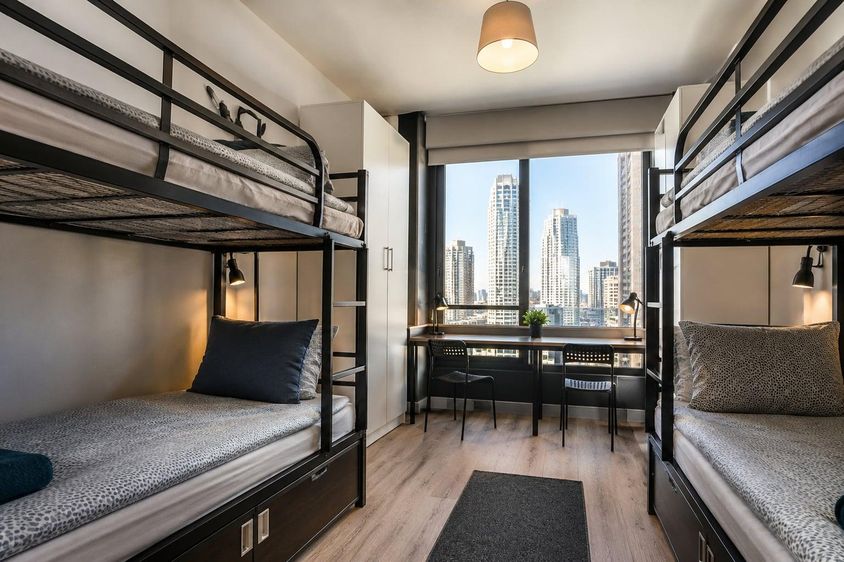
In recent years, Dubai has experienced rapid population growth and expansion in the real estate market. Many workers, entrepreneurs, and temporary residents have opted for shared housing arrangements, particularly due to rising rental prices. In many districts, it has become customary to divide larger apartments into sections or have multiple independent tenants sharing a single property. However, Dubai is now attempting to bring order to this market with a new regulatory system.
The Dubai Municipality has confirmed that applications for shared housing permits will soon be available through a digital licensing system. Although applications have not yet begun, as final procedures and technical conditions are still being developed, the system's foundations are already taking shape.
The new regulation may bring significant changes to the property market, renting practices, and everyday life.
Why was new regulation needed?
In certain districts of Dubai, overcrowded housing situations have significantly increased in recent times. There have been instances where properties originally intended for family use housed up to 10–20 people. Authorities have conducted inspections in neighborhoods such as Al Rigga, Al Muraqqabat, Al Barsha, Al Satwa, and Al Raffa.
The issue was not just the high number of people living in one place. Authorities noted that many properties did not meet basic safety, hygiene, and fire protection standards. Temporary room partitions, overloaded electrical systems, insufficient ventilation, and lack of communal spaces were common problems.
Dubai's leadership aims to establish a regulatory system that protects residents, property owners, and the city's infrastructure simultaneously.
Arrival of a Digital Licensing System
One of the key elements of the new system will be that shared housing permits can only be obtained through official channels. Applications must be submitted through the Dubai Municipality's digital platforms.
The permit will include specific conditions related to the property in question, such as:
- the maximum number of permitted residents,
- minimum floor space per person,
- mandatory communal areas,
- technical and safety requirements, and
- basic health conditions.
This essentially means that an arbitrary number of tenants cannot be accommodated in a single apartment. Authorities will examine each property based on individual criteria.
Dubai is introducing a system that will make the shared housing market much more transparent and controllable.
End of the Informal Subletting System
One of the most significant changes is that in the future, only property owners or officially licensed businesses will be able to lease properties used for shared housing.
It was quite common in Dubai for someone to rent a larger apartment, partition it themselves, and sublet different sections to other tenants, often operating without any official permits.
The new regulation essentially puts an end to this practice.
In the future, shared housing systems will only be legally operable in three ways:
- directly by the owner,
- through an official property management company, or
- by a licensed business that rents and officially relets the property from the owner.
This will significantly reshape the current rental market.
One-Year Permits and Strict Renewal
According to the Dubai Municipality, permits will initially be valid for one year. However, requests for a two-year permit can also be made.
Renewal applications must be submitted at least 30 days before expiration, indicating that authorities aim to maintain continuous control over the system.
Digitally tracking property conditions, permit expirations, and possible violations is expected.
This fits well within Dubai's digitization strategy, as the emirate is increasingly handling many services entirely online.
Serious Fines for Violators
Authorities have made it clear that violators of the rules can expect hefty fines.
Fines range from 500 dirhams to 500,000 dirhams. If a violation is repeated within a year, the fine can be doubled and reach up to 1 million dirhams.
This serves as a substantial warning for those who have been informally operating shared housing systems.
The high penalty amounts indicate Dubai's long-term intention to curb overcrowded, uncontrolled, and unsafe housing arrangements.
Impact on Rental Prices Expected
The new regulation is expected to impact the entire rental market. Many experts anticipate that stricter requirements may reduce the availability of cheap, informal shared housing options.
This could lead to rising rental prices in certain districts, particularly in areas with a large number of foreign workers, in the short term.
However, the regulation's positive side includes potential improvements in living conditions. Overcrowding may decrease, fire safety and hygiene may improve, and neighborhood conflicts may reduce.
Dubai is attempting to balance affordable housing with a livable urban environment.
A New Direction in City Development
Dubai's rapid development over the past decades has completely changed housing habits. Shared housing continues to be an important and necessary solution for many people, especially foreign workers.
However, the current regulation shows the emirate's intention to bring this system under official control.
The introduction of digital licensing, enforceable operations, and strict safety standards could result in a more stable and organized real estate market in the long term. While many owners and operators may need to adapt to the new rules, Dubai's goal is clear: to create a living environment that is safer, more transparent, and more sustainable for all residents.
If you find any errors on this page, please let us know via email.