Dubai's Real Estate Visa: New Era Begins
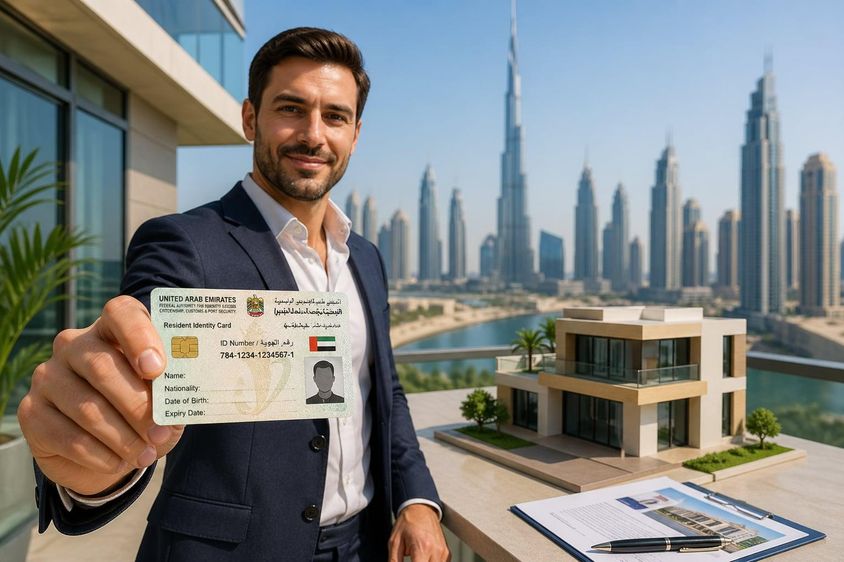
Real Estate and Residency: A New Era in Dubai
The Dubai real estate market has gained significant attention not only regionally but also globally in recent years. The city continuously adapts to investor needs, and one of the latest examples of this is the modification of the rules for the two-year property-linked residency visa. The new system makes entry more flexible for those looking to invest in real estate in Dubai, while still maintaining requirements for financial transparency and stability.
Significant Change with the Removal of the Value Threshold
One of the most important changes is the removal of the previous requirement that individual investors must own a property worth at least 750,000 dirhams to qualify for the two-year residency permit. This move clearly indicates that Dubai aims to expand the circle of investors and make the possibility of settlement accessible to more foreigners.
However, this relaxation is not completely unrestricted: according to the new regulation, the property must be registered under a single owner's name. This means that sole ownership has become a key condition for obtaining simplified eligibility.
More Open System for Joint Ownership
There has also been a relaxation for properties held in joint ownership, but here eligibility is tied to specific numbers. If a property is shared among multiple owners, each investor must have a property stake worth at least 400,000 dirhams to individually apply for the residency visa.
This change could be particularly important for those purchasing property jointly on a family or business basis in Dubai, as they can now plan based on clearer and more predictable conditions.
More Transparent Documentation System
Several documents are still required to apply for a residency visa, aimed at verifying identity, investment, and financial background. The basic requirements include the property ownership deed, which must be located in Dubai since other emirates or special zones are not accepted in this scheme.
A valid passport, Emirates ID, a digital photo of appropriate quality, and health insurance, which is a fundamental requirement for any residency permit, are also needed. Additionally, a criminal clearance certificate issued by the Dubai police must be submitted to demonstrate the investor's reliability.
For citizens of certain countries, additional identification documents may be necessary, indicating that the system still considers international compliance requirements.
Cases of Financed Properties and Installment Payments
The new regulation also specifically addresses cases where property is purchased through a loan or installment payment. In such cases, the investor must present a no-objection certificate issued by the bank or developer. This document includes the amount paid, outstanding debt, and financing details.
If the property is completed and not under construction, it must be verified that at least 50 percent of the property's value, or a minimum of 375,000 dirhams, has already been paid. This requirement ensures that the investment is genuine and substantial.
The Background and Institutional Framework of the System
The two-year property-based residency visa is not a new construct, as it was introduced in 2019 with the aim of facilitating expatriates' living, working, and investing in Dubai. The process is handled by the Dubai Land Department, while the issuance of visas falls under the General Directorate of Residency and Foreigners Affairs.
Information about the new rules appeared on the Cube Centre platform, which specializes in serving real estate investors.
Strong Real Estate Market Numbers in Early 2026
The regulatory changes did not arrive randomly timed. In the first quarter of 2026, the Dubai real estate market showed an extremely strong performance: the total value of transactions reached 138.7 billion dirhams across more than 44,000 deals.
This data indicates that investor confidence remains high and demand has remained stable despite global uncertainties. The transaction value grew by more than 20 percent compared to the previous year, suggesting that more people are opting for higher-value, premium properties.
Market Shifts Towards Long-term Investments
Based on market trends, it is clear that Dubai's real estate market is increasingly shifting towards long-term investments. The increase in average transaction value and the presence of institutional investors indicate that the market has entered a more mature phase.
This shift could be favorable for those who are not seeking short-term profits but rather a stable yield and long-term presence in Dubai.
Why Is This Change Important for Investors?
The new visa rules send a clear message: Dubai remains open to international investors and actively works to remain competitive in the global real estate market. The removal of the value threshold and the relaxation of joint ownership rules are steps that make the residency option accessible to a broader range of people.
At the same time, the system continues to require financial discipline and transparency, which serves to maintain the stability of the market in the long term.
Summary: More Flexible Entry, Stable Foundations
The update of the Dubai property-based residency visa rules fits well into the city's long-term strategy. The goal is clear: to attract more investors while maintaining the quality and reliability of the market.
Through these changes, even more opportunities are now open for those who want to invest in real estate in Dubai and simultaneously obtain residency rights. The strong performance of the market shows that the direction is good, and investors continue to trust in this dynamically developing environment.
If you find any errors on this page, please let us know via email.


