Dubai's On-Demand Buses Transform Commute
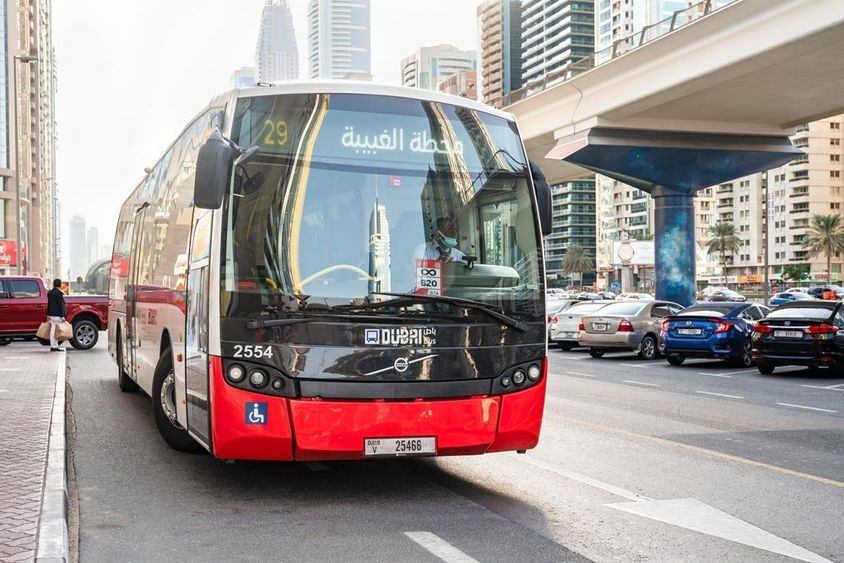
Dubai's New Bus-On-Demand System Gains Popularity
Dubai's transportation system has undergone remarkable development in recent years, but due to the city's rapid growth, the so-called "first and last kilometer" problem remains a significant challenge. Often, the metro or bus stops are not directly next to residential buildings, prompting people to use cars even if they prefer public transport. The increasingly popular solution offered by the Dubai Roads and Transport Authority's Bus-On-Demand service, now extended to four new neighborhoods, addresses this issue.
The service is now available in Al Qusais, Jumeirah Village Circle, Al Warqa’a, and Dubai Investments Park, following quick growth in uptake in 2025. The numbers speak for themselves: while over 417,000 trips were recorded previously, in 2025 close to 985,000 passengers used the system, marking more than a 136% increase in just one year.
Why has Bus-On-Demand become so popular?
Dubai residents increasingly seek transportation options that are fast, flexible, and do not require owning a personal car. Bus-On-Demand provides precisely this. The system operates much more modernly and dynamically than traditional bus routes.
Users can book seats on minibusses via a mobile application, which do not travel on fixed routes. Instead, the system adjusts in real-time to current travel demands. Passengers specify their departure and destination points, and the app designates the closest pick-up and drop-off points.
This solution is especially useful in areas where traditional bus networks are less efficient or where distances from metro stations are too great to walk. For many residents, public transportation's comfortable use has been challenging due to Dubai's car-centric urban structure. Bus-On-Demand aims to fill this missing link.
The goal: fewer cars on roads
One of the most important elements of Dubai's long-term strategy is sustainable transportation development. The emirate aims not only to operate as a modern and technologically advanced city but also to reduce car traffic and congestion.
The Bus-On-Demand system can play a key role in this. Many use their own cars because traditional public transport would take too long or is not directly accessible near their residence. However, a flexible, app-based minibus system could potentially redirect people towards public transportation.
The service also establishes a direct connection with the Dubai Metro network and other bus routes. This is particularly important for daily commuters who wish to reach metro stations quickly without having to search for parking or spend on taxis.
More neighborhoods joining
Before this expansion, the system already operated in several popular areas. These included Al Barsha, Dubai Silicon Oasis, Business Bay, Downtown Dubai, DIFC, Al Nahda, Al Karama, and Oud Metha.
The selection of new areas is no accident. Jumeirah Village Circle, for example, is one of the fastest-growing residential areas in Dubai, with many new apartment buildings and housing communities built in recent years. Although the transport infrastructure constantly evolves, growing population numbers necessitate more flexible transportation solutions.
A similar situation exists in Dubai Investments Park, which is a mixed industrial, commercial, and residential area. For workers and residents here, Bus-On-Demand can significantly simplify daily commutes.
Al Qusais and Al Warqa’a are also areas with many families living there, and where the demand for public transport is continuously rising.
Affordable pricing and promotional rides
One of the major advantages of the service is its price. The cost per trip remains just 5 dirhams, while additional passengers can travel for 4 dirhams per trip. In Dubai, this is considered particularly affordable, especially when taking taxi prices and fuel costs into account.
During the introductory period, promotional free rides are also offered to attract more people to try the system. Such promotions can be especially effective for residents who previously relied solely on cars.
The service currently operates with 49 minibusses; however, due to increasing demand, the fleet is expected to expand in the future.
Dubai's digital transport future
The Bus-On-Demand system showcases the direction Dubai's transportation strategy is heading. The city increasingly relies on smart, data-driven solutions. Real-time route optimization, app-based booking, and automated system operations are technologies that seemed futuristic just years ago.
Dubai aims to become one of the world's smartest cities, with transportation playing a key role. Not only is the metro network continually being developed, but electric transport, self-driving vehicles, and alternative mobility solutions are receiving increasing attention.
Bus-On-Demand is interesting because it serves as a bridge between traditional public transportation and personalized mobility. It is cheaper than a taxi yet much more flexible than a classic bus route.
More expansions likely in the future
The transport authority has already indicated that the service could expand to additional areas soon. Moreover, they would like to refine the operational model to ensure the system remains sustainable in the long term.
This means new route optimization solutions, faster booking options, and more efficient vehicle utilization are expected to roll out in the future. As user numbers grow, the system's operation will become increasingly precise and intelligent.
Dubai's transport development in recent years has repeatedly proven the emirate's readiness to quickly adapt to residents' needs. The current success of Bus-On-Demand demonstrates that residents are open to new types of digital transport solutions, especially if they save time, money, and stress in daily life. img_alt: Volvo bus travels in Dubai.
If you find any errors on this page, please let us know via email.


