Dubai's New Bridge Revolutionizes Connectivity
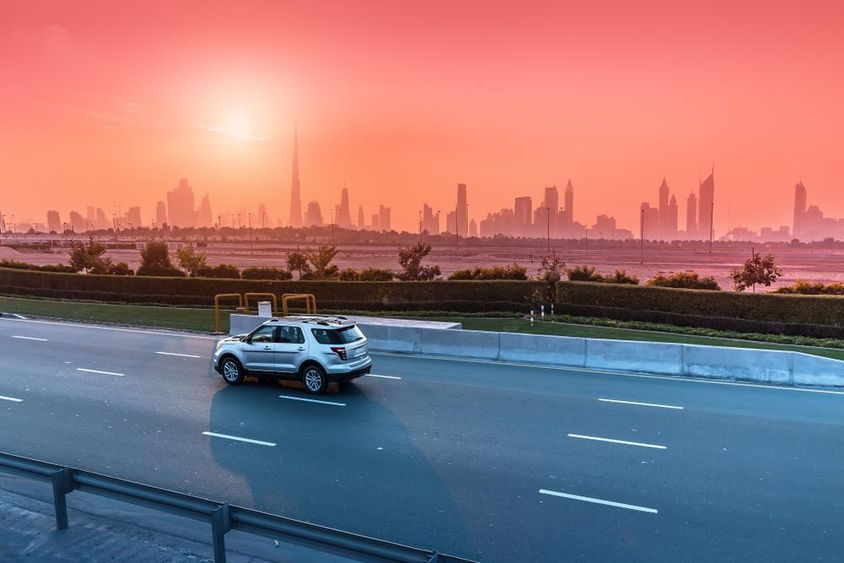
New Bridge Connects Sheikh Zayed Road to Dubai Harbour
Dubai's transportation reaches another important milestone: according to a statement from the Roads and Transport Authority (RTA), a grand bridge project creating a direct link between Sheikh Zayed Road and Dubai Harbour is 90% complete. This development is particularly significant as it connects one of Dubai's busiest urban axes with a rapidly growing coastal neighborhood, where residential buildings, port facilities, restaurants, hotels, and tourist destinations are generating increasing traffic.
The project involves the construction of a 1,500-meter-long, two-lane-per-direction bridge providing direct access to and from Dubai Harbour. It is not just a new roadway but a transportation link that significantly alters the area's accessibility. Current expectations suggest that travel time is reduced from 12 minutes to just 3 minutes, which makes a substantial difference in day-to-day transport.
Why is this bridge important for Dubai?
Dubai’s urban structure has dramatically changed in recent years. Sheikh Zayed Road remains one of the city's most important arterial roads, connecting multiple business, residential, and tourist centers. Concurrently, Dubai Harbour has become an increasingly important destination as coastal developments, port functions, residential properties, and visitor traffic continuously increase transport demand.
The lack of direct connection previously meant that motorists had to take longer routes involving multiple junctions and high-traffic sections to reach this area, causing slowdowns especially at peak times. With the opening of the new bridge, traffic organization can be improved, access to the area simplified, and the road load around Dubai Harbour can become more balanced.
Current status of the project
According to the RTA, 90% of the construction is complete. This indicates that the work is nearing its final phases, and a significant portion of the main structural elements is ready. The contractor has made notable progress in foundation work, column construction, and creating concrete protective elements.
The scale of the project is evident, with 1,400 engineers and workers currently engaged across 12 teams. Since the work began, more than 4.2 million work hours have been dedicated to the development. This not only indicates the bridge's size but also underscores the considerable organization, engineering, and logistical expertise behind expanding Dubai's transport infrastructure.
More than 45,000 cubic meters of concrete and 8,273 tons of steel have been used in construction. These figures demonstrate that this is not a simple overpass but a high-capacity, long-term planned transport link aimed at significantly improving traffic circulation in the area.
Where does the new bridge lead?
The bridge starts from junction 5 on Sheikh Zayed Road, near the American University in Dubai. From there, it crosses the intersection of Al Naseem Street and Al Falak Street, intersects King Salman bin Abdulaziz Al Saud Street, and finally leads towards Dubai Harbour Street.
This route is particularly important as it connects areas previously burdened by detours and congestion. The new connection enables those arriving from Sheikh Zayed Road to reach Dubai Harbour more quickly and directly, while also making rejoining the city's main transport axes simpler for those departing the port and coastal areas.
When will it open to traffic?
According to the project schedule, the bridge's first phase will open to traffic in June. At that time, motorists from Sheikh Zayed Road, arriving from both Deira and Jebel Ali, will be able to use the new connection towards Dubai Harbour.
The next stage is expected in July, when traffic from Dubai Harbour will be able to proceed towards Al Naseem Street, as well as from the new bridge towards the intersection of King Salman bin Abdulaziz Al Saud Street and Al Naseem Street. This represents a phased opening allowing traffic to transition systematically and safely to the new routes.
Significant reduction in travel time
One of the primary advantages of the bridge is the reduction in travel time. According to the RTA, the current travel time of about 12 minutes may decrease to just 3 minutes. Practically, this means that motorists can reach Dubai Harbour much faster, especially those arriving from Sheikh Zayed Road.
This is important not just from a convenience perspective. Shorter travel time can lead to lower fuel consumption, reduced vehicle load, and less stress for drivers. In a city where daily commuting, tourism, and business traffic all simultaneously burden the roads, any development of this kind can have a noticeable impact on the commuting experience.
High-capacity transport link
The new bridge's full capacity can accommodate up to 6,000 vehicles per hour in both directions. This is a significant figure, especially for a district increasingly drawing the attention of residents, visitors, and investors.
Increasing capacity is essential as the area around Dubai Harbour not only attracts everyday traffic but also experiences heavy loads during events, tourism programs, port activities, and beach visits. During these times as well, the new bridge can help vehicles move through the area faster and more safely.
Not just a bridge, intersection improvements also underway
The development includes not just the bridge construction but also improvements at four surface junctions. This is crucial because a new bridge alone would not solve traffic issues if the adjacent intersections can't handle the increased vehicle movement.
The goal of intersection improvements is to prevent traffic backup around the new connection. Better lane configurations, more organized entry and exit options, and more thoughtful route management all contribute to making Dubai Harbour and its surroundings more accessible.
Strengthening Dubai Harbour's role
Dubai Harbour is a prominent urban development area of recent years, serving simultaneously as a residential neighborhood, tourist destination, and maritime transport hub. Its appeal is further enhanced by its proximity to Dubai Marina, Palm Jumeirah, and key segments of Sheikh Zayed Road.
In such a location, transportation connection is crucial. Luxury apartments, hotels, port services, and dining venues operate most efficiently when access is quick and predictable. The new bridge serves this purpose: reducing traffic, shortening travel time, and making connections more direct to enhance the area’s usability.
What does this mean for motorists?
For motorists, the simplest route change will offer the most noticeable difference. Those arriving from Sheikh Zayed Road will no longer have to make complicated detours but will instead receive a more direct connection to Dubai Harbour. This can be especially beneficial for those who regularly commute to the area for work, reside there, or visit as guests.
After the openings in June and July, it’ll be worth keeping an eye on updates in route planning applications as travel habits can quickly evolve. Those who previously used established detour routes may find their travel time significantly shortened following the bridge's opening.
Dubai's direction in transportation development
The RTA's developments demonstrate that Dubai not only builds new urban areas but also continuously expands the necessary transport infrastructure to support them. The city’s growth can only be sustainably maintained if roads, bridges, junctions, and public transport connections keep pace with the needs of its population, tourism, and business sectors.
The new bridge between Sheikh Zayed Road and Dubai Harbour exemplifies this mentality. It is not built as an attraction but as a response to a practical issue: speeding up, making more direct, and making more predictable the transportation to an important, developing urban area.
A new chapter in Dubai Harbour accessibility
The 90% completion mark suggests that the project is nearing completion. After the June and July openings, motorists can gradually take advantage of the new connection, which is expected to significantly improve the traffic situation in Dubai Harbour and surrounding areas.
The 1,500-meter, two-lane-per-direction bridge will not only be a new route but also a vital component of Dubai’s urban development. Shorter travel time, greater capacity, better intersection connections, and easier access collectively make this development significant.
Dubai continues to build itself as a city where infrastructure does not strive to catch up with growth but is an active part of it. The new bridge between Sheikh Zayed Road and Dubai Harbour precisely illustrates this: in a rapidly changing, dynamic city, developing transportation links is just as important as real estate or tourism investments.
If you find any errors on this page, please let us know via email.


