Dubai's Metro Expansion: A New Era
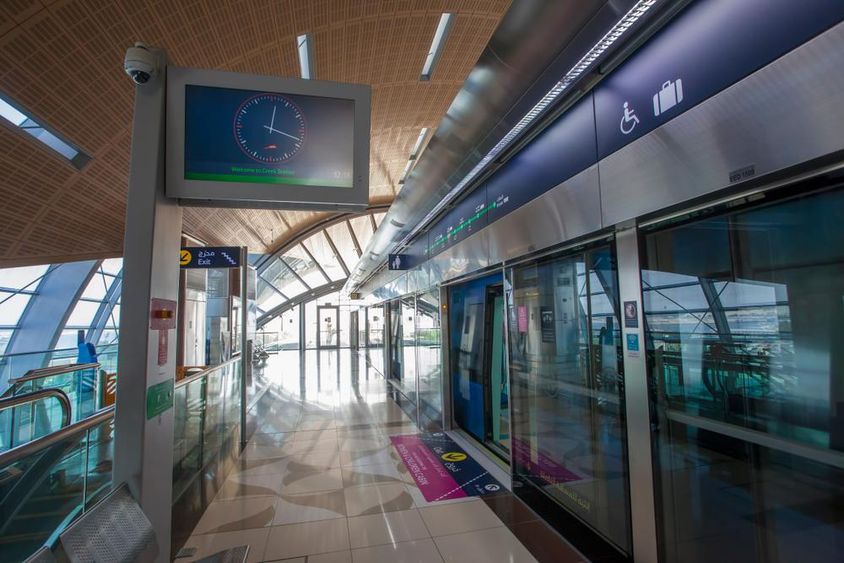
New Era Begins: Dubai's Transport Takes a Leap
Dubai is once again poised to take a step that not only accelerates the city's development but also sets a global example of how to rethink a metropolis's transportation system. The announcement of the Gold Line metro line is not merely an infrastructure development: it is part of a strategic vision that will shape the city's operation, livability, and economic strength in the long term.
The entirely underground 42-kilometer line is remarkable in its own right, but the crucial question is not how big it will be – it's what it will change.
The strategy behind the scale
The Gold Line is not an isolated project. Its aim is to connect with the already existing Red and Green lines, while also integrating with the national rail system. This means that Dubai's transport will become a significantly more unified and coordinated network.
The line will pass through 15 key areas, linking city districts that are currently undergoing dynamic development. These include historical centers as well as brand-new neighborhoods. This dual nature aptly shows that the project is about both the past and the future.
One of the system's most important goals is to serve the over 1.5 million residents who live or will live in these areas. This already indicates that it is not a 'future' investment – it is a solution that is needed right now.
Underground, without disruption
One of the most intriguing elements of the project is that it is being realized entirely underground. This is not only a technological challenge but also a strategic decision.
The use of modern tunneling technology allows construction to have minimal impact on surface life. There is no significant traffic restriction, no lasting chaos – the city's future infrastructure is being built amidst its current operation.
This approach is particularly important in a place where transport is already under heavy load. The project thus does not cause problems; it solves them.
Traffic reduction and quality of life
This is where numbers start to speak volumes. The Gold Line is expected to replace more than 40 million car journeys annually. This means not only less congestion but also cleaner air and more predictable transport.
For example, on one of the most burdened sections of the Red Line, a reduction of up to 23 percent is expected. This brings significant relief to daily commuters and directly impacts the quality of life.
The goal is not simply to have more people use the metro. The goal is for the entire city to function more efficiently.
Economic impact and real estate market
Transport developments have always been closely linked to the real estate market, and this time is no different. The Gold Line supports more than 55 major development projects that are currently under construction.
This means that the metro is not following the city's growth – it is actively shaping it. Areas along the new line will appreciate, accessibility will improve, and investments will yield returns more quickly.
The project is expected to bring a return on investment of up to 430 percent over 20 years. This not only demonstrates the efficiency of the transportation system but also its economic rationality.
Integration: the key to the future
One of the Gold Line's most important strengths is integration. It will not operate as a separate system, but be organically connected to the existing network.
There will be connecting points with the Red and Green lines, as well as the Etihad Rail system. This allows travel to function as a unified experience rather than being divided into segments.
Future transportation is not about having more vehicles on the roads. It's about how these systems work together.
The date, which is not by chance
The planned handover date is September 9, 2032. This is not a random date.
The history of the Dubai Metro is also linked to a symbolic date: the first line started exactly on 09.09.2009. Since then, every significant expansion has been coordinated with this date.
This kind of consistency shows that the city's development is not a series of ad hoc decisions but a consciously built system.
The direction of the future: more than just a metro
The Gold Line is a massive project in its own right, but even more important is that it is part of a larger vision. The development of underground transport systems – including high-speed tunnel networks – shows that Dubai is not afraid to think in radically new solutions.
The goal is not to catch up with other cities. The goal is to set new standards.
Summary: a city thinking ahead
The Gold Line is not just a new metro line. It is a message about how to develop a city in the long term.
Better transportation, less congestion, a stronger economy, and higher quality of life – all focused on in a single project. And while construction is just starting, the direction is already clear.
Dubai does not wait for problems to arise. It thinks ahead and builds solutions when other cities are still planning.
This is the real difference.
If you find any errors on this page, please let us know via email.


