Dubai's Hessa Street: A Transportation Marvel
The Beginning of a New Era on Hessa Street
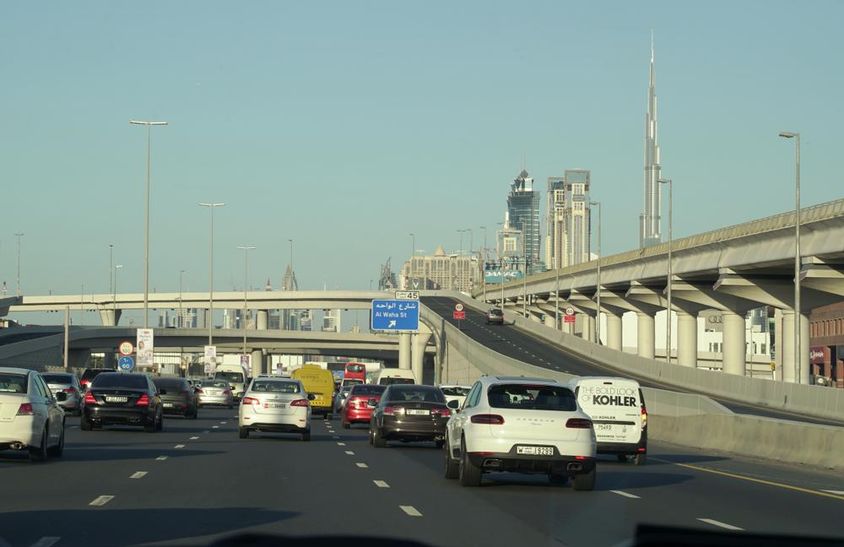
Dubai's transportation system has evolved continuously in recent years, but few projects have had as immediate and dramatic an impact on everyday life as the transformation of Hessa Street. The road, which was previously considered one of the city's most problematic stretches, now presents an entirely new face. For drivers, this means not just convenience, but tangible time savings, which are invaluable in a fast-paced city.
The change is not just a matter of perception. Both numbers and daily experiences point in the same direction: Dubai has effectively reimagined and modernized a critical traffic point.
Engineering Solutions Behind the Development
The Hessa Street development affected a 4.5-kilometer section stretching between Sheikh Zayed Road and Al Khail Road. This corridor was regularly congested, almost irrespective of the time of day. During the project, the road was expanded from two lanes to four lanes in both directions, resulting in a significant increase in capacity by itself.
However, the real breakthrough wasn't just in the number of lanes. A series of overpasses, exits, and junction improvements were completed to eliminate bottlenecks. The points where traffic once accumulated now manage vehicle flow much more smoothly.
Significant Time Savings in Daily Life
The most striking result is the reduction in travel time. On a road section where drivers previously spent 35–50 minutes, they can now reach their destination in 20–25 minutes. In some cases, traffic has become even faster, especially when the synchronization of traffic lights works optimally.
According to official data, transit time on some sections has decreased from 15 minutes to 4 minutes, while road capacity has doubled: from 8,000 vehicles per hour to 16,000. This is not just statistics but a real experience that commuters face daily.
The Change Became Noticeable Gradually
Interestingly, the improvement didn't happen overnight. During the development, traffic temporarily worsened as constructions created bottlenecks. Many drivers initially faced longer travel times.
The turning point came when each section was gradually opened. At first, only minor improvements were noticeable: shorter queues, faster changing lights, less waiting. These small changes accumulated over time, ultimately leading to an entirely new traffic experience.
Digital Maps Also Confirm the Progress
One of the important measuring tools of modern transportation is digital navigation. A section of road previously marked almost continuously as red is now often shown as green on maps. This indicates that traffic is not only faster but also smoother.
Significant differences can be seen even during peak hours. Previously, long, standing queues were characteristic around 5 PM, but today much of the traffic flows, even if slower sections do occasionally occur. This change is particularly important for those who use this route daily.
Transformation of the Driving Experience
One of the biggest advancements isn't necessarily measurable in numbers but in the driving experience. Previously, drivers often searched for alternative routes before setting off to avoid congestion. Today, predictability is much greater.
It's also a significant change that idle time has decreased. There's less unnecessary waiting, which is advantageous not just for convenience but also for environmental impact. Continuous flow results in less fuel consumption and lower emissions.
The Story Isn't Over Yet
Although the improvement is evident, many believe it's too early to declare that congestion has been completely eliminated. Slower sections may still occur around junctions, especially during the busiest times.
The true test will come as traffic continues to grow. Dubai is constantly expanding, with new residential areas and business centers being developed, posing additional strain on the road network. However, it's already clear that the current development provides a stable foundation for the future.
What Does This Mean for Dubai's Future?
The transformation of Hessa Street goes beyond itself. It is an example of how to quickly respond to the challenges of urban growth. The project demonstrates that with proper planning and execution, significant improvement can be achieved without having to build entirely new infrastructure.
For Dubai, mobility is a key issue. In a city where car usage remains dominant, every minute counts. Such developments not only improve transportation but also have a direct impact on the economy, quality of life, and the city's competitiveness.
The story of Hessa Street is not just a tale of road renovation. It is a transformation that clearly shows that Dubai can adapt, grow, and always stay one step ahead of the future.
If you find any errors on this page, please let us know via email.