Dubai's Gold Market: Opportunity or Warning?
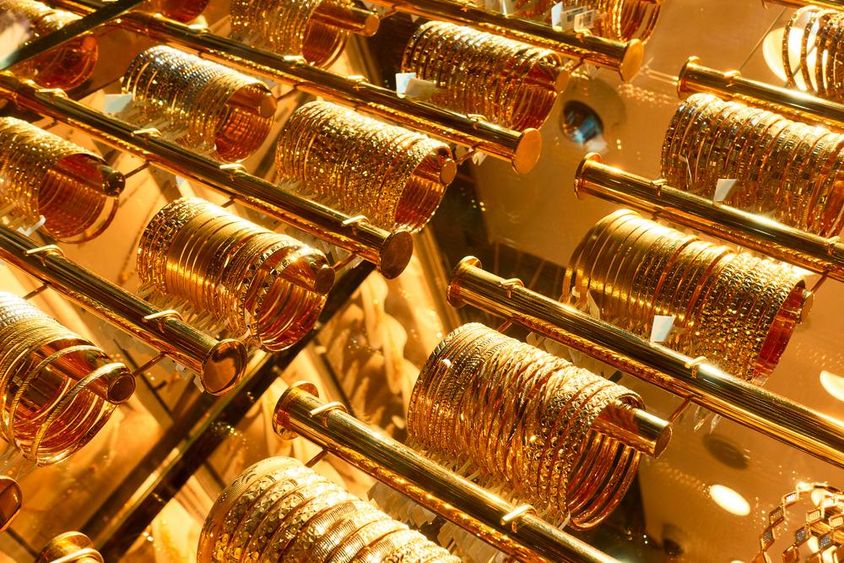
Gold and Silver Price Plunge on Dubai Market – Buying Opportunity or Warning Sign?
In recent days, extraordinary volatility has shaken international precious metals markets, with its impact immediately felt on Dubai's gold and jewelry market. The price of gold dropped by more than 35 dirhams per gram in a single day, while globally recording a drop of about $300 per ounce. Silver suffered an even larger fall, nearly 10 percent. The question is: is this really the time to buy, or is the uncertainty just beginning to unfold?
On Dubai's market, the price of 24-carat gold fell to 611 dirhams per gram by the evening, whereas it was around 646.5 dirhams at the morning opening. This sharp decline represented a more than four percent daily drop. Other types of gold followed similar trajectories: 22-carat gold fell to 565.75 dirhams, 21-carat to 542.5 dirhams, 18-carat to 465 dirhams, and 14-carat to 362.75 dirhams per gram. The international spot price weakened to $5,045.43 per ounce, which represented a close to 4.8 percent loss that evening according to the United Arab Emirates time zone.
Silver showed even more dramatic movement: it plunged to $80.3 per ounce, a nearly 10 percent decline. This level of daily fluctuation demonstrates that investors are reacting sensitively to geopolitical and macroeconomic developments.
Geopolitical tension and market nervousness
The market sentiment was significantly influenced by statements that the United States will continue its military operations against Iran until its strategic goals are achieved. Such declarations increase uncertainty in themselves, but the greatest risk does not lie in a specific military event, but rather in the possibility of prolonged conflict.
Financial markets can quickly process an unexpected event, but indefinite, open-ended conflicts build a longer-term higher risk premium into asset prices. Gold traditionally is seen as a haven asset in such situations, and thus has realized significant gains in recent times. This sharp correction, however, suggests that some investors have realized previous gains, while the strengthening dollar exerted further pressure on precious metals.
Strengthening dollar and interest rate expectations
The price of precious metals is significantly influenced by the performance of the US dollar. When the dollar strengthens, the dollar-denominated prices of gold and silver typically fall, as buying becomes more expensive in other currencies. In the current situation, the dollar has reached several-month highs against the euro, the pound, and the yen, which in itself pressured the prices of precious metals downward.
Additionally, the steep rise in oil prices has revived inflation fears. Higher energy prices increase global inflationary pressure, prompting central banks to be more cautious about interest rate cuts. Gold traditionally performs well in low interest rate environments, as it does not pay interest, thus reducing its competitive disadvantage compared to yield-bearing assets. The current situation, however, is more complex: gold has risen in recent months despite moderating rate cut expectations.
This suggests that currently geopolitical factors temporarily have a more substantial impact than monetary policy. Investors are seeking coverage against systemic risks, even when holding non-yielding assets incurs higher opportunity costs.
Dubai as a regional gold hub
Dubai plays a special role in global gold trading. Here, the jewelry market and demand for physical gold are significant not only for investment purposes but also from cultural and commercial perspectives. The sudden price decline therefore affects not only speculative investors but also retail buyers and jewelry traders.
The more than 35- dirham per gram drop could stimulate demand for physical gold in the short term, especially among those buying for long-term value preservation. However, due to volatility, many may hold off, fearing further price corrections.
Buying opportunity or further risk?
Such price movements always divide the market. Some believe the sharp drop might be an excellent entry point, especially if geopolitical tension persists and inflationary pressure strengthens. Others caution, as further dollar strengthening and interest rate policy uncertainty could lead to more price drops.
It is important to note that despite the current correction, gold's current price level remains near historical highs. This means the market prices in a significant premium due to uncertainty. If the geopolitical situation stabilizes or the rhetoric softens, prices might exhibit further downside correction.
In the case of silver, the nearly 10 percent fall is particularly noteworthy. Silver, as both an industrial and investment metal, is more sensitive to economic growth prospects. If the global economy slows, the drop in industrial demand could push its price down further.
Summary
The sudden price drop experienced in Dubai's gold and silver market reflects current global uncertainty well. Geopolitical tensions, a strengthening dollar, rising oil prices, and interest rate expectations together create a highly complex environment. Although gold remains a classic haven asset, current volatility warns that significant swings are expected in the short term.
For investors, the most crucial question is not how much the price fell in one day, but how underlying risk factors will evolve in the coming weeks and months. In Dubai's market, physical demand may surge in the short term due to lower prices, but global trends will remain crucial.
The current situation offers both opportunities and risks. Gold and silver have once again proven they are capable of extreme movements during crises—and this dynamic is likely to remain with us moving forward.
If you find any errors on this page, please let us know via email.


