Dubai's Future Museum Seeks Public's Vision
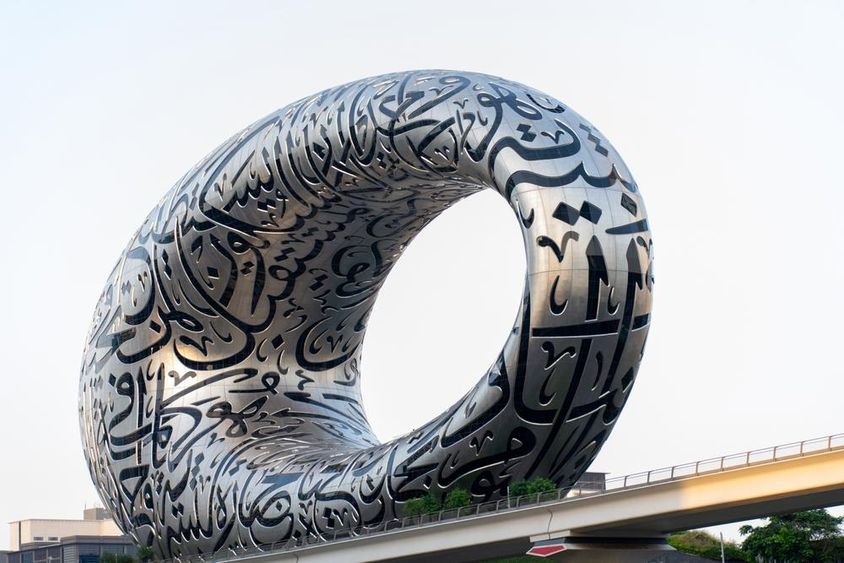
The Future Museum Seeks Ideas from the Public
The Dubai Museum of the Future is nearing another important milestone: as it prepares for its fifth anniversary, the museum is inviting ideas from the public for its next development phase. The initiative emphasizes that not only scientists, technological experts, researchers, and innovators should consider what the future museum experience should be, but also those who engage with the future as visitors, dreamers, creators, or simply curious individuals.
The museum calls on residents of the United Arab Emirates and interested parties from around the world to share their inventions, ideas, and suggestions through the Museum of the Future's social media channels. These ideas can contribute to making future exhibitions, interactive spaces, and technological displays fresher, bolder, and more personal.
A Museum that Doesn't Preserve the Past, But Explores Tomorrow
Traditionally, most museums' roles have been to preserve memories of the past. Archaeological finds, historical documents, artworks, and stories of past eras are displayed to help visitors understand where we came from. In contrast, the Dubai Museum of the Future approaches from a different angle: it doesn't primarily show what happened, but asks what could happen next.
This difference is evident not only in the exhibition topics but also in the entire spirit of the building. The museum treats the future not as a distant, intangible concept, but as a space shaped by human knowledge, imagination, technology, and action. The current call is based on this concept: the future doesn't simply arrive, but is born from many small and large ideas, decisions, developments, and experiments.
For Dubai, this message is particularly important. Over the past decades, the city has continuously built its international image by quickly responding to changes, being open to new technologies, and thinking big. In this environment, the Museum of the Future is not just a spectacle but also a kind of think tank.
Why Seek Ideas from the Public?
The new development phase of the museum is not forming behind closed doors. Public idea collection is interesting because it conveys the message that thinking about the future is not exclusively an expert task. While scientific and technological backgrounds are essential, real social impact is achieved when people bring their own questions, fears, hopes, and curiosities into the process.
A museum experience becomes truly powerful not only when it dazzles but also when it provokes thought. Visitors should feel that they've seen not just beautiful lights, futuristic spaces, and modern installations, but also take something home with them. A question. An idea. A new perspective on how work, education, healthcare, transportation, environmental protection, or even daily life can change.
Suggestions from the public can be diverse. Someone might recommend a new exhibition theme. Others may imagine a technology experience that involves the visitor. Still, others may raise a social issue that will become increasingly important in the coming decades. The aim of the museum is to recognize directions in these ideas that can be incorporated into future developments.
Deeper and More Interactive Experiences to Come
In the next phase of the Museum of the Future, plans include even deeper, more captivating, and more interactive experiences. This means visitors are expected to be not just viewers of the exhibitions but active participants.
In the modern museum world, this is an increasingly important direction. Besides traditional displays and explanatory texts, the audience today desires experiences that engage, address, and put them in decision-making situations. For a museum dealing with the future, this is especially natural. How else can one talk about tomorrow if the visitor remains passive?
Next-generation exhibitions can showcase scientific and technological changes that may transform economies, societies, and everyday life in the coming decades. These could include questions related to artificial intelligence, healthcare innovations, space exploration, sustainable cities, new forms of transportation, the future of education, robotics, energy usage, or even changes in human-technology relations.
The point is not for the museum to provide ready answers to everything. Rather, it is to ask the right questions and show what possibilities lie ahead for humanity.
Dubai's Role in the Dialogue About the Future
Since its opening in February 2022, the Museum of the Future has become one of Dubai's most recognizable symbols. Not only because of its unique building shape but also because it fits well with the city's long-term thinking. Dubai often not only showcases a new project or attraction but also conveys a message: the city wants to be the laboratory of the future.
This museum is one of the strongest manifestations of that message. Researchers, entrepreneurs, technological players, creative thinkers, and visitors from different parts of the world can meet here. The site is simultaneously a tourist destination, an educational space, and an innovation platform.
The current idea-gathering further strengthens this role. The museum not only wants to exhibit the future but also wants to think together about it. This is particularly important in an era when technological development is faster than ever, and many people feel both excitement and uncertainty about the changes.
The Future is Not Just Technology
When we talk about the future, we often first think of machines, robots, artificial intelligence, smart cities, and space travel. These are indeed important topics, but the message of the Museum of the Future is broader. The future is not just a technological issue but also a human one.
How will we live together in rapidly changing cities? What jobs will remain, and what new professions will emerge? How will kids learn? How will doctors heal? How can we make our lives more sustainable without halting progress? What decisions need to be made today so that the next generations inherit a better world?
These questions cannot be answered with a single spectacular installation. Dialogue is required. That is why the museum is turning to the public. Visitors, locals, those living abroad, young people, experts, and curious thinkers can all contribute to how we envision the coming years.
From Social Media Ideas to Exhibitions
According to the call, ideas can be submitted through the museum's social media channels. This is a simple and quick way for anyone to participate in the process. There is no need for official application materials or complex documentation: the essence is the conception, the direction, the thought that can add something to the next phase of the Museum of the Future.
The incoming suggestions will be examined by the museum as part of its own development plans. Further announcements are expected later regarding the details, but the call itself already signals that in the coming years, the museum intends to refresh its experiences, exhibitions, and innovation spaces.
This is a natural step for an institution dealing with the future. Such a museum cannot remain unchanged. If the world around it continuously transforms, it too must renew itself over and over.
A New Era Could Begin After Five Years
The fifth anniversary of the Museum of the Future will not merely be a celebratory occasion. Rather, it marks the beginning of a new chapter. In recent years, the museum has reinforced Dubai's place on the international map of future thinking and innovation. Now it is preparing to offer even more complex, human-centered, and powerful experiences in the upcoming period.
The involvement of the public in this process is important because the future does not belong to a single institution, city, or professional circle. The future is our common space. Every new idea, every question, every creative suggestion can contribute to a better understanding of the direction we are headed.
Once again, Dubai demonstrates that it is not enough to talk about the future. It must be planned, tested, showcased, and shaped together. The Museum of the Future now invites the world: let us think together about which experiences, inventions, and questions can help us understand the coming decades.
And perhaps this is the museum's most important message. The future is not some distant, misty event that will happen someday. The future is already forming in the ideas we dare to articulate today.
If you find any errors on this page, please let us know via email.


