Dubai's Bold Step Towards Digital Integration
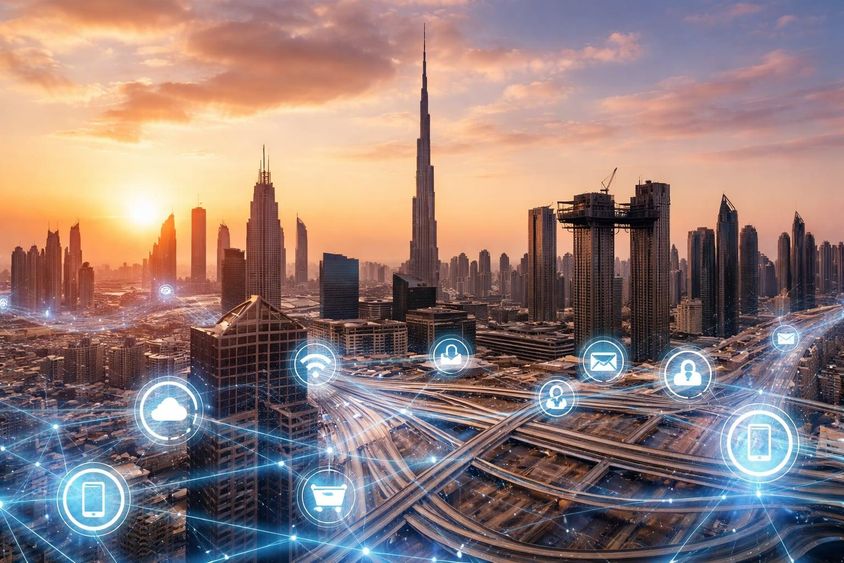
Unified Digital Ecosystem: A New Era Begins in Dubai
Once again, Dubai has taken a step that could set a precedent not only for the region but globally, in how a digital state operates. The goal is clear: within a year, all residential and corporate services will be integrated into a single, unified digital system. This is not just a development or modernization effort; it's a complete paradigm shift in how a city's administrative machinery functions behind the scenes.
The decision is based on the realization that future cities will not be composed of disparate systems, but of intelligently interconnected digital platforms. Dubai is now attempting to accelerate this future and make it a reality within a single year.
The End of Fragmented Systems
In most countries—even those with advanced digital infrastructures—government services operate in separate systems. Starting a business, obtaining a permit, or even simple administration often involves multiple platforms, several identifiers, and frequently parallel data submissions.
Dubai aims to radically eliminate this problem.
The essence of the new system is that all services function within a common digital space. This means users won't have to navigate different offices, won't have to re-enter the same data repeatedly, and won't need to understand the operations of separate systems. Everything is interconnected behind the scenes.
This step not only provides convenience but also huge time savings. Administrative processes are shortened, errors are reduced, and services respond faster.
Data as a Central Element
One of the most important pillars of the project is the unified handling of data. Dubai will not only connect systems but will build them on a central data logic.
This means that the various authorities will not work from separate databases but will use the same information. Once data is entered into the system, it will be accessible everywhere—of course, with appropriate authorization levels.
This not only increases efficiency but also enables an entirely new operational model. The city will be able to predict demands, optimize services, and even automatically respond to certain situations.
Artificial Intelligence as a Driving Force
One of the most exciting parts of the development is that Dubai will not stop at integration. The goal is a city operation where the systems are not only connected but also intelligent.
Artificial intelligence will play a key role. It will not only manage data but also provide decision support and even autonomously operate services in certain cases.
This means that the system won't wait for action from users but will think ahead. For example, it will automatically notify users before a permit expires or pre-prepare a process.
This is what is referred to as proactive governance, where the system serves the user without requiring them to manually initiate every step.
Specialized Platforms, Simplified Experience
While the goal is a unified system, implementation does not mean a single interface. The concept is based more on specialized but interconnected platforms.
This means that different interfaces will exist for various life situations or business processes, but the same infrastructure and database will work behind them.
From the user's perspective, this provides a cleaner, more logical experience. Users don't have to search for "everything in one place," but every service appears where it's relevant—while everything is connected in the background.
A New Dimension for Businesses
This transformation is particularly important for businesses. Dubai's economy heavily relies on international companies, startups, and digital enterprises.
The unified system significantly lowers entry barriers. Establishing, operating, or expanding a company becomes faster and more transparent.
Various permits, financial processes, workforce management, and even logistic connections all appear in one system. This not only saves time but also provides a competitive advantage.
An environment emerges where administration is not an obstacle but a background process.
Security and Reliability at a New Level
In such a system, security is a key issue. Dubai is not treating this as an afterthought but as one of its foundations.
Unified data management allows for more advanced security mechanisms. The system can identify risks faster, respond to threats, and ensure data protection.
Paradoxically, centralized but intelligent data management can be safer than fragmented systems where protection operates separately.
Redefining the Digital City
Perhaps the most important question is not what technologies are used, but what this means for everyday life.
Dubai is building a city model where the digital background becomes invisible. Users encounter not systems, but services that work.
There are no delays, no unnecessary administration, no loss of information. The system constantly functions, optimizes, and adapts.
It provides an experience where technology is not the goal but a tool.
One-Year Deadline: Ambition or Reality?
The set one-year deadline seems extremely ambitious at first. Integration of this magnitude typically takes longer.
However, Dubai has repeatedly proven that it is capable of rapid and large-scale developments. The infrastructure, digital strategy, and decision-making model all support this.
The question is not whether it will be realized but rather to what depth and what quality.
Conclusion: Not Development, but a Paradigm Shift
The announced direction is not just another digital project but a complete transformation of the operational model.
Dubai is building a system where the state is not made up of separate institutions but operates as a single intelligent network. Data, artificial intelligence, and integrated platforms together shape the city's functioning.
This approach not only increases efficiency but also creates a completely new user experience. A world where administration is not a burden but an almost invisible process.
If this model operates successfully, Dubai will not just follow digital trends but set a new standard for how a modern city should operate in the 21st century.
If you find any errors on this page, please let us know via email.


