Dubai's Autonomous Taxi Revolution Begins
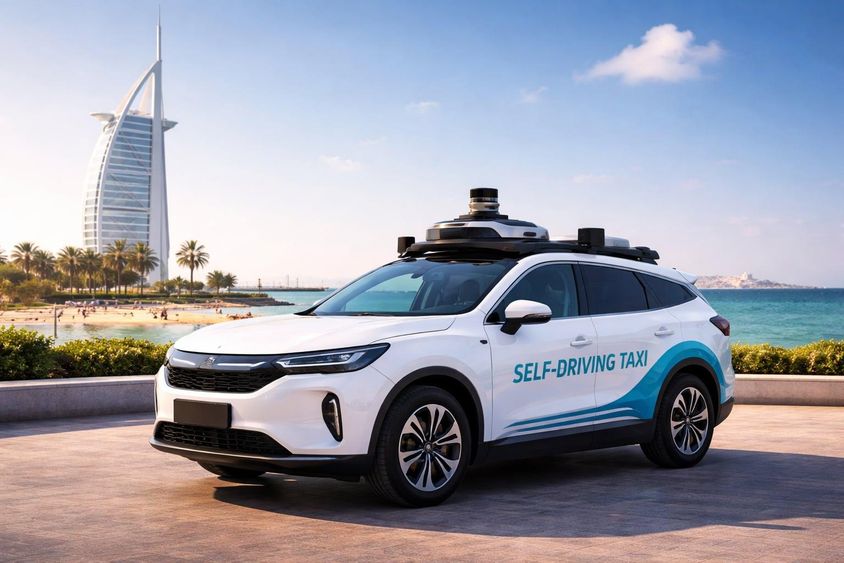
The New Era of Self-Driving Taxis in Dubai
Dubai's transportation system has long been one of the most advanced in the world, but it has now reached a new level: self-driving taxis have appeared on the city's roads. This is not an experimental project or a spectacular technological demonstration, but a real commercial service that anyone can use. In the first phase of the launch, the service is available in the Umm Suqeim and Jumeirah districts, and it was immediately clear that this is not just a new transportation option but the beginning of a complete paradigm shift.
Not the Future, but the Present
Self-driving vehicles have long been among the promises of the future. We have seen them in conferences, concept videos, and prototypes, but everyday use always seemed a step further away. Dubai is now bridging this gap. The introduced system is already capable of operating in a real environment, in real traffic, and transporting real passengers.
The starting fleet consists of 100 self-driving taxis, which may not seem like a huge number at first, but it is strategically enough to test and fine-tune the system in a controlled environment, yet in operational conditions. This is not a one-time pilot; it is the foundation of a gradually expanding network.
How Does the System Work in Practice?
The service is realized through the cooperation of several different technological and operational partners. One platform makes autonomous vehicles accessible through a well-known mobile application, while another operates with its own app. This dual approach is no accident: it simultaneously builds on the existing user base and introduces a dedicated autonomous transportation ecosystem.
In the background, a highly complex infrastructure is at work. The vehicles operate with AI-based systems that process data from the environment in real time. Sensors, cameras, radar, and high-resolution digital maps together ensure that the vehicle knows exactly where it is, what is happening around it, and what decision needs to be made in the next second.
This is not simple automation. The system continuously interprets: it recognizes pedestrians, responds to traffic lights, takes into account the movement of other vehicles, and can also adapt to unexpected situations. All of this while adhering to traffic rules and ensuring passenger safety.
Safety is Not Marketing, but a Prerequisite
The greatest concern with autonomous technology has always been safety. In Dubai's case, this is not a box-ticking point, but the foundation of the entire system. The introduction was preceded by a long testing period, during which the vehicles were examined in real conditions.
The technology behind the system is not experimental. It boasts over 150 million kilometers of driving experience and over 10 million completed trips in different cities and different traffic environments. This is the amount of data and experience that allows the system not only to function but to operate reliably.
Safety here doesn't just mean avoiding collisions. It involves the speed of decision-making, handling unexpected situations, and how the system communicates with its environment. A self-driving taxi cannot be uncertain. It cannot be slow. It cannot be unpredictable.
What Does It Mean for the City?
Dubai has long been consciously building itself as the city of the future. The introduction of self-driving taxis is one of its most spectacular steps in this direction. However, the real impact will be felt not in the spectacle, but in the operation.
Transportation efficiency may increase, congestion may decrease, and in the long run, the entire urban mobility may transform. Autonomous vehicles can optimize routes, reduce idle times, and respond more accurately to traffic situations than human drivers.
This is especially important in a city where growth is continuous and where the load on transportation infrastructure is also increasing. Autonomous systems not only serve this growth but actively help manage it.
A New Level of User Experience
For passengers, the experience will be both familiar and completely new. The car arrives in the same way, takes you to your destination the same way, but the absence of a driver fundamentally changes the experience.
There is silence, predictability, and a sense of technological trust. No conversation, no stylistic differences between drivers, no human error. Instead, there is a system that always delivers the same level.
For many, this will be comfortable, while for others, it may be unusual. But as with every technological shift, it is only a matter of time before the novelty becomes familiar.
Gradual Expansion, Global Ambitions
The first 100 vehicles are just the beginning. The plan is for the fleet to continuously expand and for the service to become available in more and more districts. This is not a static project but a dynamically developing system.
Dubai's goal is clear: it not only wants to use autonomous technology but to take a leading role in it. The city does not follow trends but shapes them.
This approach is what allows such large-scale and rapid implementations. While other cities are still grappling with regulatory issues, Dubai is already building functioning systems.
The Future of Transportation Has Already Begun
The appearance of self-driving taxis is not a one-time news story but the start of a process. A direction where transportation is increasingly automated, data-driven, and optimized.
With this step, Dubai is not only shaping its own future but setting a global example. The question is no longer when self-driving vehicles will become part of everyday life, but how quickly they will spread.
And if anywhere, in Dubai, this process always happens faster than anywhere else.
If you find any errors on this page, please let us know via email.


