Dubai's Advanced Parking Surveillance: A High-Tech Marvel
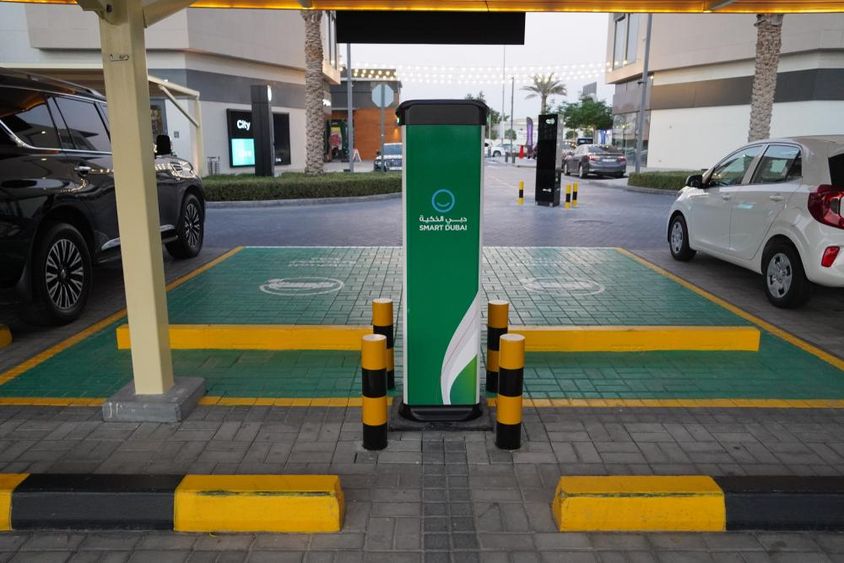
How Dubai Monitors Cars: Cameras, AI, Digital Parking Checks Are Everywhere
In recent years, Dubai has significantly accelerated the development of intelligent city systems, and parking infrastructure is no exception. In many parts of the city, drivers now encounter systems that use artificial intelligence-operated cameras, automatic license plate recognition, and digital payment solutions instead of human inspectors. In addition to traditional parking attendants, intelligent inspection vehicles now roam the streets, while barriers and paper tickets have completely disappeared in several parking zones.
The goal of modern technology is not just to collect parking fees faster and more accurately. According to Dubai city authorities, the new systems help reduce congestion, speed up traffic, and make inspections more efficient in the busiest areas. For drivers, however, this also means that parking “unnoticed” or overstaying the paid time has become much more difficult.
AI-Operated Parking Cameras
In several prominent districts of Dubai, hundreds of AI-supported cameras monitor parking areas. These systems operate, for example, in the Trade Centre 1, around Burj Khalifa, and in the Al Corniche area, where cameras mounted along roadsides and on poles automatically read the vehicles' license plates.
The system detects when a vehicle arrives at a parking space and records the departure time. Based on these two data points, it automatically calculates the parking duration, checks the payment status, and can immediately signal violations.
Unlike the previous system, where parking attendants had to walk the streets to manually check the cars, artificial intelligence can process dozens of vehicles in just a few seconds. Additionally, the digital system operates continuously, making it much quicker to detect parking violations.
Automation is particularly important for Dubai because the city has a very high number of cars, and parking space usage is continuously increasing in busy business and tourist districts.
The New Era of Intelligent Inspection Cars
Today, special vehicles equipped with multiple cameras regularly appear on Dubai streets. These intelligent inspection cars continuously move through parking zones while automatically scanning the license plates of parked vehicles.
The essence of the technology is that the system immediately compares the license plate with the digital parking database. If payment has not been made for that vehicle or the parking time has expired, the system can automatically record the violation.
This significantly speeds up inspections since previously, a parking attendant had to check each car individually. In contrast, the camera-based system can check entire streets in a matter of seconds.
This solution is especially useful in the busiest city areas because manual inspection is often too slow due to heavy traffic. Moreover, the modern system continuously collects data on parking habits, which can later be used to optimize urban traffic.
Parking Attendants Haven't Disappeared Completely
Although Dubai is increasingly automating its parking systems, traditional parking attendants are still present in many areas. Today, inspectors use digital handheld devices that allow them to immediately query a given license plate's parking status.
These devices show whether:
- A parking payment has been made.
- The correct zone was chosen by the driver.
- The parking time has expired.
- There are any other violations.
However, manual inspections are gradually being phased out where AI and automatic camera systems are already stable.
Dubai's long-term goal is to create a fully digital system where parking inspection happens almost entirely automatically.
Barrier-Free Parking Lots Spread in Dubai
Another striking development in the city is the barrier-free parking system. In these parking lots, there is no physical entry gate, no paper ticket, and in many cases, no need for a machine either.
The system records the vehicle's arrival and departure using cameras, then automatically calculates the parking fee. In many cases, drivers don’t need to do anything because the payment is handled digitally.
Such systems are already operational in several popular locations, such as around Dubai Harbour, in certain parts of Palm Jumeirah, in The Beach JBR area, and at several Union Coop parking lots.
The goal here is also to reduce congestion and speed up entry and exit. Traditional barrier systems often resulted in long queues, especially on weekends or during holiday periods.
Automatic Payments Linked to the Salik System
One of the most interesting elements of Dubai’s smart parking systems is the Salik-based automatic payment. Originally part of the road toll system, Salik is now also used for deducting parking fees at certain locations.
When a camera recognizes the vehicle's license plate, the system can automatically deduct the parking fee from the linked Salik balance. This makes parking practically contactless.
However, drivers need to ensure that there is sufficient balance in the system. If there is not enough coverage, a violation may be recorded.
In certain cases, drivers have a few working days to top up their balance. If this isn't done in time, additional fines may be imposed.
The Paper-Based Parking System Slowly Disappears
Not long ago, it was common to see a parking ticket or a paper-based fine placed behind the windshield in Dubai streets. Today, however, the city is increasingly transitioning to digital operations.
In modern systems, violations are automatically recorded by cameras and intelligent inspection systems. Many drivers do not immediately notice that they have parked illegally because there is no paper punishment on the car.
Fines are recorded digitally and automatically linked to the license plate in the database. This speeds up and makes administration more efficient, while also making it much harder to evade the rules.
What Fines Can Drivers Expect?
In Dubai's parking systems, the fines imposed for violations remain substantial. If a driver does not pay the parking fee, they can receive a fine of up to 150 dirhams.
Exceeding the paid time generally results in a 100-dirham fine. In Salik-based systems, there can also be separate fines for insufficient balance.
Due to automated inspections, there is now a much smaller chance of a violation going unnoticed. AI and digital cameras practically continuously monitor the parking zones.
Dubai Moving Towards a Fully Intelligent Transportation System
The automation of parking systems illustrates the direction in which Dubai’s transport infrastructure is developing. The city’s long-term aim is to create an intelligent urbanization model where AI, digital payments, and automated inspections appear in almost all areas of transportation.
Parking is no longer just about finding a free spot for a car. In Dubai, it increasingly becomes part of an interconnected digital system where cameras, databases, mobile apps, and automatic payments work together in the background.
With this, the city aims to not only provide faster and more modern services but also ensure that transportation becomes more efficient, transparent, and better monitored in the future.
If you find any errors on this page, please let us know via email.


