Dubai's 2025 Community Engagement Revolution
Community Engagement at a New Level in Dubai
The development of the city of Dubai is not just measurable by skyscrapers, new metro lines, or modern transportation hubs. The real progress lies more in how a city's institutional system can support the people living there—especially those in the greatest need. In 2025, the Roads and Transport Authority elevated this approach to a new level: nearly 1.2 million residents benefited from its community and charitable programs throughout the year.
This figure in itself is noteworthy, but it is the underlying content that truly gives it significance. A total of 1,192,320 beneficiaries, 50 different community programs, 19 joint government campaigns, and targeted initiatives for low-income families, workers, people with special needs, and students reflect an institutional mindset that goes beyond basic duties.
Strategic Approach Behind Community Programs
Community involvement was not a series of spontaneous actions but the result of a consciously constructed strategy. The programs were designed along the lines of international best practices to achieve long-term and sustainable impact. The goal was not merely to provide one-off assistance but to strengthen social cohesion and deepen the culture of volunteerism.
In 2025, the national "Year of the Community" initiative also provided a framework for these programs. The slogan "Hand in Hand" appeared not just as a communication element but took shape in concrete actions. This year, the transport authority was not only operating infrastructure but also building a community.
Volunteering as an Organizational Value
Notably, 599 employees participated as volunteers in 17 different initiatives and events. This means that community responsibility became part of the organizational culture, not just an executive decision. For an institution of this size, this carries a strong message: social participation is not an external expectation but an internal conviction.
Volunteer programs not only provided help for beneficiaries but also strengthened the sense of belonging among employees. Working together for a common goal created new points of connection both within and outside the organization.
Ramadan: The Month of Solidarity
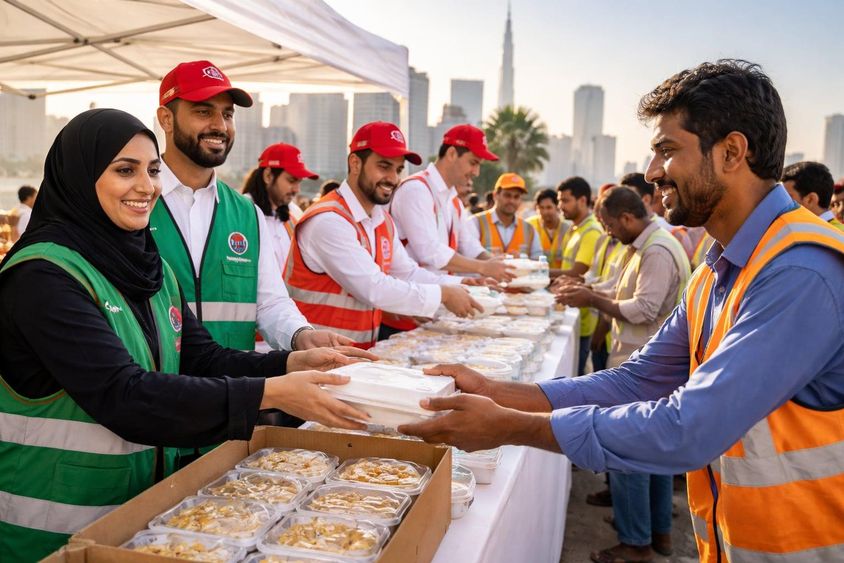
The Ramadan period received special attention among the community programs. Thousands of people received direct support through various initiatives. The "Meals on Wheels" campaign, for example, aided 8,000 workers with hot meals. Additionally, 5,000 people received iftar meals as part of a metro station distribution program, in partnership with a local digital platform.
The Ramadan food packages provided to 1,000 low-income families also offered significant support. These programs not only provided material assistance but also conveyed the message that the city's development is a shared responsibility.
A separate Ramadan tent offered communal meals for 500 beneficiaries, while vouchers distributed during Eid Al Adha brought relief to additional families.
Support for Workers and Low-Income Families
Dubai's development is unimaginable without the contribution of its workers. The "Workers’ Gifts" initiative provided recognition and support for 300 workers, emphasizing their role in building and operating the city. This gesture goes beyond material value: it expresses social appreciation.
Community campaigns were conducted in multiple locations—such as the Warsan area, marine transport stations, and worker accommodations—in collaboration with religious and charitable organizations. These actions specifically targeted communities that often live on the outskirts of the city yet play a key role in its operation.
Inclusion and Equal Opportunities
Support for people with special needs was also a primary focus. The authority participated in the AccessAbilities Expo, which aims to build an inclusive society. They also organized introductory metro trips, as well as summer programs and community initiatives for them.
Such programs not only provide physical access to the transport system but also promote social integration. The aim was that every resident could take part equally in the life of the city.
Involving Students and Youth
Programs targeting students placed the next generation at the center. Increasing traffic awareness, safety, and community responsibility are all areas that will define the culture of a city in the long term. Engaging the youth is not just an educational goal but also a strategic investment in the future.
Long-term Impact and Sustainability
The nearly 1.2 million beneficiaries are not merely statistical data. Behind each number stands real-life situations, families, workers, and students. The diversity of the programs indicates that the transport authority was able to transcend its basic duties and become a key player in social responsibility.
Dubai's development is often presented in the context of infrastructure and economic growth. However, 2025 also showed that social cohesion and community solidarity are equally important factors. A city becomes truly strong not only by building roads and metro lines but also by fostering community connections.
The RTA's initiatives in 2025 send a message: transportation is not just about getting from point A to point B. It's also about how a city can connect people—both physically and socially.
If you find any errors on this page, please let us know via email.


