Dubai Traffic: It's Not About Shopping
The Real Cause of Dubai's Traffic Jams: Commuting, Not Shopping
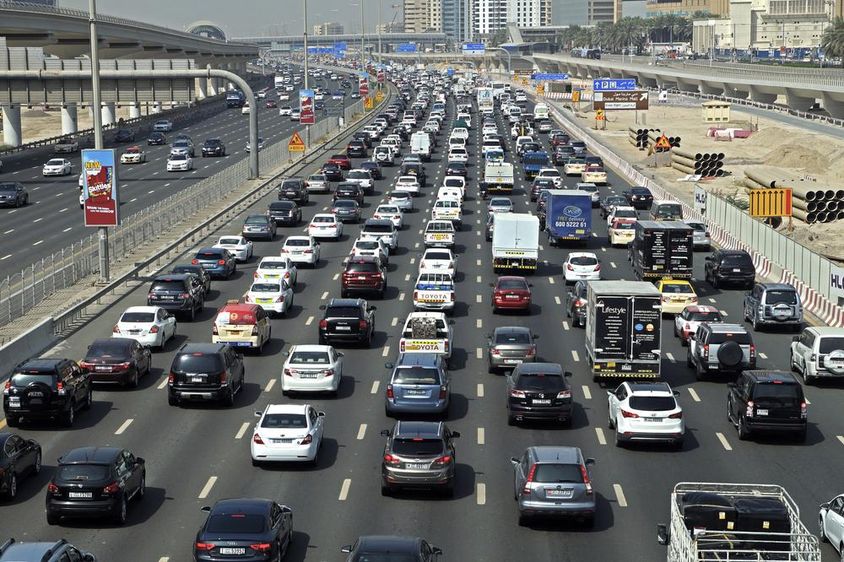
Traffic congestion on Dubai's roads is an almost daily problem for the emirate's residents. The city, despite having a well-developed road network for its size, often experiences slowdowns, or even complete standstills at certain junctions. According to a local transport expert, the primary cause is not entertainment or shopping, but the daily commute associated with work and business activities.
90% Business and Work-Related Travel
According to an expert in transport studies, about 90% of Dubai's traffic does not stem from weekend outings or leisure trips, but is directly related to reaching workplaces, schools, and business meetings. This is especially true in areas where residential zones are far from industrial or office districts. The decentralized growth of the city forces many residents to travel longer distances twice a day, in the mornings and afternoons.
Overloaded Roads, Finite Capacity
Roads are designed to handle a certain number of vehicles per hour. When this number reaches its limit, the system's balance is disrupted, and traffic slows down dramatically. The expert pointed out that traffic jams do not build up gradually but worsen explosively after a threshold is reached. This phenomenon is particularly evident in the morning hours before work begins, and between 4 and 6 PM, when most office workers head home.
The Ratio of Bus and Personal Transport
The expert illustrated the problem with a school example: if a school transports 1,000 students by buses, around 20 vehicles will suffice for the task. However, if each student is taken by their parents in separate cars, it means 1,000 individual vehicles in the same time frame. It's not hard to see which scenario puts more strain on the roads. This logic applies to commuting as well: if each employee uses their car, the traffic volume increases much faster than the roads can be developed.
Urban Lifestyle and Car Dependency
Walking plays almost no role in daily commuting in Dubai. According to the expert, this is not merely a matter of convenience but a consequence of deeper urban planning issues. People often live far from their workplaces, and few positions provide accommodation near the job site. Cars thus become not just an alternative but a necessary condition for daily routines.
Despite the availability of public transport, many continue to prefer personal vehicles. The reasons include high incomes, cheap fuel prices, and urban prestige, which remains strongly tied to cars.
The Gap Between Traffic Studies and Reality
The transport expert also warned that there is often a significant gap between the traffic impact assessments prepared for development projects and the actual situation. On paper, acceptable loads often exceed calculations by the time a project starts, especially if they do not account for the actual movements between residential areas and business centers, and the rapid increase in car numbers.
What Does This Mean for the Future?
Dubai’s development is not slowing down, so the load on the roads will continue to grow. Therefore, urban planning and transport policies need a new approach that considers the dominance of workplace mobility. Possible solutions include:
encouraging companies to provide remote work opportunities, applying flexible working hours so not everyone travels at the same time, promoting carpooling at the corporate level, expanding and supporting school bus systems, encouraging geographical alignment of workplaces and residences in new projects.
Summary
Dubai's traffic congestion is not just due to the amount of traffic but also the nature of it. Daily commutes, business meetings, school transportation, and commercial commuting account for the vast majority of traffic. To effectively reduce traffic, it is not enough to build more lanes – there’s a need to rethink mobility habits and fine-tune the urban structure.
This shift in perspective could be beneficial not only in Dubai but in any modern metropolis where the capacity of transportation infrastructure reaches its physical limits, while the economy's further growth generates even more movement daily.
If you find any errors on this page, please let us know via email.


