Dubai Tightens E-Scooter Regulations
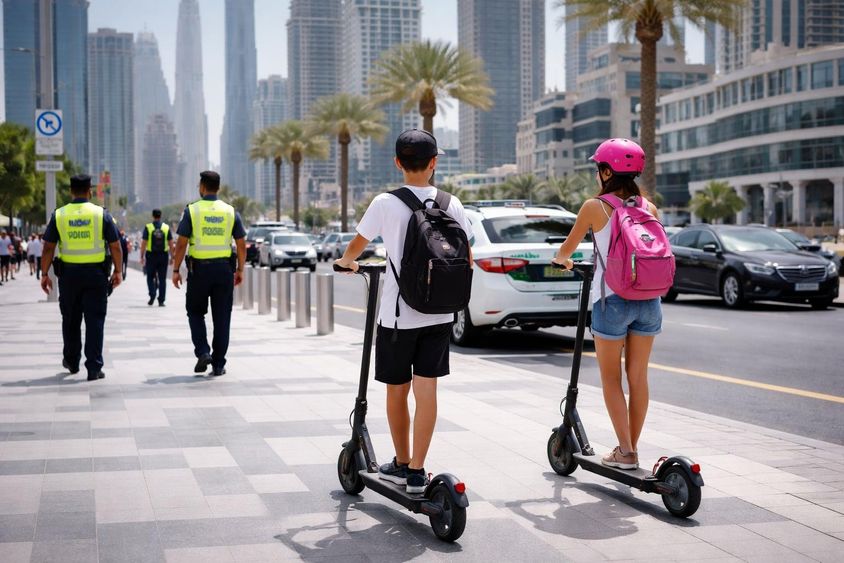
New Regulation in the Horizon: Accountability, Safety, and the Future of Micromobility in Dubai
In recent years, the use of electric scooters has dramatically increased on Dubai's streets. What initially seemed like a convenient and modern transportation alternative is now raising serious traffic safety concerns. Consequently, the city administration is working on a new legislative proposal that could fundamentally change the regulations for using e-scooters. One of the proposal's most important elements is that parents would be held legally responsible if their children use these devices improperly.
This step is not an isolated measure but part of a broader strategy aimed at improving traffic safety and ensuring more controlled use of micromobility devices.
From Freedom to Regulation
The rapid spread of electric scooters is partly due to their easy accessibility, relatively low cost, and the fact that they require no special training to use. They have become popular gifts or rewards for many families, particularly among children and teenagers.
However, this freedom has quickly led to problems. Increasingly more cases are emerging where young people use them in inappropriate places, at excessive speeds, or with modified vehicles. Some scooters, for example, have been illegally modified to reach speeds exceeding 100 km/h – equivalent to motorcycles rather than urban transportation devices.
This trend has raised serious concern among authorities since the infrastructure and traffic environment were not designed for this kind of usage.
Parental Responsibility: A New Legal Dimension
One of the most significant innovations in the proposed legislation is that parents would be held accountable if their children dangerously operate electric scooters. This means that not only warnings or minor fines would be considered, but also more serious legal consequences.
The logic behind it is simple: parents are ultimately responsible for the decisions of minors. If a child rides in a forbidden area, exceeds speed limits, or endangers the physical safety of others, accountability does not stop with the child.
This approach sends a clear message: e-scooters are not toys, but transportation devices requiring serious attention.
Mandatory Registration and Number Plates
Another key element of the legislation is the mandatory registration and numbering of electric scooters. While this may initially seem excessive, the aim is clear: identifiability and accountability.
Scooters with number plates would be easier to track, providing multiple benefits. On one hand, it aids authorities in uncovering violations, and on the other, serves as a deterrent.
Additionally, registration enables the development of a comprehensive database to help analyze traffic trends and fine-tune future regulations.
Rising Accident Numbers and Alarming Trends
The push for stricter measures is clearly fueled by accident statistics. The number of accidents involving electric scooters has significantly increased recently, especially among young people.
Hundreds of such incidents occurred within a year, many with fatal outcomes. In the following year, an even more concerning trend emerged: multiple fatalities occurred in a short period, including minors.
This is not just a statistical data point but a real societal problem requiring response from decision-makers.
Checks and Zero Tolerance
Authorities are already applying stricter measures against illegal scooter use. Inspections are common, especially in popular areas where young people tend to perform dangerous stunts.
In numerous cases, vehicles have been confiscated, and dozens of offenders have been fined. This zero-tolerance policy clearly signals that authorities do not wish to continue tolerating reckless behavior.
Tension in Residential Areas
The issue is not limited to busy urban roads. Increasingly, residential communities are complaining about children riding unsupervised at high speeds in internal streets.
Such situations are particularly dangerous, as drivers often do not expect fast-moving, low-profile vehicles, making timely reactions more difficult.
This phenomenon reinforces the need for regulation to extend beyond main roads to residential areas.
Educational Institutions' Reaction
Safety concerns have also emerged at the level of educational institutions. Several schools have already banned electric scooters from entering the premises.
This decision clearly demonstrates that the problem is not merely a traffic issue but is also relevant from an educational and safety perspective. Institutions strive to minimize risks, especially in environments where many children are present at once.
The Future Direction: Balance of Awareness and Regulation
The intended measures do not aim to curb micromobility but to place it within safer frameworks. Electric scooters can still play an important role in urban transportation, particularly for short distances.
However, rapid growth necessitates the development of the regulatory environment. Emphasizing parental responsibility, mandatory registration, and introducing number plates are all steps that could result in a more stable and safer system in the long run.
Nevertheless, true change depends not only on laws. Traffic culture, awareness, and a responsible attitude are equally significant in ensuring that electric scooters truly become a beneficial part of urban mobility in Dubai.
In this new environment, parents have a crucial role: not only to ensure supervision but to lead by example in how modern transportation devices can be used responsibly.
If you find any errors on this page, please let us know via email.


