Dubai Supermarkets Impose Purchase Limits
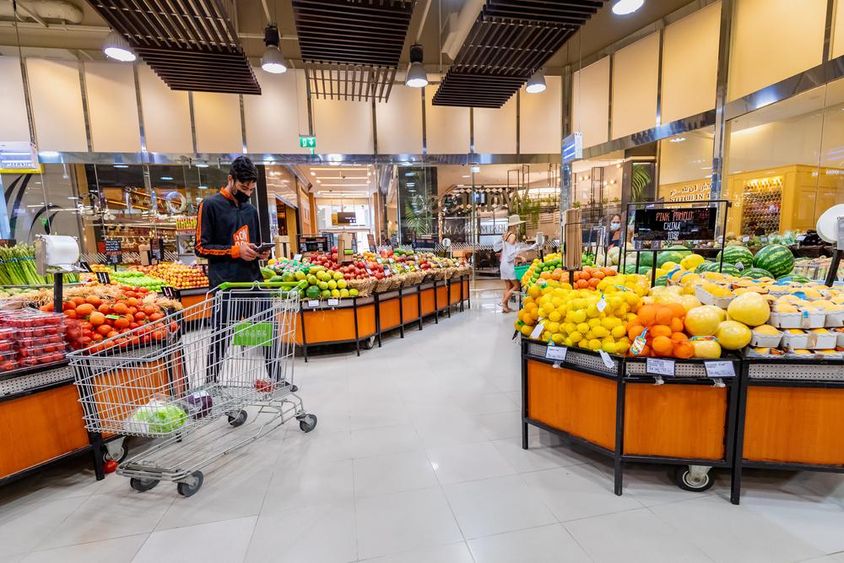
Purchase Limits in Some Dubai Supermarkets: What's Behind It?
In recent days, several Dubai supermarkets have issued notices that they are temporarily limiting the purchase of certain fresh foods. According to these announcements, a customer may buy a maximum of 2-3 kilograms of a specific fruit or vegetable. The restriction applies to all customers and aims not to manage stock shortages but to maintain balanced supply during a period when many are trying to procure larger quantities of food at once.
Dubai authorities emphasized that the country’s food supplies are stable and supply chains are continuously operational. Residents are thus advised not to hoard large quantities of products, as there is no shortage of essential foods. The situation is more about changing consumer behavior rather than an actual stock shortage.
Why Were Quantity Limits Introduced?
Such restrictions typically appear in retail whenever there is a sudden surge in demand for certain products. Fresh vegetables and fruits are particularly sensitive categories because they are perishable products, and daily supply often relies on precise logistical planning.
When customers try to buy larger quantities at once, store shelves can quickly empty, even if warehouses or import channels have sufficient stocks. In such cases, retailers often introduce temporary quantity limits to ensure that the product remains accessible to all customers.
In Dubai's case, most fresh products come from imports. While the city has modern logistical centers and advanced food distribution systems, daily delivery cycles play a key role when it comes to perishable goods. Quantity limits thus act as a protective mechanism to prevent panic buying.
Government's Message: No Food Shortage
Authorities have made it clear that the nation's strategic food stocks are secure. In recent years, the United Arab Emirates has made significant efforts to strengthen food security, particularly because of its import dependency.
The strategy is based on several pillars. One is diversifying global procurement networks, allowing products to arrive from different countries. Another is advanced logistic infrastructure that can quickly respond to changes in demand. Additionally, the country maintains significant reserves of certain essential foods.
Authorities therefore urge residents and visitors to shop as usual and not to stockpile unnecessarily large amounts. Panic buying can create an artificial sense of shortage in the short term, even when there are ample stocks available.
How Does Dubai's Food Supply Work?
Dubai holds a unique position in the global food market. Located in a desert environment, agricultural production is limited. Nonetheless, a highly efficient supply system has been built through modern technology and global trade connections.
Most fresh vegetables and fruits arrive by air or sea transport from various regions. Products often reach Dubai store shelves within days from the producers. Logistic centers play a crucial role in the supply chain, capable of quickly redistributing stocks between different supermarkets.
Modern warehouse technology, refrigerated transport, and digital inventory management all contribute to ensuring stores can consistently offer fresh goods. This is why authorities emphasize that current restrictions are not signs of a shortage but are precautionary measures.
The Role of Consumer Behavior
In retail, it is often observed that news of an uncertain situation quickly alters customer habits. If people fear that obtaining certain products will become more difficult later, they tend to purchase larger amounts at once.
However, this can easily trigger a self-fulfilling process. If many customers stockpile products simultaneously, store shelves temporarily empty, which encourages even more people to shop quickly. Quantity restrictions aim to halt this process.
The 2-3 kilogram limit is generally sufficient for an average household for a few days or even a week. Thus, the restriction does not pose a real problem for everyday consumption, but it helps ensure that everyone has access to fresh products.
Short-term Measure, Long-term Stability
The restriction introduced by Dubai supermarkets is expected to be a temporary measure. Such rules typically remain in place until purchasing habits return to normal levels.
Experiences from recent years show that the supply system of the United Arab Emirates is extremely flexible. The logistic network can quickly adapt to changing demand, and new shipments arrive at stores when necessary.
As a global trade hub, Dubai places great importance on the stability of food supply. Cooperation between authorities and commercial chains ensures that residents and visitors have continuous access to essential foods.
What Does This Mean for Everyday Shoppers?
For most shoppers, the change is scarcely noticeable. Stores remain open, products are available, and supply is continuous. The quantity restriction merely means that one cannot purchase an excessively large amount of a particular product at once.
This practice is a common method in many countries when demand spikes in a short period. The goal is always the same: to ensure that every customer can obtain the necessary foods.
According to authorities, the most important message is that there is no need to worry. Supply chains are functioning, stocks are available, and stores continually restock their shelves. Conscious shopping and measured procurement help ensure the system operates smoothly. img_alt: courier sorting vegetables and fruits in a supermarket.
If you find any errors on this page, please let us know via email.


