Dubai-Sharjah Traffic Relief on the Horizon
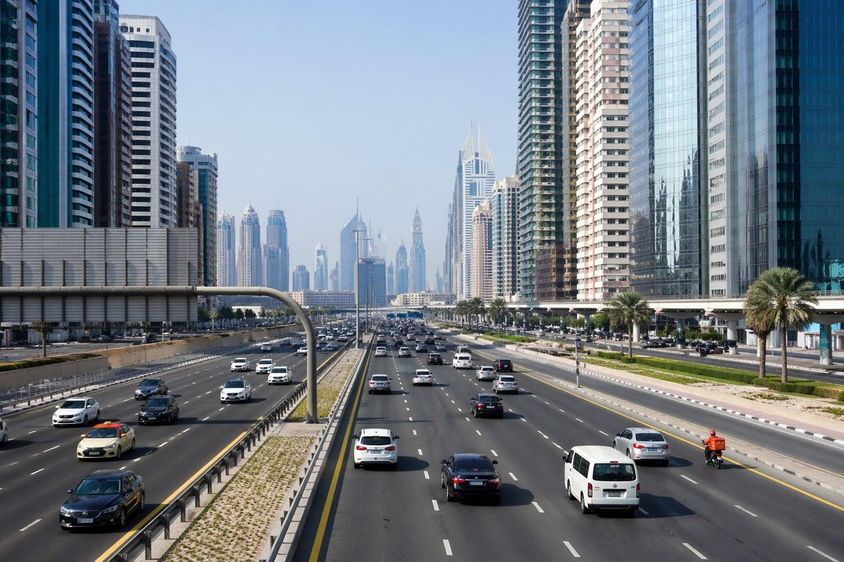
Comprehensive Transport Reform: End of Dubai-Sharjah Jamming?
One of the most pressing issues in the United Arab Emirates for years has been the traffic congestion between Dubai and Sharjah. For daily commuters, this problem is not just an inconvenience but also results in significant time loss, stress, and economic effects. However, now a comprehensive, multi-level development program is emerging, promising to fundamentally change transportation in this key region.
Federal decision-makers made it clear: the current situation is unsustainable, which is why a complex infrastructure development and regulatory package has been put on the agenda. The goal is nothing less than a significant reduction in traffic congestion, increased transportation efficiency, and integration of future technologies.
The root of the problem: growing population and overloaded roads
Every day, hundreds of thousands of vehicles travel between Dubai and Sharjah. Due to economic and housing differences between the two emirates, many choose to live in Sharjah while working in Dubai. This phenomenon has been continuously increasing traffic for years, especially during morning and evening peak hours.
Rapid population growth, the high rate of car ownership, and urban expansion together put pressure on the road network, which the current infrastructure can hardly serve anymore. Congestion occurs not only on major highways but also at connecting roads and junctions.
Fourth Federal Corridor: Taking the Road Network to a New Level
A key element of the solution is a new, large-scale highway project, which consists of a 120-kilometer-long, 12-lane federal corridor. This route will connect several emirates, including Abu Dhabi, Dubai, and Sharjah, and will be capable of handling hundreds of thousands of vehicles daily.
The project is not just about building a new road. It also includes plans for modern junctions, overpasses, and intelligent traffic management systems. Estimates suggest the new corridor could increase the efficiency of the federal road network by up to 73%, marking a significant advancement compared to the current situation.
Artificial Intelligence in Transportation
One of the most exciting elements of the developments is strengthening the role of artificial intelligence. In the future, traffic management will not be based on static rules but on real-time data and predictive models.
This means the system will be able to predict congestion, dynamically adjust the number of lanes, and optimize traffic distribution. Handling peak times could thus become much more efficient, especially on the Dubai-Sharjah axis.
By further developing the existing camera networks and control centers, an integrated system could be created that continuously monitors and directs traffic.
Smart Signboards and Accident-Prone Areas Management
The so-called smart information boards' role is also being enhanced. These will not only display simple warnings but will also provide multilingual, real-time information to commuters.
Accident-prone areas receive special attention as well. The authorities already have a continuously updated map identifying dangerous road sections. Targeted interventions are expected in these areas, such as road restructuring, speed limit modifications, or increased surveillance.
Regulation of Heavy Vehicles and Delivery Traffic
A significant source of congestion is the presence of heavy vehicles, especially during peak times. New regulations aim to more strictly control vehicle weights and limit their traffic during the most critical periods.
Additionally, the explosive growth of delivery services has brought new challenges. The presence of motorcycle couriers increases traffic and accident risks. In the future, stricter regulations, as well as possibly automated delivery solutions, may be introduced.
Restricting Vehicle Ownership: A Radical Step Ahead
One of the most intriguing proposals is restricting vehicle ownership. Decision-makers are exploring the possibility of limiting the number of vehicles a person can own. This could bring a significant change compared to the current system, where many households own multiple cars.
It has also been suggested to regulate the lifespan of vehicles, which in the long run could lead to a decrease in the number of cars on the roads.
Railway Developments and the Future of Mobility
In addition to road developments, expanding railway infrastructure also plays a key role. The new railway network aims to reduce heavy traffic on the roads, especially the number of heavy vehicles.
This will not only alleviate congestion but also improve transportation safety and sustainability. Through combined transportation systems, more efficient logistics solutions could be created.
Summary: On the Brink of a New Era
Solving the transportation problems between Dubai and Sharjah will not be the result of a single project but the realization of a comprehensive strategy. Infrastructure development, regulatory changes, and technological innovations together can bring a real breakthrough.
The coming years will be crucial: if the plans are realized, a significant portion of current congestions could disappear, and a much more efficient, intelligent transportation system could come into existence in the United Arab Emirates.
If you find any errors on this page, please let us know via email.


