Dubai: Safe Haven at Any Hour
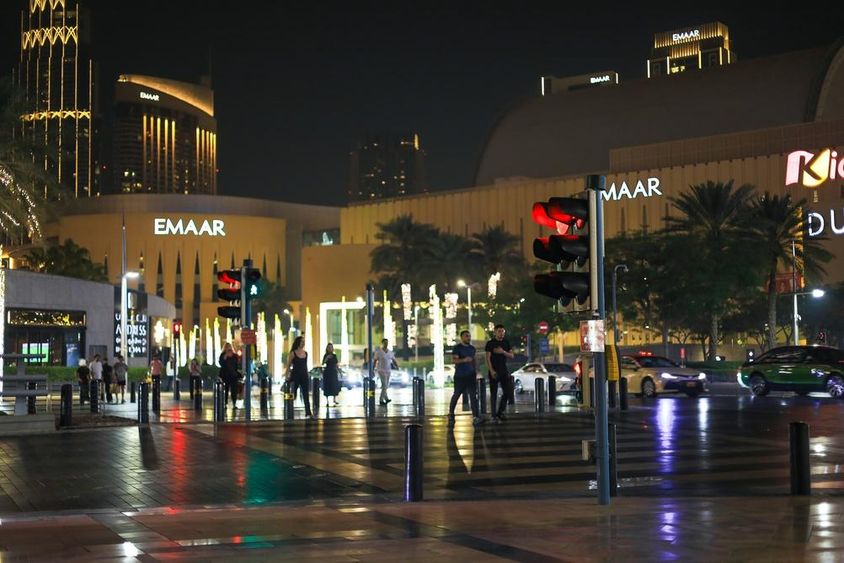
Dubai is Considered a Safe City Even at Night, Residents Say
In many people's minds, Dubai is strongly associated with spectacular skyscrapers, seaside neighborhoods, modern shopping centers, and rapidly developing infrastructure, but there's another factor that equally defines the city's everyday appeal: the sense of security. According to a recent survey, nearly 99 percent of Dubai's residents feel safe even when walking alone at night. This is not only an impressive statistic but also speaks volumes about how residents experience everyday life in the city.
The survey was conducted by the Federal Competitiveness and Statistics Centre in collaboration with the UAE Ministry of the Interior, and the results were also shared by the Dubai Police. Based on the numbers, Dubai not only performs well as a modern metropolis but also as a location where residents perceive an extremely high level of public safety. The index for safety and quality of life showed a value of 98.2 percent, while the daytime safety perception index achieved an outstanding result of 99.9 percent. The feeling of safety when walking alone at night was 98.7 percent, while the trust in police stations stood at 96.2 percent.
These numbers are particularly important because Dubai is an extremely diverse city. A significant portion of the population consists of expatriates, businessmen, families, students, tourists, and professionals living here for shorter or longer periods. Maintaining a sense of security in such an international environment is not an easy task. People from different cultures, diverse lifestyles, different languages, and customs meet daily on the same streets, in community spaces, at metro stations, and in residential areas. Nevertheless, the majority of residents feel that Dubai provides a predictable, orderly, and safe environment.
The nighttime safety perception is a particularly interesting indicator because it is often the area where residents of many major cities become more cautious. A city might be busy, bustling, and livable by day, but real trust is often measured when people move around comfortably, whether on foot, by taxi, metro, or other means of transportation, even at night or late at night. In Dubai's case, the 98.7 percent result indicates that most residents feel safe not only during the day but also when fewer people are on the streets, when the city operates at a different rhythm, and when public safety issues would typically be more pronounced in many places.
In everyday life, this sense of security manifests in various ways. Many people go shopping late at night, dine out, go to the gym, or stroll in the waterfront neighborhoods. Families move more freely in residential communities, tourists explore the city with confidence, and those returning home late from work feel less like they need to avoid certain areas. Naturally, basic caution is necessary in any major city, but in Dubai's case, based on residents' feedback, security is experienced as a daily reality rather than just an official promise.
The 99.9 percent daytime safety perception value in the survey indicates almost complete trust. This shows that residents feel extremely safe in public spaces, transportation hubs, residential areas, business districts, and tourist sites during the day. Dubai's city structure has continuously developed over the years: new roads, more pedestrian-friendly areas, residential parks, business zones, metro connections, and community services have emerged. In this environment, the sense of security cannot be separated from overall urban operations. Clean, well-maintained, controlled, and organized public spaces contribute to people feeling calmer by themselves.
The 96.2 percent trust in police stations is also an important signal. A city's security is not only determined by a lack of problems but also by the belief that if help is needed, the authorities are accessible, effective, and capable of handling the situation. In Dubai's case, the high level of public trust indicates that residents not only perceive presence but also functioning. A security system is truly strong when the population is not afraid to engage with authorities, believing they will receive substantive responses to complaints, emergencies, or issues.
The 98.2 percent index of safety and quality of life highlights that public safety is not a separate issue but directly related to the perception of a city's livability. Individuals who feel safe plan for longer-term stays more comfortably, are more likely to move with their families, are more confident in taking jobs, use public spaces more frequently, and participate more openly in urban life. Therefore, Dubai builds its reputation not just from an economic or tourism perspective but also by trying to provide a stable, predictable, and safe everyday environment for its residents.
Positive data regarding public safety has not only emerged for Dubai. Sharjah also reported similarly strong results, where another survey showed that in 2025, residents reported 99.7 percent safety satisfaction. The survey, conducted by the Department of Statistics and Community Development, also indicated high law enforcement trust, with around 99 percent of residents expressing confidence in the police to maintain safety and stability. This is significant as it shows that a high level of public safety is not an isolated phenomenon but a strongly perceived local experience across several emirates in the UAE.
In Dubai's case, the perception of safety is a particularly valuable asset due to the city's international role. The city continuously attracts investors, digital nomads, entrepreneurs, migrant workers, those interested in luxury tourism, and those seeking a stable long-term residence in the region. In this competition, high buildings, a modern airport, or a spectacular range of services alone are not enough. The true appeal comes when people feel in their everyday lives that the city functions seamlessly, safely, is orderly, and predictable.
The data on the feeling of safety when walking at night is more than just simple statistics. It conveys that Dubai's residents predominantly use the city with normalcy rather than fear. This trust can have long-term effects on the economy, tourism, the residential property market, and the city's international reputation. Once someone experiences that in a major city, they can move around comfortably, walk, or handle errands even late at night, their perception of the city is significantly strengthened.
Thus, based on the recent survey, Dubai is seen not only as a rapidly developing, spectacular, and international city but also as one where an exceptionally high proportion of residents feel secure. The 98.7 percent perceived night safety, the 99.9 percent daytime safety perception, the 98.2 percent safety and quality of life index, and the 96.2 percent trust in police stations together indicate that the city's public safety reputation is extremely strong. This is the foundation of everyday life: the tranquility that one can step out into the streets and feel at home and secure in a bustling metropolis.
img_alt: Pedestrians in downtown at night
If you find any errors on this page, please let us know via email.


