Dubai Rethinks Parking Fees for Residents
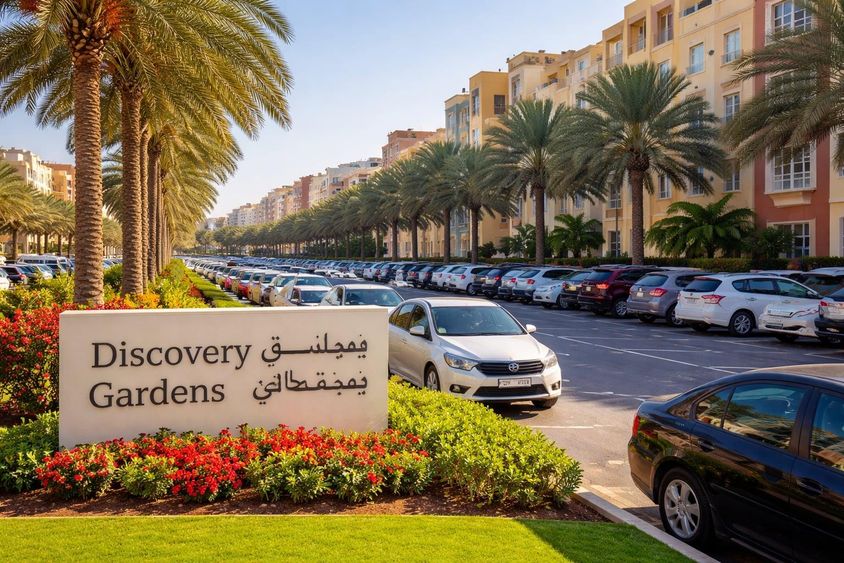
Rethinking Parking Fees in a Popular Dubai Neighborhood
In the continuously evolving urban environment of Dubai, transportation and parking issues are among the most sensitive topics, especially in densely populated communities. In the case of Discovery Gardens, this problem has become increasingly prominent in recent times, so it's no surprise that following the introduction of a regulated parking system, new modifications have been made. From April 15th, Parkonic significantly revamped the subscription parking fees, a change that directly affects residents, tenants, and those traveling in the area.
Why was the change necessary?
The original goal of the paid parking system was to reduce congestion and make the use of parking spaces more transparent. Discovery Gardens is a middle-income residential community where many families live, often with multiple cars. In the previous system, although each apartment received one free parking permit, significant costs were incurred for the second or additional vehicles.
Many believed the initial fees were too high, especially in an environment where housing costs alone are already a substantial burden. Based on residents' feedback, the monthly subscription, for example, was 945 dirhams, representing a disproportionate expense for many families alongside maintaining a second car.
This pressure eventually reached decision-makers, and Parkonic introduced a new fee structure, taking into account community feedback.
The new fees: a noticeable relief or just adjustments?
The new rates effective from April 15th show a significant reduction. The monthly subscription has been reduced to 672 dirhams, the quarterly package is 1,999 dirhams, the half-year package is 3,999 dirhams, while the annual subscription is 4,999 dirhams. At first glance, these amounts appear indeed more favorable, especially compared to previous fees.
The question, however, is whether this reduction is sufficient for residents. For an average family, where using two cars is a daily necessity, even the reduced fees can represent a significant monthly expense. However, the annual package might be proportionally more favorable for those planning long-term in the area.
Thus, the change appears to be more of a compromise solution: the service provider responded to the criticisms, but the fundamental logic of the system has not changed.
The system's operation and the registration process
The parking system's operation remains based on digital foundations. For residents, the first parking permit is available for free, but it needs to be activated through the Parkonic system. This requires several documents, such as proof of ownership, a rental agreement, and the so-called Ejari document.
The process is not immediate, as all data is verified, so approval may take some time. After registration, users receive a special identifier code with which they can activate parking rights through the mobile application.
This system clearly points towards digitalization, but can pose challenges for those less experienced with online administration.
Visitor parking: dynamic pricing
Not only residents, but also visitors have adopted changes. The parking fee varies depending on the time of day: between 8 AM and 5 PM, it's 4 dirhams per hour, while between 5 PM and midnight, it's 6 dirhams per hour. Parking is free from midnight to 8 AM.
This dynamic pricing specifically aims to reduce the burden during daytime peak periods, while encouraging nighttime use. Such a system can be effective in distributing traffic but also requires more predictable costs from visitors.
Social impacts and residents' reactions
The issue of parking fees goes beyond mere transportation problems. A community's quality of life is directly influenced by how easily and at what cost they can manage everyday mobility.
In the case of Discovery Gardens, many residents felt that previous fees placed a disproportionate burden, especially for those living with families and using multiple vehicles. The introduction of new fees may alleviate this tension but does not necessarily fully resolve the problem.
The role of community feedback has clearly gained importance, as the current modification shows that providers are forced to consider residents' opinions, especially in a competitive and rapidly changing city like Dubai.
The future direction: regulation and sustainability
The transformation of parking systems is not a unique phenomenon but part of a global trend. Cities are increasingly striving to optimize available space, reduce traffic, and encourage more efficient forms of transportation.
In Dubai's case, this is especially important, as the city's infrastructure is continuously developing while the population and the number of cars are also increasing. Regulated parking is a tool that can help balance demand and supply.
The modifications introduced in Discovery Gardens are not just a local decision but part of a broader strategy that aims for more sustainable urban operations.
Summary
The new parking fees introduced by Parkonic are clearly interpreted as a response to residents' feedback. Although the reduced rates partially alleviate the burdens, the system remains paid for households with multiple vehicles.
The most important message of the change might not lie in the prices themselves, but in the fact that community opinions can influence the development of services. As Dubai progresses, this type of dialogue becomes increasingly important, potentially resulting in a more livable and balanced urban environment in the long term.
If you find any errors on this page, please let us know via email.


