Dubai: Reality Beyond the Online Narratives
Dubai is Not Empty: Reality is More Complex than Online Narratives
In recent weeks, more and more online content has suggested that regional tensions have caused Dubai to become empty, tourism to decline, and the city's operations to slow down. However, based on on-site experiences, the reality is quite different. Beneath the surface, it's not panic but adaptation that takes place, while everyday life continues to operate within stable frameworks.
The Difference Between Appearance and Reality
News circulating in the digital space often exaggerates uncertainties. A single notification, alert, or security measure can easily create the impression that the city's operations are faltering. In reality, however, these events typically last for a short period, and normalcy quickly resumes.
This is precisely what happens in Dubai: warnings occasionally arrive on mobile phones, but these are more precautionary in nature. Residents and visitors have accustomed themselves to this type of functioning, so the reaction is not panic but conscious adaptation.
Fully Booked Flights, Continuous Arrivals
One of the most crucial indicators is always air traffic. If a city truly 'empties out,' it is first reflected in the occupancy of flights. However, in the case of Dubai, the opposite can be observed.
Flights continue to operate with high occupancy. This means that people are not massively canceling their travels, and interest in the city has not drastically declined. The willingness to travel remains stable, which is a clear signal for both tourism and business.
This is particularly important because, during times of global uncertainty, people generally postpone their travels. However, that is not happening here—it’s more of a cautious yet continuous presence.
Shopping Malls: Not Peak Hours, But Far from Empty
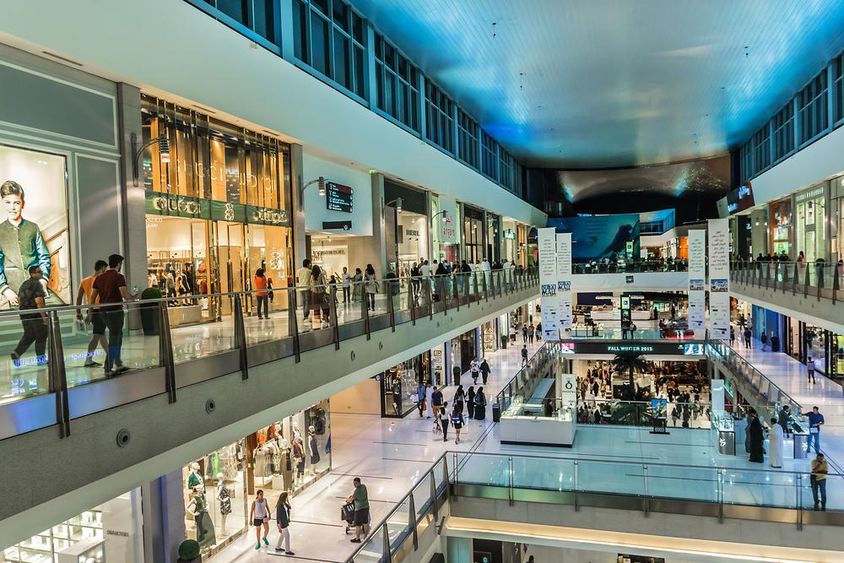
One of the city's best 'thermometers' is always the traffic in shopping malls. The example of the Mall of the Emirates clearly shows the current situation.
On a weekend evening, the picture is not the usual peak crowd, but it is by no means an empty space. The shops are open, dining venues operate, and there's even waiting in some places. The difference is more noticeable in pace and the level of crowding.
This kind of 'looser' traffic is particularly advantageous for many: shorter lines, calmer environment, faster service. Thus, the city hasn't stopped; it has just slowed down a bit.
Urban Life: Calmer, Yet Stable
Different parts of Dubai have reacted differently to the situation. In areas like Downtown Dubai or the Sheikh Zayed Road, everyday life continues practically undisturbed.
People work, meet, go to restaurants, and live their usual routines. Transportation works, services are accessible, and the city's infrastructure is stable.
Conversely, in areas closer to the airport—such as Mirdif—some disruptions were noticeable for a short period. However, these were localized and temporary phenomena, not systemic problems.
No Panic, Just More Conscious Presence
One of the most interesting observations is that the behavior of residents and visitors has not changed radically. There is no mass buying, no rush, no nervousness.
The atmosphere is more of quiet mindfulness. People follow the news, respond to notifications, but do not let it completely rewrite their daily lives. This kind of stability is crucial for a city that functions as a global business and tourism hub.
Real Estate Market: Subtle Shifts
The current situation does not affect all segments equally. In the real estate market, for instance, certain changes are already visible.
In the luxury category—especially for high-value villas—a slight correction can be observed. Prices decrease in some cases, and the number of transactions is more restrained. However, this does not signify a collapse but a natural reaction to the more uncertain environment.
Conversely, the mid-range real estate market has remained stable. Demand continues to be present in this segment, and prices have moved less. This indicates that the city’s long-term appeal has not been questioned.
Business Life: Momentum Unbroken
For businesses, the most important question is always whether operations can be sustained. In Dubai's case, the answer is unequivocally yes.
Business meetings are taking place, services are operational, and orders have not disappeared. Although decision-making may have become more cautious, the market has not stopped.
Many see opportunities precisely in this situation: in a less crowded, yet still active market, it’s easier to build a position. This is particularly true for sectors where personal presence and relationships play a key role.
The Advantages of a 'Calmer' Dubai
Interestingly, the current situation has brought not only challenges but also advantages. The city is less crowded, services are faster, and the experience is more pleasant for many.
This kind of balance is rare in a global hub known for constant bustle. Now, however, a transitional state has emerged where the dynamism remains but overcrowding has decreased.
Conclusion: Dubai Has Not Stopped
The most important lesson is that there can be a significant difference between external perception and reality. Although the news often amplifies uncertainty, on-site experiences show that Dubai continues to function, live, and develop.
Flights are full, shopping malls are operational, and people are living their everyday lives. The city is not empty—it has simply become a bit calmer.
This is not a sign of weakness but of strength: evidence that a global city can adapt while maintaining its functionality even in uncertain times.
If you find any errors on this page, please let us know via email.


