Dubai Real Estate Thrives Amid Global Tensions
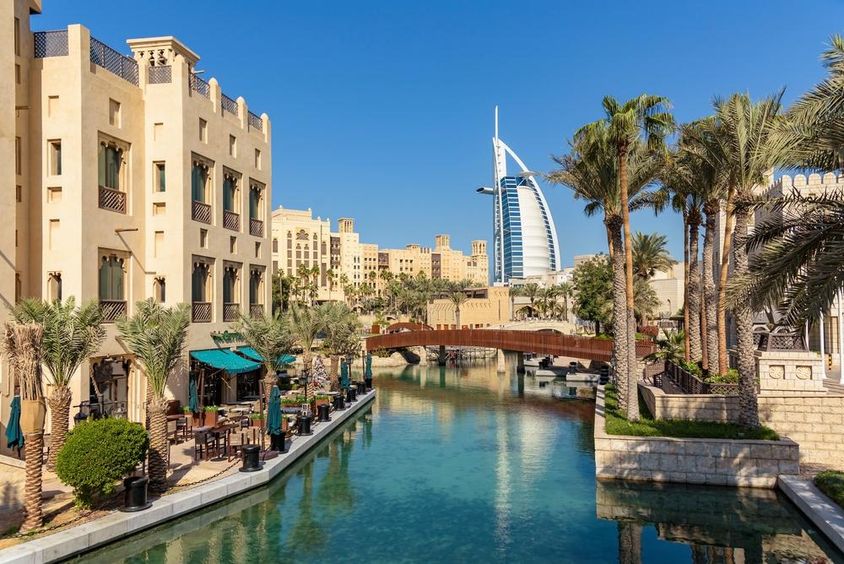
Dubai Real Estate Market: Million-Dollar Deals Amid Geopolitical Tensions
Dubai Real Estate Resilience
Recent geopolitical tensions have made many investors worldwide more cautious. It's often observed in financial markets that uncertain situations trigger quick reactions: stock prices may drop, investors turn to safer assets, and many economic sectors may temporarily slow down. Despite this, the Dubai real estate market has once again proven that it operates with a unique dynamic and often reacts differently to global events.
The United Arab Emirates' real estate sector continues to showcase stable operations, and according to market participants, most development projects, sales, and investments are proceeding as usual. A clear demonstration of this is a recent real estate transaction in Dubai exceeding $100 million, signaling that interest in high-value investments remains robust.
A More Cautious Investment Sentiment
Although the market's fundamentals are stable, the short-term investor sentiment has become somewhat more cautious. Many buyers are currently taking a wait-and-see approach, especially those who haven't committed to a specific property purchase yet.
However, investors who have already signed preliminary agreements or initiated the buying process generally continue with their transactions. Most of the pre-prepared deals are moving forward, with several projects engaged in price negotiations and contract discussions.
This phenomenon highlights that the Dubai real estate market doesn't immediately and drastically respond to geopolitical events. Most investors prefer to wait, monitor developments, and only modify their decisions if the situation changes permanently.
The Natural Stability of the Market
Real estate markets generally react slower to economic and political changes than stock markets. A stock's price can change significantly in a single day, while a property's value typically adjusts over a longer period.
On the Dubai market, significant price drops usually occur only if a mass selling wave begins. Such a situation can develop, for example, if there's a significant economic downturn, massive job losses, or if interest rates rise drastically.
Currently, however, these conditions do not exist in the United Arab Emirates. The economy is stable, the labor market is strong, and population growth continues to generate significant demand in the real estate market.
Reactions of International Investors
A substantial portion of Dubai real estate buyers are foreign investors. This means that global mood changes can affect the market, especially in the short term.
In the current situation, international investors are observing regional events more closely than local residents. Many foreign buyers consider it essential for the geopolitical situation to remain stable before investing significant amounts.
Nevertheless, interest hasn't disappeared. It's more about some investors taking time for decision-making, while others continue actively seeking opportunities.
Opportunities in Uncertain Times
Experienced investors often view uncertain periods from a different perspective. For them, such situations can even create opportunities.
It may happen that some owners wish to temporarily exit the market, perhaps because they need quick liquidity or are uncertain about short-term prospects. In such cases, properties may be sold below market value.
Investors with available capital often take advantage of these opportunities. By executing quick transactions, they can purchase at more favorable prices and later sell the property at a higher value after market stabilization.
This strategy is particularly common in the secondary market, where existing homes and villas change hands.
New Projects Continue Apace
Developers also emphasize that the sector's operation is uninterrupted. The launch of many new projects continues as planned, and real estate developers are not postponing announced investments.
The pricing of project launches hasn't changed significantly either. Most new developments enter the market at the same price level determined before the current geopolitical situation.
At the same time, developers often offer more flexible payment structures to buyers. This means purchasers must make a smaller initial payment than before, while they can pay the remaining amount over a longer period.
This approach helps maintain investor interest and facilitates market entry for those seeking long-term investments.
Long-term Prospects for Abu Dhabi and Dubai
The stability of the United Arab Emirates' real estate market is supported not only by investor interest but also by economic foundations. The country has shown significant economic growth in recent years, with a continuously expanding population.
Urban centers like Abu Dhabi and Dubai are attracting more international professionals, entrepreneurs, and families. Jobs, educational institutions, and quality of life all contribute to many planning long-term stays in the country.
This is especially true for families, who often seek stable housing and consider purchasing their property. Such buyers are less reactive to short-term market fluctuations as they make decisions with a longer time horizon.
What Determines the Future Direction?
The future development of the Dubai real estate market largely depends on how quickly the geopolitical situation stabilizes. If tensions ease quickly, many analysts believe the market can swiftly return to its previous growth path.
In the short term, prices may stabilize or show slower growth. However, long-term factors supporting the Dubai real estate market remain strong.
International capital typically avoids uncertainty, but once outlooks become clear again, it quickly returns to markets with stability and growth potential. In this regard, Dubai has repeatedly proven in recent years that it can remain an attractive investment destination.
Stable Market in a Turbulent World
Overall, the current operation of the Dubai real estate market shows that the sector is resilient to short-term geopolitical tensions. While some investors have become more cautious, large-value transactions continue, new developments commence, and long-term demand remains strong.
The market's stability is supported by strong economic fundamentals, continuous population growth, and international investor interest. Therefore, many experts believe that the Dubai real estate market will continue to maintain its growth path in the future, even as the global environment becomes more uncertain.
If you find any errors on this page, please let us know via email.


