Dubai Introduces Hyper-Speed Underground Travel
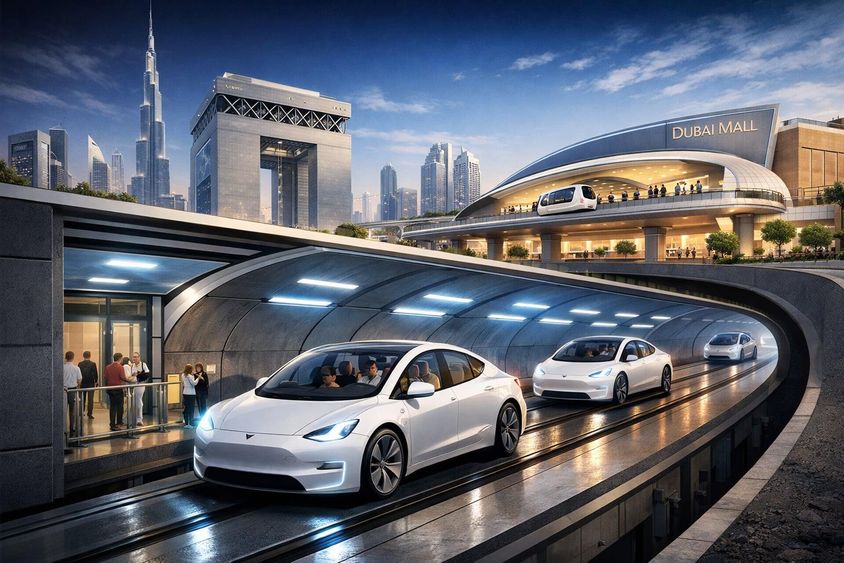
Dubai Loop: A New Era in Urban Transport
Dubai makes history once again by introducing the Loop transportation system—the second in the world after Las Vegas—which could become one of the most innovative solutions for future urban mobility. The project has officially announced its first two locations: the Dubai International Financial Centre (DIFC) and the Dubai Mall area will serve as starting points. The aim is to establish a tunnel system that provides fast connections between key areas of the city.
The Future Underground: What is the Dubai Loop?
The essence of the Dubai Loop is a one-way, low-pressure tunnel system offering fast, safe, and uninterrupted travel for passengers. Often dubbed the "underground Tesla," the system will use electric vehicles operating on tracks or guideways, minimizing surface traffic and reducing emissions.
The plan is for the entire network to stretch 24 kilometers with a total of 19 stations. The project's cost is estimated at approximately 2.5 billion dirhams. The first phase, currently underway, will cover 6.4 kilometers with four stations between DIFC and the Dubai Mall, expected to cost 600 million dirhams.
Three Minutes from DIFC to the Dubai Mall
Under current travel conditions, a journey between DIFC and the Dubai Mall can take up to 20 minutes—especially during rush hour. With the Dubai Loop, this time could be reduced to just three minutes. This represents a revolutionary advancement for both commuters and tourists, making travel faster and far more predictable.
Initially, the system will operate around 100 cars within the tunnels, capable of carrying up to 13,000 passengers per day. This is particularly crucial in densely visited city districts where traffic congestion is a severe problem.
Cost-Effectiveness and Innovation Hand in Hand
According to the Roads and Transport Authority (RTA), the Loop project is not only technologically advanced but also cost-effective. Traditional tunnel excavation methods cost around 125 million dirhams per kilometer, while the Loop's new, gradual deepening technology reduces this to around 70 million dirhams per kilometer. This makes construction not only cheaper but also faster.
The RTA has signed a collaboration agreement with The Boring Company (TBC), associated with Elon Musk. Musk compared the project to a "wormhole," where one enters at one point and almost instantly appears at another, with minimal energy and time consumption.
First Phase: Construction and Expected Completion
The construction agreement for the section between DIFC and the Dubai Mall has already been signed, and the kickoff won't be delayed. The project is expected to conclude within one to two years. If construction progresses faster than planned, the next phases could start earlier.
One of the unique features of the Loop project is that the system will not only be underground but will also include surface-level stations, ensuring easy access from different parts of the city.
How Much Will It Cost?
The pricing for the service is yet to be finalized, but RTA representative Hamad Alshehhi indicated that competitive pricing is expected, especially compared to other modes of transport. The goal is clear: to offer a system that is not only technologically advanced but also attractive in terms of value for residents and visitors alike.
Dubai as a Transportation Laboratory
The Dubai Loop is more than just another transport project. It's part of a comprehensive strategy to make Dubai one of the world's smartest and most modern cities. The system aligns with the city's long-term sustainability goals and exemplifies the progressive approach that has characterized Dubai's development in recent years.
The RTA increasingly focuses on innovative solutions that reduce surface traffic, curb carbon emissions, and create a new standard of living for the city's inhabitants.
Summary
The launch of the first phase of the Dubai Loop marks a milestone not only for Dubai but also in the history of global urban transportation systems. A project is being realized that brings not only technological novelty but tangible improvements to urban life. If the project proceeds as planned, within a few years, it may be possible to reach our favorite shopping center or business district from any point in the city in just a few minutes, without congestion or delays.
If you find any errors on this page, please let us know via email.


