Dubai Cuts Travel Time by Five Minutes
Travel Time Reduced by Five Minutes on Dubai's Key Traffic Corridor
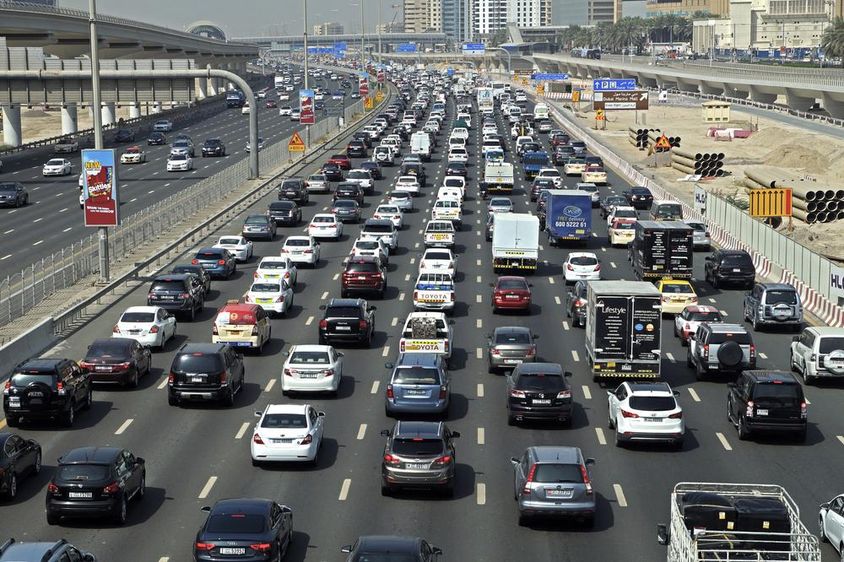
Dubai's city leadership has embarked on another major infrastructural development aimed not only at reducing travel times in the long term but also significantly improving residents' quality of life and the city's mobility. The new investment's goal is to reduce the previous twenty-minute travel time to just five minutes at the intersection of Al Awir Road and Sheikh Zayed bin Hamdan Al Nahyan Street. This traffic corridor is one of the city's busiest sections, making this development a particularly significant step for the future of transportation in Dubai.
The project has been awarded by the Dubai Roads and Traffic Authority (RTA) and is part of a comprehensive strategy designed to meet the needs of the city's growing population and urbanization demands. The developments are set to increase the section's capacity from 5,200 vehicles per hour to 14,400 vehicles per hour, representing a 176 percent increase. Work is scheduled for completion in the third quarter of 2028.
Investment Details
A key element of the project is the construction of a 2,300-meter bridge, which will be accompanied by lane expansions, service road developments, and new entrances and exits. These improvements directly serve the residential and development areas where more than 600,000 people live or spend time daily. RTA aims to provide smoother traffic and better mobility in the affected area through development.
The current roundabout at the intersection of Sheikh Zayed bin Hamdan Al Nahyan Street and Al Awir Road will be replaced by a grade-separated junction, which will allow free flow in all directions. The main bridges will feature four lanes in each direction, and separate right and left turn ramps will also be constructed, each with two lanes.
Additional Junction Developments
As part of the project, a bridge will also be built at the intersection of Al Awir Road and Emirates Road, serving traffic toward Sharjah and Al Awir. In addition, parallel service roads will be developed along both main roads, providing secure access to surrounding developments. This is particularly important in areas where residential zones and commercial centers alternate, as direct accessibility speeds up and simplifies daily travel.
Significant work is also taking place at the intersection with Al Manama Street. Here, Sheikh Zayed bin Hamdan Al Nahyan Street will be expanded from two lanes to four in both directions. The current signalized junction will also be upgraded to more efficiently manage traffic and provide safer access to surrounding developments.
Continuation of Previous Developments
The current investment is part of a broader program covering the entire length of Sheikh Zayed bin Hamdan Al Nahyan Street. Previously, a 25-kilometer section between Dubai-Al Ain Road and Al Yalayis Street was modernized, which included the construction of multiple junctions and temporary traffic solutions.
These included two bridges at the Dubai Silicon Oasis intersection, each 120 meters in length and featuring four lanes in each direction. Their combined capacity is also 14,400 vehicles per hour. Below the bridges, a signalized junction operates, facilitating traffic flow toward Dubai Silicon Oasis, Zayed University, and the Academic City roundabout.
Why Is This Development Important?
For years, Dubai's city leadership has consistently worked on developing the transport network, which not only aims to reduce traffic congestion but also to increase energy efficiency, reduce the number of accidents, and promote sustainable urban mobility. The current investment plays a crucial role in making the city center and eastern regions, such as Al Awir, Dubai Silicon Oasis, or Academic City, more accessible quickly and conveniently.
The 15-minute time gain can bring significant changes for residents, businesses, and logistical operators alike. The reduced travel time could lead to saving thousands of hours daily on aggregate, boosting productivity and decreasing fuel consumption.
Summary
Dubai has reached another milestone in its infrastructural development. The improvements at the intersection of Sheikh Zayed bin Hamdan Al Nahyan Street and Al Awir Road not only enhance transportation efficiency but also improve urban quality of life. The modern bridges, expanded lanes, and service roads all contribute to shaping Dubai into a more livable, quickly traversable city. This investment exemplifies how the city is preparing for the future—where population, economy, and mobility can continue to develop in balance.
Press release from Dubai Roads and Traffic Authority (RTA).
If you find any errors on this page, please let us know via email.


