Community Power Transforms Urban Challenges in Dubai
Community Unity in Dubai: Residents Become Essential Part of the City
The functioning of modern cities is often evaluated based on their spectacular infrastructure, advanced transportation systems, and technological solutions. However, there are moments when it becomes clear: the true strength of a city lies not only in its buildings or systems but in its people. This is particularly true in Dubai, as the extraordinary storm situation in March clearly demonstrated.
The heavy rains associated with the so-called Azm storm presented serious challenges to multiple areas of the United Arab Emirates in a short time. As a result of the intense rainfall, roads were flooded, transportation difficulties emerged, and quick intervention was needed in numerous places. Yet what was truly remarkable was not just the swift response of the authorities but the unprecedented unity of the residents.
When Private Property Becomes a Community Solution
One of the most memorable stories relates to a resident who opened his own yard to passing motorists. Due to flooded streets, many drivers found themselves in difficult situations, and traffic in certain areas practically came to a standstill. In this critical moment, the private property became a temporary detour, allowing vehicles to pass safely.
This decision was not only a practical solution but also held symbolic significance: it demonstrated that the functioning of a city does not solely depend on official infrastructure but also on whether people are willing to help one another.
Couriers Who Deliver More Than Just Packages
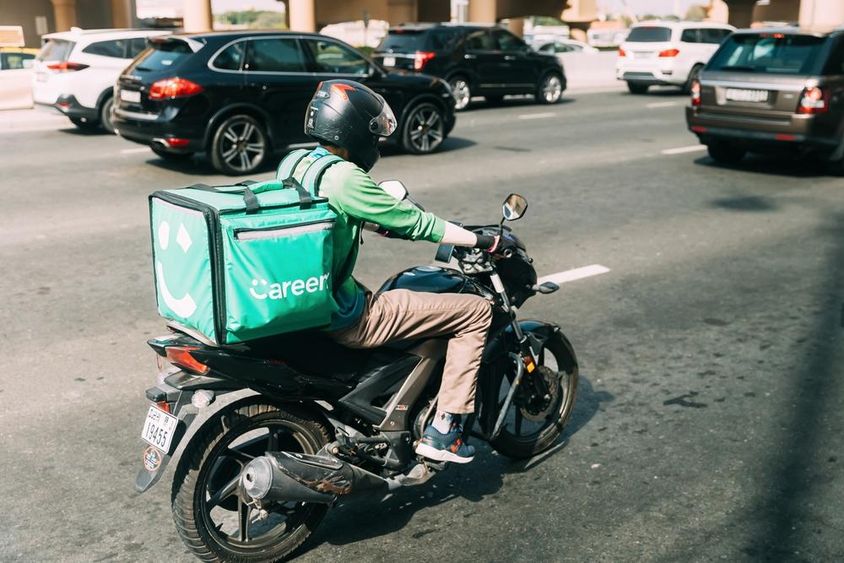
During the storm, delivery couriers played a particularly important role. They are the invisible motors of urban life in everyday situations, but in this situation, their role went far beyond their usual duties.
Several couriers actively participated in draining water, helping to remove accumulated rainfall from the roads. Additionally, they contributed to maintaining traffic safety by warning others about dangerous sections and assisting in directing traffic. These volunteer activities were not part of their job descriptions, yet they played a crucial role in the city's swift recovery.
Digital Responsibility and Rapid Response
Modern technology also played an important role in crisis management. For instance, a resident reported a sidewalk defect through a mobile application, which the authorities promptly repaired. This case clearly shows how digital tools and civic responsibility can complement each other.
Social media also proved to be an effective platform: some individuals used these channels to draw attention to noise reduction and environmental protection, thereby contributing to improved quality of urban life even amidst a crisis.
Authorities and Community: A Working Model
City management and institutions also responded quickly and in a coordinated manner. Thousands of professionals and a significant number of vehicles were mobilized to ensure that drainage, road cleaning, and traffic restoration occurred as quickly as possible.
What makes this case truly special, however, is the cooperation between authorities and residents. It wasn't a one-sided intervention; instead, an integrated model was realized where all participants contributed to the solution. This type of cooperation is rare and exemplary.
Recognition Beyond the Individual
In the aftermath of the storm, several individuals were recognized for their outstanding contributions to managing the situation. These recognitions were not only about the individuals but also conveyed a message to society: community responsibility is a value worth following.
Such initiatives contribute in the long term not only to the functioning of a city but also to its development—not only in terms of infrastructure but also in terms of community mindset.
The Secret to a Swift Recovery
Despite the extraordinary weather conditions, Dubai surprisingly quickly returned to normal operations. This was due not only to technical preparedness but also because the community actively participated in the restoration.
The collaboration among residents, volunteers, and various organizations prevented problems from accumulating and ensured immediate solutions were found. This flexibility and rapid response were crucial factors.
A City that Learns and Grows
The events of March not only posed challenges but also provided an opportunity for learning. Such situations highlight where the system's weak points are and how these can be strengthened.
In the case of Dubai, it is clear that in the future, there will be an even greater emphasis on sustainable infrastructure, the development of drainage systems, and strengthening community involvement.
Summary: More Than Just a City
Based on these events, Dubai is not just a developed city but a community where people play an active role in everyday operations. The March storm showed that true stability lies not just in systems but in people's attitudes.
These examples strengthen social cohesion and contribute in the long term to the creation of a more livable, sustainable urban environment. A city's value is not only determined by how quickly it is built but also by how well its residents can cooperate when there is a real need for it.
If you find any errors on this page, please let us know via email.


