Balancing Work and Family in Digital Education
Parents and Work Under the Shadow of Digital Education in the UAE
The UAE's educational system has often proven its ability to quickly adapt to changing circumstances in recent years. The implementation and expansion of distance learning is not a new phenomenon, but it always brings new challenges—especially for working parents. The current situation, where schools are transitioning to online education even after the spring break, highlights how fragile the balance between work and family life can be.
Impact of the Sudden Transition on Families
The extension of digital education came unexpectedly for many families. Although the clear aim of the decision is to ensure the safety of students and the continuity of education, it presents significant organizational challenges in everyday life. Working parents have to suddenly find solutions for child supervision while simultaneously fulfilling their own job responsibilities.
Those who lack family or external support find themselves in particularly difficult situations. The absence of grandparents, the high cost, or simple unavailability of babysitters all contribute to parents having to manage alone. This situation poses serious physical and mental stress.
Work and Learning in the Same Space
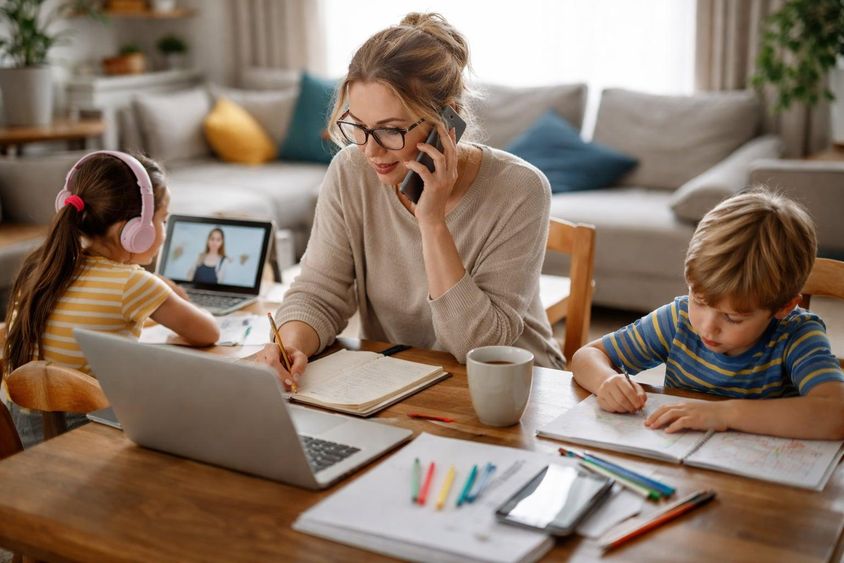
The home environment simultaneously becomes an office, school, and living space. This multifunctional use requires significant compromises. Many homes lack enough separate rooms for everyone to carry out their tasks undisturbed. During an online meeting, background noise might include a math lesson, or a child may ask for help with a task.
This continuous interruption reduces work efficiency and may also affect the children's learning experience. Maintaining concentration becomes challenging on both sides, potentially leading to performance decreases in the long term.
The Growing Demand for Flexible Work Arrangements
The situation clearly shows that traditional office-based work is not sustainable in many cases. Many roles could allow for remote work, yet many employers insist on physical presence.
For working parents, flexible working arrangements are not a matter of convenience but a necessity. The option to work from home can significantly reduce stress and allow parents to manage their time more effectively. This is particularly vital for those raising multiple children of different ages.
At the federal level, measures have been introduced to allow flexible or remote working arrangements for parents caring for their children. However, in the private sector and some local institutions, similar decisions have not been made everywhere, further increasing inequalities.
Particularly Difficult Situations for Families with Young Children
For parents of young children, the situation is even more complex. An infant or toddler requires constant attention, making uninterrupted work virtually impossible. Such families often find themselves needing to take leave or even choose unpaid absence.
This can lead to long-term financial uncertainty, especially in single-income families. Such situations highlight that workplace flexibility is not only a matter of convenience but also an economic issue.
Technical Challenges and Digital Overload
Distance learning presents not only organizational but technical challenges as well. In the case of multiple children, several devices and a stable internet connection are often needed. A lack of devices or technical problems further complicates daily life.
Moreover, the constant demand for digital presence can lead to mental exhaustion. Long hours in front of screens are taxing for both children and parents. Eye strain, decreased attention, and general fatigue are increasingly common.
Flexibility and Limits of the Educational System
The UAE's educational system quickly responded to the situation and managed to ensure the continuity of education. The implementation and maintenance of online education require significant organizational and technological efforts, which institutions have successfully executed.
However, the limits of the system are also becoming increasingly apparent. Education is not just about delivering content but also a communal experience, which is harder to achieve in the online space. Maintaining students' motivation and the lack of personal connections could present challenges in the long term.
Employer Responsibility and Future Directions
The current situation clearly shows that employers play a crucial role. Companies that can offer flexible solutions may gain a long-term competitive advantage. Employee loyalty and satisfaction can significantly increase if workers feel that their life circumstances are considered by their employer.
In the future, hybrid work models combining office and home work will likely become increasingly common. This not only provides an answer to current challenges but could also create a more flexible, people-centered workplace culture.
Seeking Balance in a New Reality
The extension of distance learning once again highlights that one of the greatest challenges of modern life is achieving balance. Harmony between work and family is not self-evident but requires continual adaptation.
Families living in the UAE are once again proving their adaptability. However, the situation carries a clear message: the workplaces and educational systems of the future must be even more flexible and empathetic to truly support people amidst everyday challenges.
If you find any errors on this page, please let us know via email.


