Balancing Distance Learning and Safety in UAE
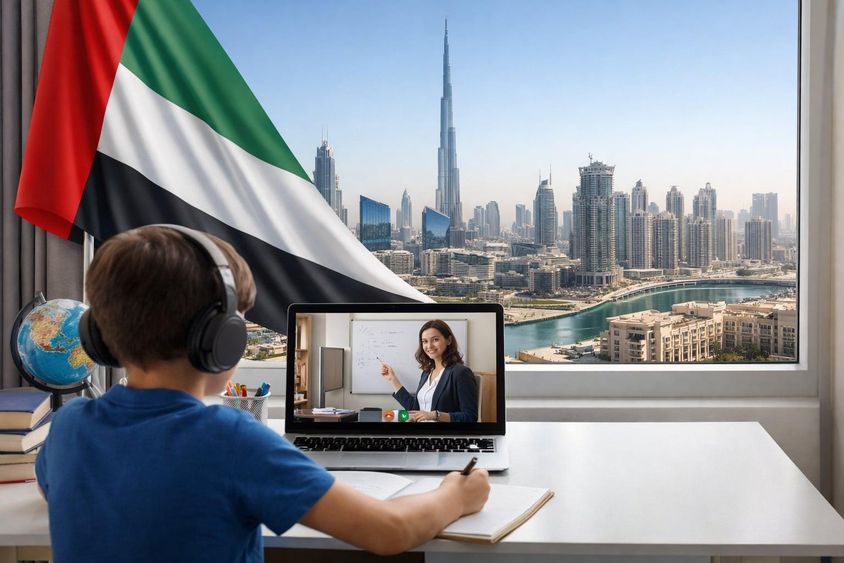
Distance Learning and Security Balance in the UAE
Recent events have once again highlighted that education today is no longer confined within the walls of a school. In the UAE, families are currently experiencing a period where distance learning is not just an alternative but a deliberately applied tool for community protection. Before the end of the two-week online education period, authorities reassess the situation, showcasing that decisions are based on continuous analysis rather than routine.
The most important aspect is clear: the safety of students. Not only in schools but throughout society. This mindset was already present during the pandemic period and is now apparent again, showing that the system can quickly react to changing circumstances.
Not a Temporary Solution, but a Conscious Strategy
Distance learning is still perceived as a forced solution in many places, but in the UAE, it is already part of a developed system. Educational institutions are prepared to switch between online and in-person formats at any time, causing no disruptions to the delivery of educational materials or evaluation.
This flexibility is especially important in a region where environmental, economic, or geopolitical factors can change swiftly. The goal is not to maintain traditional operations at all costs but to ensure the continuity of education in any situation.
Decision-makers have made it clear: the two-week period is not a fixed framework but a checkpoint. If necessary, it will be extended, and if the situation improves, schools may return to normal operations. This kind of dynamic management is one of the keys to keeping the system stable.
Crisis Management on Multiple Levels
The UAE's crisis management model is not based on a single measure but on a multi-layered system. The first level is institutional stability, ensuring that governmental and educational organizations continue functioning seamlessly. This forms the base upon which everything else is built.
The second level is social cooperation. Without active participation from the population, the best system cannot function effectively. Unified communication, following guidelines, and disciplined attitudes all contribute to making the situation manageable.
The third element is quick decision-making. This is particularly crucial in situations where changes in the environment can occur within hours or days. The introduction or extension of distance learning is not the result of lengthy negotiations but the consequence of quick, data-driven decisions.
Learning from Past Experiences
One of the greatest advantages of the UAE is that it did not start building this system now. During previous global health situations, mechanisms were already developed that are now in operation. Various scenarios have been pre-modeled, so it's not improvisation but the activation of an already tested system.
This also means that every participant knows their role precisely. A pattern of operation has emerged between schools, authorities, and families, significantly reducing uncertainty. For students, this is particularly important because predictability is a fundamental requirement for effective learning.
The Role of Technology in Everyday Life
Distance learning wouldn't work without proper technological support. The UAE has an advantage in this as its digital infrastructure has been advanced for a long time. Using online platforms poses no obstacle for teachers or students.
Thus, education doesn't stop, it just transforms. Classrooms move to virtual spaces, but the curriculum, teacher presence, and evaluation remain. This type of continuity ensures that students do not fall behind even if they are not physically attending school.
Private Sector and Work
Besides education, the operation of the economy is also an important issue. Authorities have provided guidelines for companies, especially regarding outdoor work. In cases where external risks are present, reevaluation of activities is necessary.
However, the decision often remains in the hands of the individual organizations. This allows everyone to adapt measures to their own operations while central guidelines provide a unified framework.
Advanced Alert System
One of the most interesting elements of the UAE's operation is the forecasting and alert system. It's not a simple mobile notification, but a complex network that conveys information to the population through multiple channels.
The system is capable of sending targeted messages so that only those who are truly affected by a particular situation receive notifications. This reduces unnecessary panic while ensuring everyone is informed about important information in time.
It also shows the sophistication of the system that it adjusts its operation based on feedback. For example, reducing the volume of night alerts was a step that considered the needs of the population without compromising effectiveness.
Stable Economic and Health Background
In the current situation, it is particularly important for the population to feel that basic systems are functioning. Supply chains are stable, and food and other necessary goods are accessible. This sense of security is crucial for maintaining social calm.
Health indicators also paint a positive picture. The number of incidents is low, indicating that preventive measures are working. This is not by chance but the result of a well-established system and quick responses.
Preparing for the Future
The most important question is always what comes next. The UAE does not rely on a single scenario but considers multiple possible outcomes. Whether it's economic changes, transportation restrictions, or other challenges, preparations are in place for every eventuality.
This kind of thinking ensures stability in the long run. The goal is not to manage the immediate situation but to maintain sustainable operations under any circumstances.
Conclusion: A Working Model
The example of the UAE clearly shows that modern education and crisis management are not separate fields. The two are closely intertwined and together form a system capable of adapting to changes.
Distance learning is not a weakness but a strength. A tool that allows society to continue functioning even when circumstances would justify otherwise. Student safety, educational continuity, and social stability together form the foundation upon which this system is built.
Upcoming decisions in the next few weeks will show whether further measures are needed, but one thing is already certain: the system works and is capable of responding to any challenge.
If you find any errors on this page, please let us know via email.


