Airspace Closure Causes Dubai Flight Interruptions
Airspace Closure and Immediate Response: Temporary Flight Suspensions to Dubai
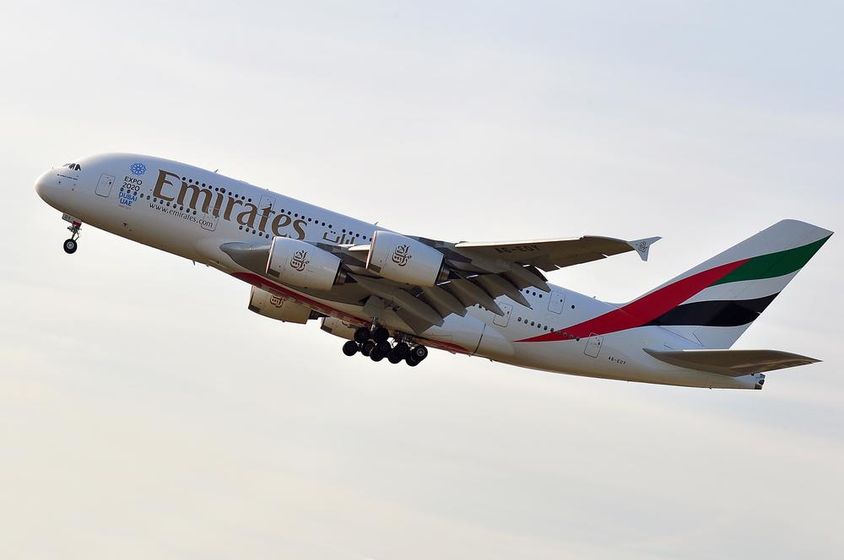
The temporary closure of airspace by the United Arab Emirates and several regional countries has triggered a domino effect in aviation, with consequences immediately felt in the international flight network. Due to the situation, Emirates has suspended its flights arriving and departing from Dubai between 12:00 and 24:00. This decision is not an isolated measure, but rather a swift and responsible response to an uncertain regional security environment.
One characteristic of modern aviation is its extreme sensitivity to geopolitical changes. A single airspace closure can reorganize, redesign, or temporarily halt entire flight networks. In this case, it's not just about schedule adjustments but a decision prioritizing safety above all.
Safety as a Primary Concern
The airline emphasized working closely with authorities in the United Arab Emirates and continuously monitoring regional developments. The safety of staff and passengers is the basis of every decision. This is not just a communication panel but one of the strictest operational principles in the international aviation industry.
When airspace closure is implemented, airlines must consider several factors: the safety of alternative routes, fuel capacity, crew working hours, ground service, and the receiving capacity of destinations. If any of these become uncertain, the most responsible decision is the temporary suspension of flights.
Dubai functions as a global hub, so such a measure not only has local but also intercontinental effects. Flights towards Europe, Asia, Africa, and Australia may be affected as many routes connect through Dubai.
Details of the 'Interruption Policy'
In response to the situation, the airline activated the so-called 'interruption policy,' applicable to customers traveling between February 28 and March 2, 2026. This mechanism provides flexible solutions for passengers under extraordinary circumstances.
According to the decision, all affected passengers have the option for free cancellation or rebooking. Those with bookings valid until March 2 can rebook their travel within the same region and on the same travel class, in the same RBD category, until March 12. Refunds are valid for unused flight coupons, and cancellation fees are waived.
Such flexibility is especially important in situations where most passengers are forced to change their travel plans not by their choice. The aim of such a policy is to minimize financial risk and maintain customer trust.
Economic and Network Impacts
Dubai is one of the most important aviation centers in the Middle East. A significant portion of international transfer traffic is concentrated here. Therefore, a temporary flight suspension affects not only passengers but also global logistics chains.
Business travel, tourism, cargo shipments, and regional connections can all be impacted. Airspace closure leads to the prioritization of alternative routes, resulting in longer flight times, higher fuel consumption, and increased operational costs.
These situations highlight how interconnected the global transportation system is. A regional security decision can spread its effects across multiple continents within hours.
Passenger Experience and Communication Challenges
In crisis situations, communication plays a key role. For passengers, the greatest uncertainty often stems not from the cancellation itself but from a lack of information. Rapid, clear, and transparent communication is thus indispensable.
Online booking systems, mobile apps, and customer service channels come under increased pressure during such times. The stability of the digital infrastructure is equally important as the replanning of flight operations.
Flexible rebooking options are not only a convenience service but also a trust-building tool. It signals to passengers that the airline is a partner in handling unforeseen situations.
Regional Tensions and the Future of Aviation
Airspace closures have become increasingly common worldwide in recent years. Geopolitical uncertainty, security risks, and rapidly changing international situations all contribute to the need for airlines to develop more flexible operational models.
Dubai is a particularly sensitive point in the global network, as its geographical location makes it a natural crossing point between Europe and Asia. A temporary suspension is therefore not just a scheduling issue but a strategically significant event.
In the future, the role of real-time risk analysis, the development of airspace surveillance systems, and the ability to quickly activate alternative routes are expected to strengthen. For airlines, resilience is not an option but a requirement.
What to Expect in the Coming Days?
The current measure is time-limited, but the developments in the regional situation may influence further decisions. If airspace restrictions are lifted and the security environment stabilizes, flights may gradually return to schedule.
The most important task for passengers is to continuously check bookings and manage potential changes in a timely manner. The flexible policy allows everyone to make decisions suitable for their own situation.
The current situation once again reminds us that aviation is not just a logistical system but also a sensitive indicator of global stability. Dubai, as an international hub, particularly reflects regional processes.
Prioritizing safety, swift operational response, and passenger-friendly compensation mechanisms together determine how an airline can handle unexpected situations. In this case, the temporary suspension of flights is not a sign of weakness but evidence of responsible operations. img_alt: EMIRATES AIRLINES Airbus A380-800 aircraft.
If you find any errors on this page, please let us know via email.


