AI Scams: A New Threat to Ramadan Giving
The Dark Side of AI in Ramadan Charity
The Ramadan period in the United Arab Emirates is about generosity, compassion, and the culture of giving every year. Communities come together, and families and businesses support those in need, while charity appeals multiply even in the digital space. Recently, however, authorities have issued serious warnings: artificial intelligence has elevated electronic begging to a new level.
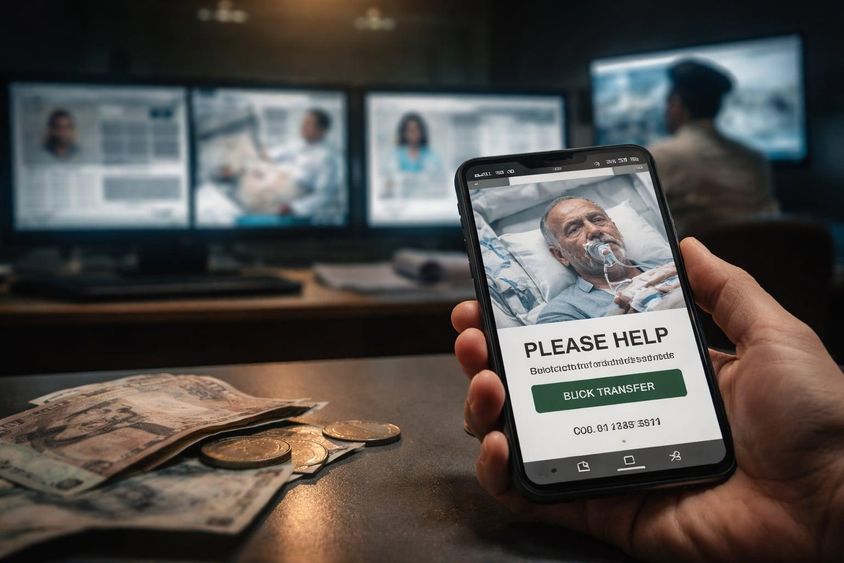
Images and videos circulating on social media are striking at first glance. Elderly people on hospital beds, children connected to machines, and trembling voices urgently asking for help. The stories are detailed, the attached documents appear official, and the visual content is often indistinguishable from reality. The problem is that many of these cases are not based on genuine tragedies, but are carefully crafted manipulations generated by artificial intelligence.
The New Era of Electronic Begging
Electronic begging has existed before, but it typically appeared in simple textual messages or posts of dubious credibility. Today, however, scammers are backed by algorithms, image-generating systems, and voice synthesizing tools. The technology enables the creation of a completely fictitious, yet emotionally powerful story in just a few minutes.
Artificial intelligence can generate realistic hospital scenes, produce official-looking medical documents with stamps and signatures, and even create personalized voice messages. These tools not only result in individual attempts but also in industrial-scale, organized digital campaigns.
Ramadan is especially sensitive from this perspective. People are more open to giving, less skeptical, and more likely to respond quickly to an urgent appeal during this time. Scammers are precisely capitalizing on this.
The Price of Manipulated Compassion
In the digital age, compassion can also be manipulated. A well-composed image or video can reach thousands of people in just a few hours. The shares trigger a chain reaction, reaching a wider audience, while no one checks its authenticity.
According to authorities, tools of artificial intelligence allow scammers to automatically mass-produce fraudulent content. A single well-constructed template can be reused with different names, varying backstories, presenting and appearing as numerous yet distinct appeals for help across multiple platforms in a short timeframe.
Such campaigns not only cause financial harm but also undermine trust. When people realize they’ve been deceived, they can easily turn away from real charitable initiatives. This weakens the entire culture of donation in the long term.
Organized Digital Networks
Authorities emphasize that electronic begging today often operates in an organized manner. It is not isolated individuals attempting it but coordinated networks that know exactly how to build an emotionally impactful narrative.
These groups appear simultaneously on multiple platforms: social network sites, messaging apps, closed groups, and even fake charity pages may be part of the system. They often create professional-looking websites that are deceptively similar to those of officially registered organizations.
Artificial intelligence plays a role not only in content creation but also in targeting. Using algorithms, they can select communities or groups with the highest propensity to donate, especially during Ramadan.
Legal Consequences in the UAE
The UAE legal system clearly acts against electronic begging and digital fraud. Regulations regarding cyber crimes prescribe strict sanctions. Unauthorized fundraising, especially if supported by manipulated content or artificially generated documents, carries criminal consequences.
Under the law, electronic begging can be punishable by imprisonment and substantial fines. In the case of an organized network, the penalties can be even more severe. Additionally, the creation and distribution of fake documents constitute a separate fraud offense.
Authorities operate special cyber defense units that scrutinize such cases with advanced digital tracking and analytical tools. Hence, it’s not only scammers who respond to technological advancements but also regulatory bodies.
The Role of the Public in Defense
Authorities regularly stress that charity should not equate to carelessness. The safest solution is to donate exclusively through officially authorized, registered charities.
A call is particularly suspicious if it asks for transfers to a personal bank account or accepts donations only in cryptocurrency. It's worth verifying the authenticity of attached documents, watching out for formatting errors, strange language, or contradictory details.
If a story is too perfectly composed, too dramatic, and demands urgent, immediate transfer, it might be a warning sign. In the digital age, emotional manipulation is often a deliberate strategy.
Suspicious cases within the UAE can be reported to the police through the non-emergency line at 901, or in urgent cases, via the emergency call 999. In Dubai, the eCrime online platform is also available for reporting digital abuses.
Preserving Charity in the Digital Age
The essence of Ramadan is compassion, solidarity, and community responsibility. However, electronic begging supported by artificial intelligence poses a challenge to these values. Technology, in itself, is not inherently bad, but in the wrong hands, it can cause significant harm.
Perhaps the greatest danger is not financial loss, but the erosion of trust. If people lose faith that they are supporting genuine causes, it can weaken the entire charitable ecosystem.
The solution is not to withhold donations but to support more consciously and verifiedly. Using official channels, verifying information, and reporting suspicious cases all contribute to ensuring that Ramadan truly focuses on compassion, not digital deception.
Artificial intelligence has opened a new era in electronic begging, but authorities can also counteract it with similar tools. The question is, how vigilant can the community remain? The value of charity must not diminish, but today the digital world requires awareness alongside good intentions.
If you find any errors on this page, please let us know via email.


