UAE's Gold Market: A New Era Begins
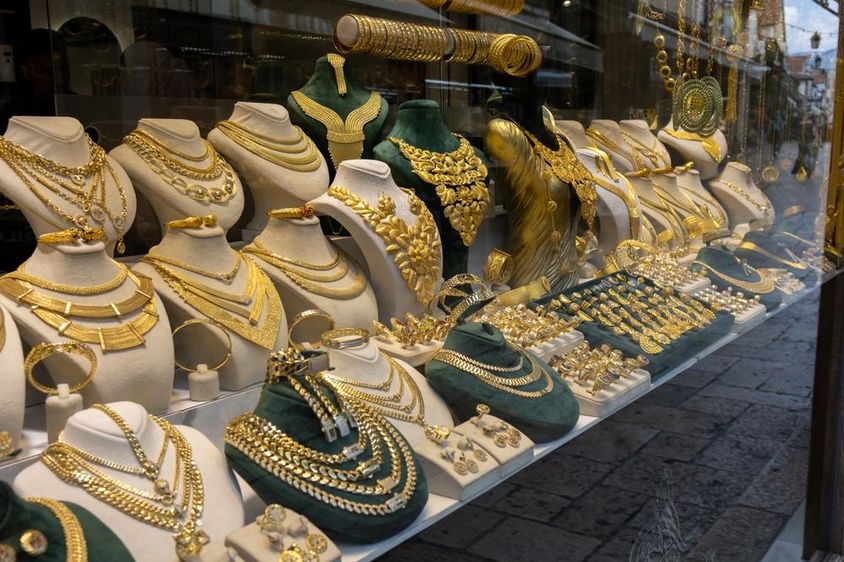
The Gold Jewelry Market's New Direction in UAE: Exchange and Upgrade in Uncertain Times
The gold market of the United Arab Emirates has been one of the world's most significant jewelry trade centers for decades. Particularly, the city of Dubai has become a global symbol of gold trading, where traditional jewelry culture, investment gold, and luxury shopping all play a defining role. However, the geopolitical tensions of recent months have created new purchasing patterns in the region. Buyers have not turned away from gold, but their behavior has clearly transformed.
Due to the military tensions in the Middle East and global uncertainty, buyers have become more cautious. This does not mean the demand for gold has disappeared. On the contrary, gold continues to be considered a safe haven asset in the UAE. The difference is more about how buyers are spending.
Gold Remains a Safe Haven
Gold has traditionally been seen as a refuge during financial and geopolitical uncertainties. When global economic prospects deteriorate or military conflicts arise, both investors and retail buyers tend to turn to gold.
In the current situation, however, purchasing dynamics differ somewhat from previous crises. Retail buyers are not necessarily buying new jewelry in large amounts but are more likely to exchange, update or modernize existing pieces. The so-called exchange and upgrade programs are becoming increasingly popular in jewelry stores.
This trend can be particularly observed in Dubai's jewelry districts, where buyers often bring in older jewelry to exchange it for new pieces or to reshape it into a more modern style.
A Shift Towards Lightweight Jewelry
One of the most significant changes can be seen in jewelry styles. Buyers increasingly seek lightweight, minimalist pieces. Instead of massive, heavy gold jewelry, thinner, more wearable modern designs are becoming more popular.
There are several reasons for this. First, the price of gold is hovering near historical highs. After the outbreak of conflict, the price of gold exceeded 600 dirhams per gram in the UAE. On the global market, the price moved close to more than 5000 dollars per ounce.
When prices are this high, buyers naturally purchase smaller quantities but do not abandon gold entirely. Instead, they choose jewelry that is elegant but contains less gold.
This minimalist trend fits well with modern fashion trends. Younger generations particularly favor simpler, clean shapes that are better suited for everyday wear.
Focus on Exchange Programs and Upgrades
Jewelry stores have adapted to new purchasing habits. Instead of focusing solely on selling new products, more and more stores offer exchange and upgrade programs.
This means buyers can credit their old jewelry toward the price of a new piece. The value of the existing gold is deducted, so the buyer only pays the difference.
This model is especially attractive to those who want to keep up with fashion but do not want to buy completely new jewelry. Additionally, from an investment standpoint, it is a logical solution as the value of gold remains.
Flexible Payment Solutions
Jewelers also employ another tool to retain buyers: flexible payment structures. Such solutions allow buyers to pay in installments or purchase at a predetermined gold price.
The so-called price guarantee systems are particularly popular. These allow buyers to lock in gold at a specific rate, even if the price rises later.
This strategy helps reduce buyer uncertainty and ensures more stable demand for stores.
Stores Focus on the Residential Market
Tourism has always played a key role in Dubai's gold market. Tourists visiting the city purchased a significant amount of jewelry, especially during holidays.
However, the current geopolitical situation has slightly restrained travel in certain parts of the region. As a result, jewelry retailers are placing greater emphasis on local residents and expats living in the UAE.
Stores offer more personalized service and spend more time advising customers. Instead of traditional, fast transactions, relationship building is increasingly coming to the forefront.
This approach can yield stronger customer loyalty in the long term.
Strengthening Digital Presence
The digitization of the jewelry market has also accelerated. Stores are offering more and more online services, including virtual showcases, online catalogs, and personalized digital offers.
Buyers often select their desired jewelry online and then finalize the purchase in-store. This hybrid model is particularly popular among younger generations.
Dubai's technological infrastructure and digital economy create an ideal environment for such solutions.
Long-term Confidence in the Dubai Market
Although the current geopolitical tensions create temporary uncertainty, industry players remain extremely optimistic about Dubai's future.
The economic foundations of the city are strong. The business environment is stable, the taxation system is competitive, and the gold trading infrastructure is world-class.
Dubai continues to be one of the most significant hubs for global gold trading. The resilience of the gold market shows that the industry can adapt to changing circumstances.
A New Era in the Gold Jewelry Market
Thus, the UAE gold jewelry market is not weakening but transforming. Buyers continue to value gold, but they spend on it in different forms. Lighter jewelry, exchange programs, and flexible payment solutions give a new direction to the market.
Industry players view this change not as a crisis but as an opportunity. Optimizing operations, new business models, and digital developments all contribute to ensuring Dubai's gold market continues to play a significant role in global jewelry trade in the future.
All this indicates that confidence in gold remains extremely strong in the UAE. Buyers may have become more cautious, but gold remains one of the most important assets for preserving value in the region.
If you find any errors on this page, please let us know via email.


