Adventurous Skies: UAE Travel Amid Turmoil
Travel from UAE Through Uncertain Airspace: Longer Trips, More Layovers, Yet a Functioning System
In recent times, geopolitical tensions in the Middle East have significantly impacted air travel, particularly flights departing from the United Arab Emirates. For travelers from Dubai, the usual fast and convenient flights have been replaced by a much more complex, often unpredictable travel environment.
Trips that previously took a few hours have suddenly stretched into full-day journeys, with multiple layovers, altered routes, and constant adaptation. However, this doesn’t mean the system has collapsed—instead, a new operational order has emerged where both passengers and airlines strive to quickly respond to changes.
Longer Trips and Detour Routes
One of the biggest changes is the significant decrease in the number of direct flights. In many cases, a direct route to the destination is no longer available, forcing passengers to travel through several cities to reach their destinations.
This means that what used to be a simple journey now involves several stages: flying to a major regional hub, then continuing to another city, and often requiring further modes of transportation. It’s not uncommon for travel time to reach 20-22 hours, even when the actual distance doesn't justify it.
In such situations, planning takes on a completely new level. Passengers must pay attention to layover times, the security of connections between flights, and what alternative options are available if a flight is canceled.
Transformation of the Airport Experience
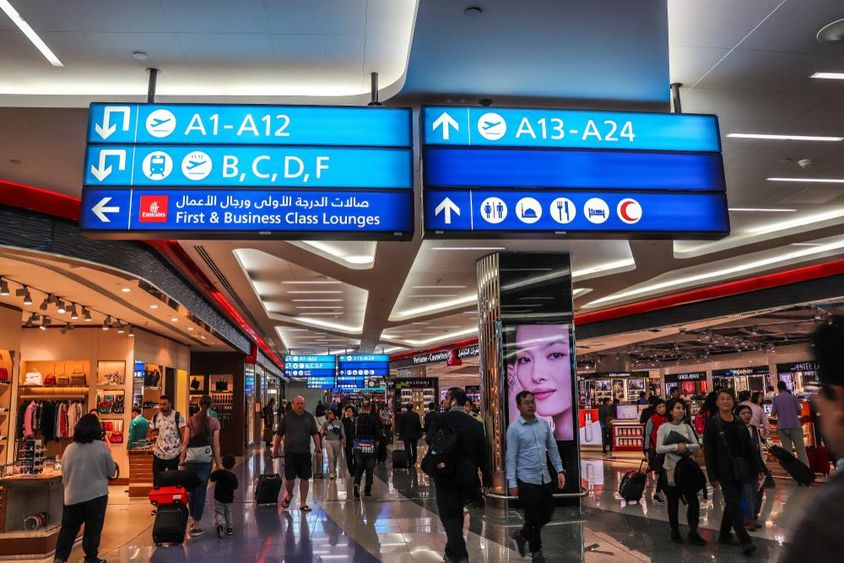
Dubai airport remains one of the best-organized hubs in the world, yet passengers clearly feel that things have changed. The usual routine has been replaced by a carefully monitored system.
More staff assist passengers, separate lines are formed for different needs, and there is greater emphasis on management. Elderly passengers, families, and those traveling urgently often receive priority, helping to keep critical situations manageable.
While this may initially seem unusual to passengers, experience shows the process is well-organized. The system has not become faster but more aware and controlled.
Flight Cancellations and Rescheduling
One of the greatest challenges is flight cancellations. Many passengers have had to completely rethink their travel plans, often shortly before departure.
In such cases, airlines strive to offer alternative solutions: rebooking on other flights, different routes, or even refunds. However, due to increased demand, these processes can be slower than usual.
Flexibility has become crucial for passengers. Those who can quickly adapt and accept changes find it significantly easier to reach their destinations.
Heightened Attention and Information Flow
At airports and on flights, it’s noticeable that more information is shared than before. Passengers continuously check gates, departure times, and potential changes.
This increased attention is not a sign of chaos, but rather awareness of the situation's sensitivity. The continuous presence of staff and management helps ensure passengers do not feel lost.
The key here is that passengers actively participate in managing their travel, rather than passively following events.
Importance of Alternative Routes
One of the most important elements of the new situation is the use of alternative routes. Passengers increasingly choose to transfer through cities that were not primary options before.
This applies not only to major aviation hubs but also to smaller regional airports. Such routes allow passengers to reach their goals, even if direct flights are unavailable.
This trend could transform travel habits long-term, as people learn that the shortest route is not always the best.
Support for Stranded Travelers in the UAE
For those who could not travel on time, certain solutions have been provided in the UAE. In some cases, it was possible for affected individuals to temporarily stay in the country until a new flight is found.
This is particularly important for those suddenly faced with flight cancellations and without immediate alternatives. Such measures help reduce uncertainty and give time for replanning.
Stabilization of the Situation
While the current situation has not returned to normal, there are clear signs of stabilization. More flights are resuming, albeit with limited frequency.
Demand remains strong, as many wish to travel, whether to return home or embark on new journeys. This means the system is continually adapting, and slowly, step by step, approaching normal operations.
What We Can Learn From This Period
One of the most important lessons from this period is that travel today is no longer a static process. Those departing from the UAE, particularly Dubai, must be prepared for plans to change.
Flexibility, quick decision-making, and continuous monitoring of information have become crucial. Passengers who can adapt do not only reach their destinations but also experience significantly less stress during travel.
Overall, despite longer routes and more complex planning, the system works. Passengers reach their destinations, even if sometimes through detours—and this may be the most important factor in the current situation.
If you find any errors on this page, please let us know via email.