Abu Dhabi's Smart Transportation Revolution
Abu Dhabi's New Era of Transportation
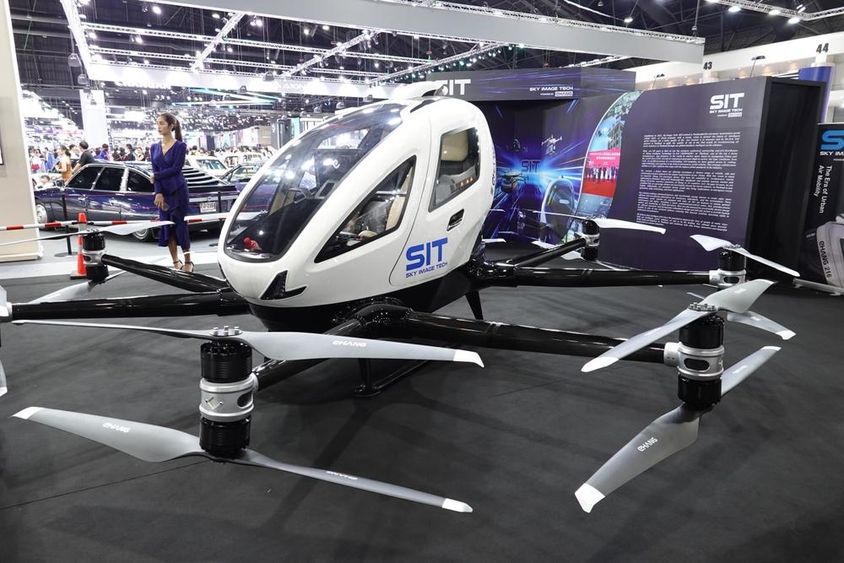
Abu Dhabi is on the brink of a spectacular transformation in transportation, which could not only simplify daily travel but also elevate the way the city's residents and visitors think about moving around. The emirate's leadership is working on an integrated mobility system where land, sea, and air transportation are not separate services, but part of a connected, digitally controlled network. One of the most exciting components of this is the electric air taxi, which is currently planned to launch in Abu Dhabi by the end of 2026 or early 2027.
This announcement is particularly significant because Abu Dhabi could become one of the first cities in the world to launch a commercial electric air taxi service. The air taxi is not merely a dazzling technological innovation but a mode of transport that, in the long run, could alleviate traffic congestion, create faster city connections, and provide a new option for those who value time-efficient transportation.
One major advantage of electric vertical takeoff and landing vehicles, or eVTOLs, is that they do not require traditional runways. This enables them to operate in urban environments, between designated takeoff and landing points. Abu Dhabi is already preparing for this new era with test flights and infrastructure preparations, in which the air could become an active part of urban transportation.
The launch of the air taxi service, however, is only one aspect of the bigger plan. Abu Dhabi's goal is not to create separate, luxury-type transportation solutions, but to fit all modes of transport into a transparent, user-friendly system. Hence, a new digital platform operating on the mobility-as-a-service principle is being developed, through which residents and passengers can plan, book, and pay for their journeys.
This platform is expected to be based on a logic similar to the digital service systems already known in the United Arab Emirates: it will consolidate services that previously had to be used through separate applications, ticketing systems, or administrative processes into a single interface. The aim is for the passenger to not feel complicated choices between bus, taxi, ferry, air taxi, or other forms of transportation but rather to see the best route, available options, and appropriate payment solution all shown by the app.
This approach could fundamentally change urban transportation. In many large cities today, the problem is not necessarily the lack of transportation options, but that these do not always connect conveniently. A bus stop, taxi stand, ferry terminal, or future air taxi landing site works really well when seamless transit between them becomes natural for the passenger. Abu Dhabi wishes to strengthen precisely these connection points.
Another key to the development of the transportation system is artificial intelligence and data-driven planning. The city doesn't just want to manage the current traffic situation, but to forecast where new capacities, roads, routes, or transportation hubs will be needed. They analyze various data sources for this: population growth forecasts, housing development plans, economic strategies, data from taxis, buses, and road sensors.
This is crucial because, in a rapidly developing region, transportation demands can change very quickly. The emergence of a new residential area, business center, tourism development, or industrial-logistics zone can create new travel patterns in a short time. If the city responds to these only in hindsight, it can result in congestion, overloaded routes, and inconvenient transfers. However, if it can model changes in advance, then the transportation network can be developed more consciously and efficiently.
Therefore, Abu Dhabi is also building an integrated transportation management platform that centralizes mobility data. This can not only aid long-term planning but also improve daily operations. In case of accidents, traffic jams, special events, or unexpected traffic situations, the system can signal problems faster and help optimize transportation services. The goal is for the city to transition from reactive traffic management to increasingly predictive and preventative operations.
Alongside land transportation, maritime mobility also plays a vital role in Abu Dhabi's vision of the future. Given the emirate's geographical characteristics, water transportation is not a secondary matter but can be a natural part of urban and regional mobility. Digitalizing ports, ferries, maritime logistics routes, and passenger transport options can help reduce waiting times, improve efficiency, and lessen fuel usage and emissions.
However, integrating air taxis, maritime transport, and traditional urban transportation modes is a substantial planning task. It is not enough to develop the technologies separately. From the passenger's perspective, what matters is that the journey from beginning to end is transparent, predictable, and comfortable. A future travel scenario could start from home in a taxi or autonomous vehicle, continue with public transport, and then switch to air taxi or maritime transport on certain routes. For this, unified information, a unified payment system, and well-designed transfer points are needed.
The integration of city planning and transportation planning is also crucial. Abu Dhabi not only wants faster transportation but also a more livable urban environment. Denser, mixed-use urban areas, high-quality public transportation connections, pedestrian-friendly spaces, and active mobility networks can all contribute to making the city not only technologically advanced but also human-centered.
This is especially important in an era where major cities worldwide face simultaneous challenges of population growth, traffic congestion, sustainability demands, and new technologies. Abu Dhabi's response to this is that it sees the future not in a single transport mode but in a complete ecosystem. In this ecosystem, buses, taxis, maritime transport, air taxis, autonomous vehicles, and digital payment systems can work together complementarily.
The expected launch of air taxi services naturally raises many questions. Which routes will be available first? Who will be able to use it during the initial period? What pricing model will it start with? How will it fit into flight safety, urban noise, and energy supply regulations? Details on these are expected to gradually emerge in the coming months. However, it is already clear that Abu Dhabi does not view air taxis as an experimental spectacle but sees them as a potential element of future urban transportation.
The message of the developments is clear: Abu Dhabi wants to create a mobility system in which travel is not a series of separate steps but a single, integrated service. For the passenger, this could mean easier planning, faster decision-making, more convenient payment, and better connections. For the city, it could bring more efficient infrastructure use, more accurate planning, and more sustainable operations.
While Dubai is continuously developing its own transportation system, Abu Dhabi is increasingly showing that the emirate intends to be a major hub for future mobility. The electric air taxi, the unified mobility platform, AI-supported traffic management, and the integration of land, sea, and air transportation together point to a direction that could become part of everyday travel within a few years.
Based on the current announcements, Abu Dhabi's transportation will not simply become faster or more modern, but smarter and more interconnected as well. If the plans proceed on schedule, the end of 2026 or the beginning of 2027 could indeed be a milestone: this is when an era starts, where city transportation in the air is not a distant vision but a real, bookable, and usable alternative.
If you find any errors on this page, please let us know via email.


