Abu Dhabi's Parking Innovation Sparks a New Era
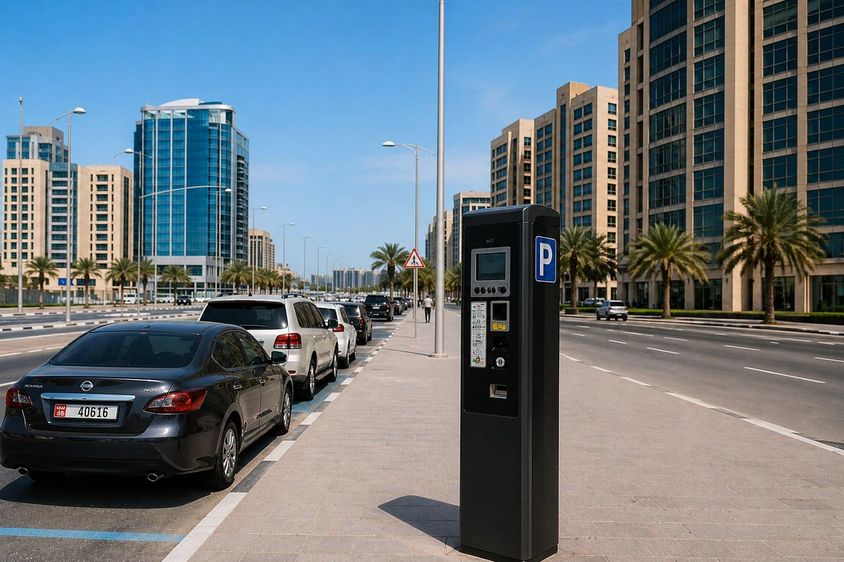
The Expansion of Paid Parking System in Abu Dhabi: A New Era in Mohamed Bin Zayed City
Urban mobility in Abu Dhabi takes a new level
The ever-evolving urban infrastructure of Abu Dhabi has reached another milestone: starting from May 6, 2026, a paid parking system will be introduced in the commercial zones of the Mohamed Bin Zayed City district. The aim of this measure is clear: to create more organized traffic, more efficient parking management, and a more livable urban environment. The development is closely aligned with the United Arab Emirates' aspiration to become the leading smart city model in the region—similar to what Dubai has successfully implemented for years.
The newly implemented system is not the result of a sudden change, but part of a multi-step, consciously constructed strategy. The goal is not merely to make parking paid but to create a complex transportation ecosystem that supports economic activity, reduces congestion, and improves day-to-day quality of life.
Where and how the parking system changes
The new regulation affects two prominent commercial sectors: areas labeled ME9 and ME12. These are among the busiest locations in the district, where thousands of vehicles pass through daily. The constant vehicle traffic due to shops, service units, and offices here had often led to chaotic parking situations.
Under the new system, a total of 10,205 parking spaces will be regulated. Of these, 3,219 are located in ME9 and 6,986 in ME12. Special attention is also given to parking spaces reserved for people with special needs, showing that the development is not only technological but also socially considerate.
The parking fee will uniformly be 2 dirhams per hour at standard locations. This pricing is intentionally set to encourage shorter parking durations, thereby increasing the turnover of spaces without imposing disproportionate burdens on users.
Digital solutions for smooth usage
One of the most critical innovations is the modernization of payment options. The system fully supports digital payment, allowing motorists to settle parking fees in several ways. Mobile applications, SMS-based payment, and traditional parking meters are all available.
This flexibility is crucial for user experience. In a modern urban environment, services are expected to be fast, simple, and digitally accessible. In this respect, Abu Dhabi clearly follows the model of Dubai, where smart city solutions have already become part of everyday life.
Why the change was necessary
Mohamed Bin Zayed City is one of the fastest-growing districts in Abu Dhabi. The continually increasing population, the ever-growing number of businesses, and the rising commuting demands placed significant strain on existing infrastructure. The shortage of parking spaces, irregular parking, and congestion had become everyday problems.
The introduction of paid parking offers a solution to these challenges. Experiences show that such systems significantly reduce unnecessary long-term parking and facilitate the continuous flow of traffic. This is particularly important in commercial areas, where quick access is crucial for economic activities.
Part of a multi-step development process
The current introduction is the third phase of a comprehensive parking management program. The first phase began on December 15, 2025, when parking regulations started free of charge in several sectors, including areas ME9, ME10, ME11, and ME12. This was a transitional period that allowed residents and drivers to adapt to the new system.
The second phase began on April 6, 2026, when parking became paid in sectors ME10 and ME11, as well as on major streets in some villa neighborhoods. The results were encouraging: traffic flow improved, congestion decreased, and parking became more organized.
The third phase, now starting, builds on these results and further expands the scope of regulated areas. This phased introduction allows the system to be continuously fine-tuned based on real experiences.
Impact on the economy and everyday life
The development of the parking system is not just a transportation issue, but one with economic and social significance. More organized parking makes it easier to access shops, increases customer traffic, and contributes to the growth of local businesses.
Additionally, it provides tangible benefits for residents. Less time is spent searching for parking, stress is reduced, and the overall traffic experience improves. These small yet significant changes greatly enhance the quality of life in the long term.
Laying the foundations for the city of the future
Such developments clearly show that Abu Dhabi and Dubai are not merely reacting to present challenges but actively shaping the city of the future. Smart parking systems, digital payment solutions, and sustainable transportation strategies all contribute to making these cities leaders on the world stage.
The new parking system implemented in Mohamed Bin Zayed City is another step on this path. While it may seem a simple measure at first glance, it is actually part of a much larger picture: creating an urban environment where technology, sustainability, and human needs meet harmoniously.
In the coming years, further similar developments are expected, which will further strengthen Abu Dhabi's position among global smart cities. The direction is clear, and based on current results, the strategy appears to be working.
If you find any errors on this page, please let us know via email.


