Abu Dhabi's New Parking System Unveiled
New Paid Parking System in Abu Dhabi: Order, Access, and Urban Transformation
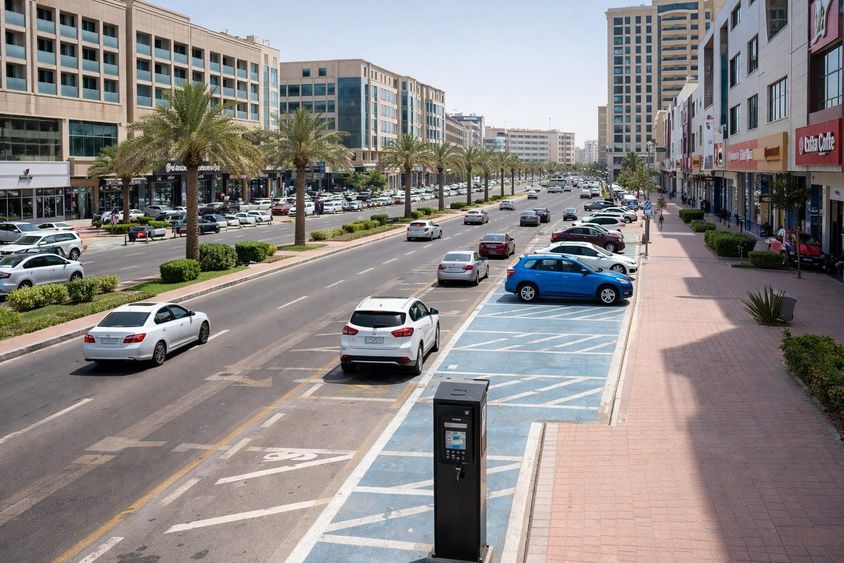
The capital of the United Arab Emirates takes another step towards modern, organized, and sustainable urban transportation. Abu Dhabi has announced that from April 6, 2026, a new paid parking system will be introduced in parts of Mohamed Bin Zayed City. This decision is not merely a new payment obligation but part of a comprehensive urban strategy aiming to reduce traffic, eliminate parking chaos, and improve quality of life.
Why was the change necessary?
In recent years, Mohamed Bin Zayed City has been dynamically developing, especially in commercial areas. Increasing business activity, expanding services, and a growing population have placed significant pressure on the transportation infrastructure.
The biggest problem was irregular parking and the lack of parking spaces. Drivers often resorted to illegal or unorganized parking, leading to congestion, difficult transportation, and decreased business accessibility.
In the long term, this situation was unsustainable, prompting authorities to implement a system to make parking more structured and predictable.
How does the new system work?
The first phase of the new parking model affects several key areas, including commercial sectors and certain villa zones where traffic is most intense.
The system covers more than 11,000 parking spaces, reflecting significant infrastructure development. The distribution of parking spaces has been carefully designed to ensure sufficient capacity in high-demand areas.
The pricing is simple and transparent: for so-called secondary parking spaces, the fee is 2 dirhams per hour. Payment can be made through multiple channels, including mobile apps, SMS, and on-site machines. This flexibility is crucial as users have different needs and technological habits.
Protection of residential areas and priorities
One of the most important innovations is the regulation of parking in residential areas. A significant portion of parking spaces in villa neighborhoods will be reserved exclusively for residents with permits.
This step is particularly important for locals, as it was previously common for visitors from surrounding commercial areas to occupy spaces allocated for residents. The new system returns control over their environment to the residents, while reducing tension between different user groups.
Economic impacts and business benefits
Parking regulation is not just a transportation issue but an economic factor as well. Organized parking directly affects business accessibility and the customer experience.
If a visitor can easily find a parking spot, they are more likely to enter a store or service provider. This is especially important in densely visited commercial zones where parking difficulties have previously been a deterrent.
Thus, the new system not only regulates but also stimulates, helping businesses better leverage traffic and contributing to a more stable, predictable business environment.
The role of multi-story parking
Simultaneously with the introduction of the paid parking system, several new parking garages have opened in the region. These buildings provide more than a thousand new parking spaces, significantly easing the burden on surface parking.
The multi-level parking facilities allow for more efficient space utilization while offering modern infrastructure. This is especially important in an urban environment where available space is limited, but car traffic continues to grow.
Sustainability and the smart city concept
The system responds not only to current problems but also lays the foundation for the city of the future. The development, overseen by the Integrated Transport Centre, is part of a broader strategy focused on smart mobility and sustainable transportation.
Smart parking systems help reduce unnecessary circling while searching for parking spaces, resulting in significant fuel savings and lower emissions. This is particularly important in a region where car use plays a dominant role.
Digital payment solutions and data-driven management allow for the continuous optimization of the system, making even more efficient operation possible in the future.
Social considerations and inclusivity
The new system pays special attention to parking spaces reserved for the so-called 'People of Determination'. This approach shows that the developments serve not only economic and transportation goals but are also sensitive from a social perspective.
Ensuring accessible parking options is a fundamental part of the operation of a modern city and contributes to everyone having equal opportunities to use urban services.
What does this mean for the future?
The system introduced in Mohamed Bin Zayed City is about more than just parking fees. It marks a shift in direction that demonstrates how a rapidly growing city can be managed sustainably.
Such developments are expected to appear in other city districts too, resulting in a unified and well-functioning transportation system in the long run. The goal is to create an urban environment where transportation is not an obstacle but a smooth backdrop for everyday life.
Summary
Abu Dhabi’s new parking system is a thoughtful, complex solution to modern urban challenges. It simultaneously addresses traffic problems, supports economic activity, protects residential interests, and promotes sustainability.
The change requires short-term adaptation from drivers, but in the long run, it creates a more organized, livable, and efficient urban environment. This step clearly shows that the region is not only responding to challenges but is proactively shaping the city of the future.
If you find any errors on this page, please let us know via email.