Abu Dhabi's New Bridges Revolutionize Travel
New Marine Bridges in Abu Dhabi: Faster Travel and Smart Urban Planning for the Future
Abu Dhabi's transportation infrastructure has reached another significant milestone: with the opening of two new marine bridges, the city has taken a major step not only in reducing traffic congestion but also in supporting long-term economic and urban development goals. This investment worth hundreds of millions of dirhams clearly indicates that the region continues to prioritize issues of mobility, sustainability, and livable urban environment.
Strategic Connectivity Between Key Areas
The new bridges provide a direct connection between Al Reem Island and the Sheikh Khalifa Bin Zayed Highway, while also significantly improving access towards Saadiyat Island. This development not only speeds up the daily commute of local residents but also efficiently channels traffic heading towards Dubai.
One of the most important advantages of the project is that it can reduce travel time by up to 15 minutes during peak hours, which represents about a 60 percent improvement on certain sections. In a region where daily commuting and intercity travel are a fundamental part of life, this change can bring significant improvements in quality of life.
Traffic Reduction and More Livable Urban Environment
A key role of the new infrastructure is to relieve the burden on existing roads. Previously overloaded urban routes, such as Hamdan Bin Mohammed Street and Mina Road, can now breathe more easily. Part of the traffic is diverted to the new bridges, which not only ensures faster progress but also reduces urban noise and air pollution.
This type of development goes beyond mere transportation. Less congestion means less stress for drivers, and reducing environmental impact results in more sustainable urban operations in the long term. With this, Abu Dhabi clearly follows a path where transportation is not a problem but a well-organized system.
Logistical Advantages and Safety
As part of the project, a separate U-turn bridge for freight traffic was also built to facilitate the transport of goods between Zayed Port and Saadiyat Island. This is particularly important economically, as the efficiency of port traffic directly affects trade and supply chains.
Dedicated routes reduce conflicts between heavy machinery and passenger cars, significantly increasing traffic safety. Such solutions demonstrate that modern urban development is not just about speed but harmonious coexistence of different modes of transport.
Engineering Solutions and Modern Technology
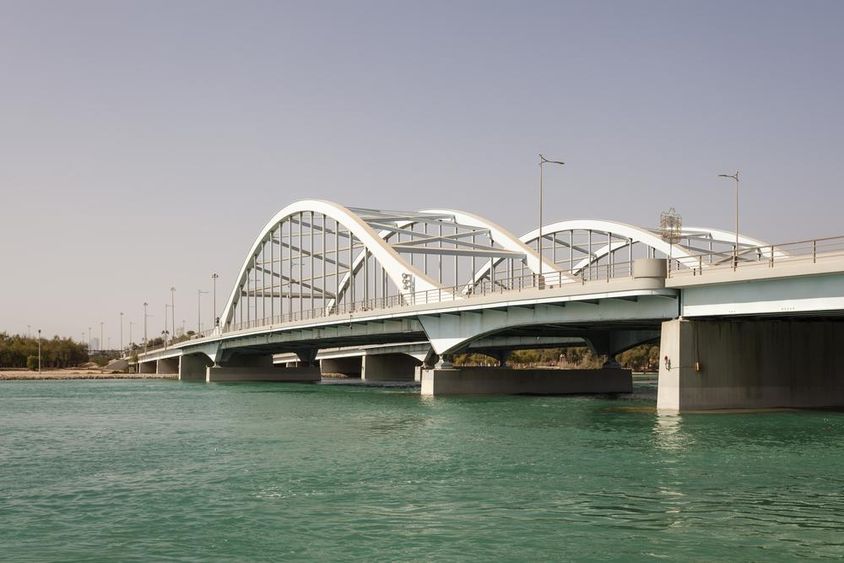
The bridges are a total of about 1.5 kilometers long and cover an area of more than 25,000 square meters. Modern in-situ box girder technology was used during construction, providing outstanding stability and durability.
The structure is supported by 12 special V-shaped pillars that are not only aesthetically impressive but also allow for unobstructed passage of ships. This is particularly important in a city where sea transport and port activities also play a significant role.
These engineering solutions indicate that Abu Dhabi is not just building quickly but planning for the long term. Durability and reliability are key factors in infrastructure that serves thousands of vehicles daily.
Capacity and Efficiency
The new bridges can handle up to 7,200 vehicles per hour, a significant capacity expansion in the urban network. This is especially important given the continuously growing population and economic activity.
The greater capacity not only can accommodate current traffic but also anticipates future growth. With this development, Abu Dhabi prevents problems rather than attempting to address them afterwards.
More Than Transportation: Quality of Life and Community Space
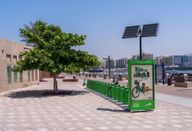
The project doesn't stop at vehicular traffic. The new infrastructure includes a 2-kilometer elevated road section, 71 modern lighting elements, and carefully designed green spaces. In addition, pedestrian and bicycle paths were also built, providing an alternative mode of transportation over a length of about 2 kilometers.
This is particularly important in an era where cities are increasingly opening up to active transportation modes. Walking and cycling are not only healthier but also environmentally friendly solutions that reduce the need for car use.
Sustainability and Future-Oriented Thinking
During the design of the new bridges, great emphasis was placed on sustainability. Modern material use, energy-efficient lighting, and environmentally integrated design all serve to ensure that the project meets sustainability expectations in the long term.
With this development, Abu Dhabi proves that the city of the future is not only fast and efficient but also conscious and responsible. The development of transportation infrastructure here is not an end in itself but part of a comprehensive strategy that serves both economic growth and the improvement of quality of life.
Connection Towards Dubai: Regional Significance
One of the most important aspects of the project is that it not only improves internal transportation in Abu Dhabi but also smooths the journey towards Dubai. This is key to the economic and social linkage between the two cities.
Faster and more predictable transportation strengthens regional integration, supports business relations, and helps the area become even more competitive on a global scale.
Conclusion: A Step Towards the City of the Future
The construction of the two new marine bridges is not merely infrastructural investment but part of a well-thought-out long-term strategy. Faster transportation, reduced traffic load, increased safety, and sustainable solutions all contribute to Abu Dhabi becoming one of the most livable and modern cities in the world.
Projects like these show that the region not only responds to challenges but actively shapes the future. Here, transportation is not an obstacle but an opportunity – a system that supports daily life, the economy, and community development alike.
If you find any errors on this page, please let us know via email.