Why the Burj Al Arab is Closing
An Icon Before a New Era: Why the Burj Al Arab is Closing for a Long Time
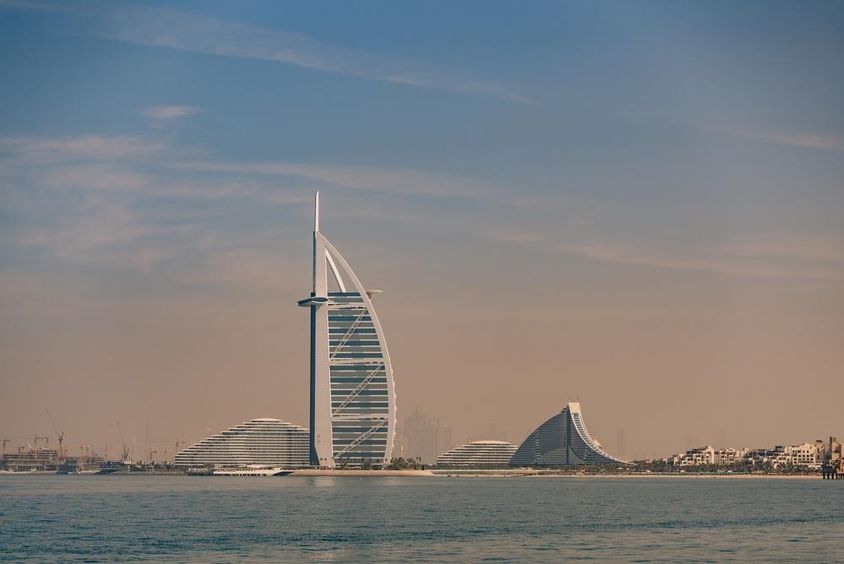
Few buildings in the world are as closely tied to a city's identity as the Burj Al Arab is to Dubai. The iconic, sail-shaped hotel is not just an accommodation but a symbol of an era: encompassing bold architectural thinking, elevating luxury to a new level, and capturing global attention. However, this emblematic building is now closing for a long period, which might initially sound surprising, even worrying. In reality, it is a conscious and strategic decision that points toward the future.
The planned 18-month closure is not a simple renovation. It involves a complex intervention affecting all the major systems of the building. In a project of this magnitude, compromises cannot be made: it's either done entirely or not worth starting at all.
Why Complete Closure Was Inevitable
Renovating an average apartment causes significant disruption. If this situation is magnified to a luxury hotel over 50 stories high with hundreds of suites, it becomes clear that working amidst partial operation would be practically impossible.
In the case of the Burj Al Arab, the building is not merely a collection of separate elements, but a fully integrated system. Air conditioning, the electrical network, water supply, elevator system, and security systems are all closely interlinked. Any major intervention with any of these aspects affects the entire operation.
Noise, dust, vibrations, and periodic shutdowns are factors that would be unacceptable in a hotel offering a premium experience. Guests expect no compromises, but perfect operation. Therefore, the complete closure was not only practical but an essential decision.
What Does 'Restoration' Actually Mean
The word 'renovation' might be misleading in this case. It is not about placing new furniture or repainting the walls. For the Burj Al Arab, restoration means a much deeper, almost surgical precision intervention.
The building is essentially stripped back to its operational fundamentals. Structural elements are checked for their condition, especially the effects caused by the marine environment, such as salty air and high humidity. All technical systems are reviewed and modernized, including mechanical, electrical networks, and water treatment.
Simultaneously, special attention is paid to preserving the original design. The proportions of the interiors, material usage, and iconic details remain intact. The challenge lies in integrating modern technology in a way that does not alter the building's character.
The Importance of 'Invisible' Changes
One of the most intriguing promises is that the changes will be almost imperceptible to guests. This might seem contradictory at first: what’s the point of a massive investment if it’s not visible?
The answer is simple: true luxury does not necessarily lie in the spectacle but in the experience. If the room temperature is perfect, the air quality excellent, and technology works flawlessly, the guest may not be able to articulate this, but they will feel it.
The 'unseen' improvements are actually the most important. These ensure that the building meets today’s expectations while preserving the atmosphere that made it world-famous.
The 25-Year Turning Point
Such interventions do not happen arbitrarily after a certain time has passed. For a building operating in an intensely used marine environment, the 20-25 year period is critical.
Constant use, weather effects, and technological development together lead to a point where minor repairs are no longer sufficient. At such times, a comprehensive, system-level renewal is needed.
Thus, this project is not the result of an unexpected decision but is foreseeable, indeed necessary. The building simply reached a point where significant intervention was needed to ensure the future.
Redefining Luxury
Restoration also indicates that the concept of luxury is continually evolving. Spectacular design and premium services are no longer sufficient today. A modern luxury hotel must be sustainable, technologically advanced, and viable in the long run.
The project is expected to emphasize energy efficiency, eco-friendly solutions, and smart systems significantly. These are the elements that will define the standard of luxury in the coming decades.
A New Phase in Dubai's Development
The restoration of the Burj Al Arab goes beyond itself. This step clearly shows that Dubai’s development has entered a new phase. The city not only builds new icons but consciously maintains and develops existing ones.
This indicates a kind of maturity. The initial rapid growth is being replaced by a more thoughtful, long-term approach, emphasizing sustainability and value preservation.
Iconic buildings are not just physical structures but also carry cultural significance. Their preservation and modernization are thus not just economic but also a question of identity.
Summary
The 18-month closure of the Burj Al Arab might seem like a radical step at first glance, but it is actually a conscious and unavoidable decision. In the case of such a complex and iconic building, half-measures cannot be employed.
The aim of restoration is not to create something entirely new but to preserve what is already exceptional while preparing for future challenges.
If the project succeeds, guests might not notice spectacular changes. But they will feel that everything has become smoother, more refined, more perfect. And ultimately, that is what truly matters.
If you find any errors on this page, please let us know via email.


