Vaccine Fine: A New UAE Proposal
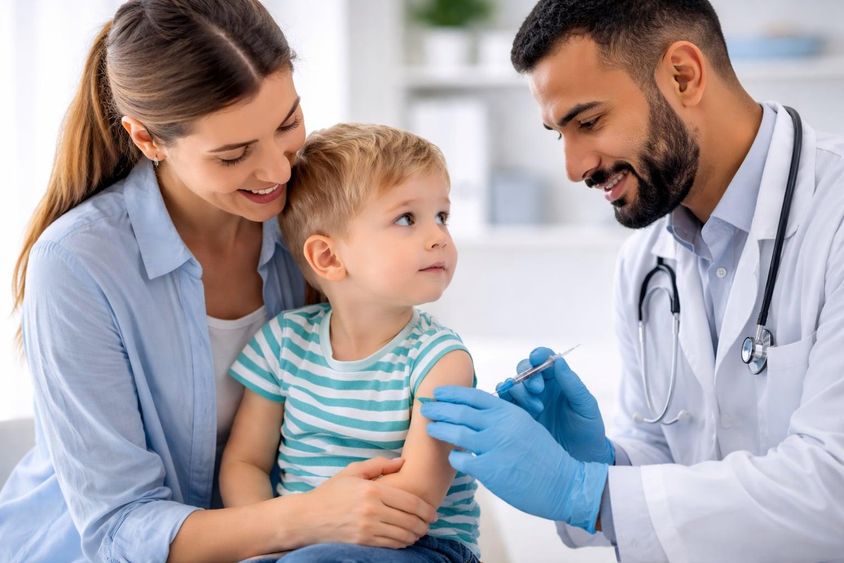
The Cost of a Missed Vaccine: Why Severe Penalties Might Be Imposed in the UAE
When Lack of Prevention Becomes a Risk
One of the greatest paradoxes of healthcare systems is that their biggest successes often become invisible. When a disease disappears from everyday life, people tend to forget how severe its consequences can be. In the UAE, a new proposal has emerged that could impose fines of up to 20,000 dirhams on parents who neglect their children's mandatory vaccinations. This may initially seem strict, but very real health risks lie behind it.
Vaccination is a cornerstone of modern medicine, providing not only individual protection but community stability as well. If this system falters, the consequences manifest quickly and visibly. Doctors indicate that even a single missed vaccine can lead to severe, potentially life-threatening conditions.
Real-life Cases as Warnings
In clinical practice, these are not theoretical dangers. Regular cases in the UAE show severe manifestations of diseases that could have been prevented with a vaccine. For example, a child infected with measles was hospitalized with severe symptoms like high fever, rashes, respiratory difficulties, and pneumonia. The condition worsened, requiring prolonged hospital treatment, and the infection spread to other family members.
In another incident, a few-month-old infant was infected with whooping cough from an unvaccinated sibling. Being too young to receive the first vaccination, the baby was entirely unprotected, resulting in repeated coughing fits, breathing interruptions, and intensive care treatment, posing a serious life risk.
These cases are not exceptions but warnings. The absence of vaccinations poses a risk not only to the individual child but to the entire community.
The Fragile Balance of Community Immunity
A key element of the vaccination system is so-called community immunity. This means that if a significant portion of a population is protected, infections do not spread. In the UAE, this rate is currently very high, exceeding 95% for many vaccines.
However, this rate is not so high by chance. Infectious diseases like measles spread extremely rapidly and can only be controlled if almost the entire population is immunized. If this rate decreases even slightly, diseases can immediately return.
This is particularly true in a country like the UAE, where international travel is normal. The country has constant connections with all parts of the world, allowing infections to easily enter the system. If immunity isn't high enough, a single imported case can start an outbreak.
Why Vaccination Is Not Just an Individual Choice
Discussions around vaccination often focus on individual freedom. However, the medical profession clearly states that vaccination is not merely a personal decision but a communal responsibility.
Children cannot make independent health decisions. If parents reject vaccinations, their children are exposed to risks they didn't choose. Moreover, those who cannot be vaccinated for health reasons—like newborns or the immunocompromised—are endangered.
A single unvaccinated child can potentially endanger an entire community. Hence, the idea of state intervention in public health protection is increasingly prominent.
Myths Behind Vaccine Skepticism
Mistrust of vaccines often originates from the spread of misleading information. One of the most well-known myths is the alleged link between vaccines and autism, a notion refuted by numerous scientific studies worldwide.
This misunderstanding often arises because autism's first signs appear at an age when children receive several mandatory vaccinations. This is a temporal coincidence, not a causal relationship.
Doctors emphasize that vaccines are among the most rigorously scrutinized medical interventions. Their risks are minimal, especially when compared to the diseases they prevent.
Natural Infection or Conscious Protection?
Another common argument is that natural infection provides stronger immunity. While this may be true in some instances, the cost is often too high. Natural infections can lead to severe complications, hospitalization, or even death.
In contrast, vaccines provide protection without exposing the body to these dangers. This is one of modern medicine's greatest advantages: minimizing risk.
Why The Fine Might Be Justified
The proposed fine can be understood as a preventive measure rather than a punishment. The state's goal isn't to financially penalize families but to maintain the high vaccination rate that currently protects society.
If coverage begins to decline, consequences quickly emerge. Many parts of the world already show that where vaccination willingness falls, diseases previously kept at bay reappear.
For the UAE, the objective is clear: maintain the current stable situation and prevent future outbreaks.
Maintaining Trust Is Key
The foundation of long-term operation for the vaccination system is trust. People must believe that the healthcare system serves their interests. Therefore, education and accurate information are crucial.
As long as the population understands the significance of vaccinations, the system remains stable. However, if misleading information takes the forefront, trust can falter, weakening protection.
The UAE's current situation is strong, but doctors' warnings are clear: this state must be continuously maintained. A single gap may be enough for previously conquered diseases to return.
Summary: A Decision That Goes Beyond the Individual
The vaccination issue is not just an individual choice but a social responsibility. A single missed vaccination can endanger not only a child's life but an entire community.
The message of the proposed regulation is clear: prevention is not optional but a fundamental necessity. Health is not only an individual value but a common interest that can only be preserved collectively.
If you find any errors on this page, please let us know via email.


