Strategic Shift in Gulf Cooperation
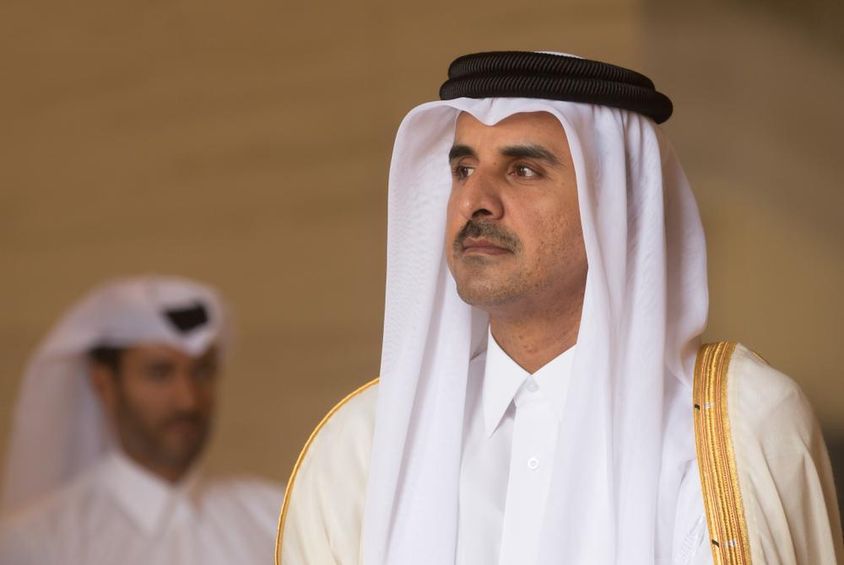
Strategic Message on the Landing Strip
The official visit of the Emir of Qatar to the UAE is not merely a diplomatic event but a deliberately timed political message. When key players in a region meet at such a level, it always extends beyond mere protocol handshakes. The choice of location - Abu Dhabi - and the level of attendance clearly indicate that the relationship is of strategic importance.
In the Gulf region, gestures have weight. Personal attendance, joint appearances, and the composition of delegations all send messages. This is not only directed towards the two countries but also to the international community. The visit clearly demonstrates that stability, cooperation, and regional coordination are top priorities.
The Post-Normalization Era
The region has experienced significant political turmoil over the past decade, characterized by tensions, diplomatic ruptures, and gradual rapprochements. This current visit is part of a new era, one marked by pragmatic cooperation.
Today, the UAE and Qatar define each other not through past disagreements but through shared interests. This approach reflects modern Middle Eastern political thought. The region's leading states have recognized that they can remain strong in the global economic competition only with a coordinated strategy.
Economic Interests and Competitive Dynamics
It is important to understand that the two countries are both competitors and partners. Both possess substantial energy resources, operate significant investment funds, and position themselves as global financial, logistical, and technological hubs.
In recent years, the UAE has visibly strengthened its role on the international financial and tourist map. Dubai has become a significant player in the global business environment, while Abu Dhabi has remained a strategic center for capital and state investments. Simultaneously, Qatar has been building its position through substantial global investments, energy exports, and infrastructure developments.
The question is not whether they compete. They do. The question is whether they can collaborate where it benefits both parties. This visit suggests that the answer is yes.
Security Policy Dimension
The geopolitical environment of the Middle East is still fraught with uncertainties. Regional conflicts, global power shifts, and changes in the energy market all impact the Gulf countries.
In this context, high-level consultations are crucial. Security policy coordination is not only a military issue but also a factor in economic stability. For investors, the region's stability is a primary concern. Every step that strengthens cooperation indirectly enhances economic confidence.
Thus, the visit is not just a political event but also a step towards building economic trust.
Role of Delegations
Official visits are always accompanied by larger professional delegations. This is not merely a formality. The composition of delegations often indicates areas where deeper cooperation is anticipated.
Economic, investment, energy, infrastructure, and technological issues are likely to be on the agenda. Such meetings often result in pre-arranged agreements that later materialize in concrete investments and joint projects.
The region's dynamics are swift. Those who fall behind, miss out. That's why consultations of this level play a key role in aligning strategic directions.
Message to International Markets
The global context cannot be ignored. The world energy market is transforming, technological competition is intensifying, and geopolitical uncertainty is growing. In this environment, regional stability is becoming more valued.
When two key players in the Gulf region publicly demonstrate their intention to cooperate, it sends a clear signal to international markets. Capital seeks predictability. Political coordination strengthens this predictability.
Future Direction: Pragmatism and Modernization
The common denominator for the UAE and Qatar is modernization. Both countries are intensively building their economic model for the post-oil era. Artificial intelligence, financial technology, renewable energy, global logistics, and tourism are areas where success will be determined in the coming decades.
This visit clearly points towards pragmatic cooperation. It's not about ideological but strategic partnerships. The goal is not merely regional dominance but strengthening global competitiveness.
Why is this important for Dubai?
Although the reception took place in Abu Dhabi, the impact of such events extends across the entire UAE. Dubai's economic model is particularly sensitive to regional stability. Tourism, financial services, real estate, and international business presence all benefit from a predictable geopolitical environment.
Such a visit indirectly strengthens Dubai's global position as well. A stable region boosts business confidence, and business confidence generates growth.
Diplomacy Beyond Protocol
Therefore, the visit of the Emir of Qatar to the UAE is not just a simple official event. It is a strategic gesture. A signal to the region and the world. A manifestation of a policy focused on future cooperation instead of past conflicts.
The Gulf region is no longer just an energy provider but a global center for investment, finance, and innovation. Such meetings show that the region's leading states consciously and in coordination wish to strengthen this role.
Here, diplomacy is not a formality. It's a strategy. And in this strategy, cooperation is one of the strongest tools.
If you find any errors on this page, please let us know via email.