Smartphone in Space: Dawn of a New Era
Smartphone in Space: Dawn of a New Era
In the history of space exploration, there have always been significant milestones when everyday technology transcended Earth's boundaries. The latest development, however, opens up a whole new dimension: the appearance of a modern smartphone onboard a lunar orbit mission. The emergence of the iPhone 17 Pro during Artemis II is not only a technological curiosity but also a sign of a deeper change in how space and our everyday devices are connected.
Everyday Technology Steps into Space
For a long time, only specially designed, extremity-optimized devices were allowed aboard spacecraft. In recent years, however, a strong trend has been observed where commercial technologies are also becoming part of missions. NASA's decision to allow smartphones in space clearly demonstrates this shift.
This step is no coincidence. Modern smartphones now have advanced sensors, camera systems, and computing capabilities that, in many cases, rival previously dedicated space equipment. Integrating such a device is not only cost-effective but allows for more flexible operations.
How Did the iPhone Get Onboard?
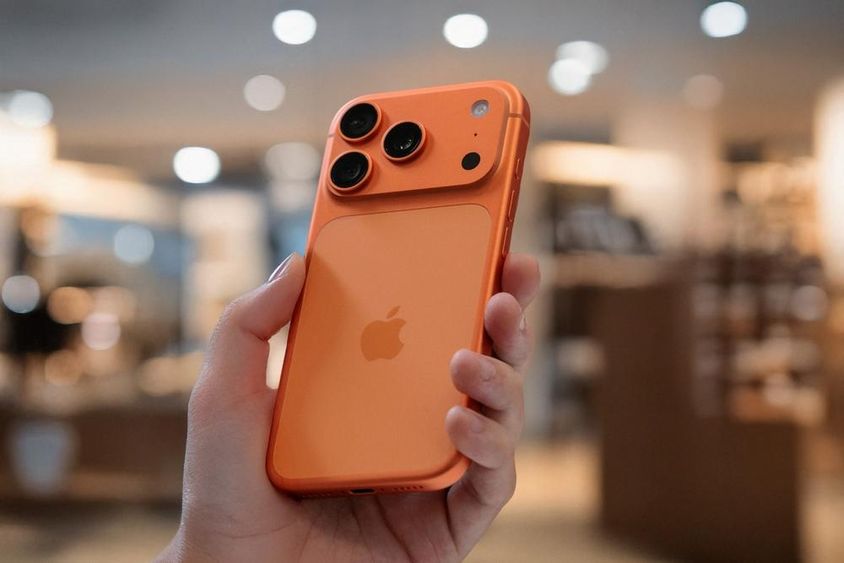
Based on mission footage, it was clear that the iPhone was not just accidentally onboard. Even before liftoff, it was visible that a smartphone was placed in one of the spacesuits. In later scenes, a floating device appears in the spacecraft, recognizable by its distinctive three-camera design.
The microgravity environment poses unique challenges. A small object can easily drift away, so a special attachment solution was visible on the device. This was a Velcro system that allows the phone to remain stable, whether on the astronaut's suit or the cabin's interior surface.
This small detail shows that even the simplest everyday devices require rethinking in space.
Not the First, but Different Role Now
While this isn't the first time an iPhone has reached space, the current situation is special. Previously, a decade ago, such devices were used solely for experimental purposes. They ran custom applications that helped astronauts complete specific tasks.
The current mission represents a different level. It's no longer an experimental platform but a device approaching everyday use in space as well. This means that the role of smartphones can gradually expand: communication, documentation, quick note-taking, or even capturing visual observations.
The Significance of the Artemis II Mission
The Artemis II mission is not just a technological demonstration but a strategic step towards future deep-space travel. During the multi-day mission, the spacecraft circumnavigates the moon, while many systems are tested under real conditions.
The inclusion of commercial devices in such a mission indicates that future space travel will increasingly integrate Earth-based technologies. This is particularly important for longer missions, where flexibility and resource efficiency play crucial roles.
What Does This Mean for the Future?
The presence of smartphones in space goes far beyond a simple curiosity. It marks the beginning of a trend that could fundamentally change space technology development.
In the future, it's conceivable that:
astronauts will use their own personalized devices
ground applications' modified versions will operate directly in space
communication will become simpler and more direct
documentation and data collection will be faster and more effective
This is especially intriguing for places like Dubai, where technological innovation and the interest in the space industry are growing stronger. The city is already actively participating in various space research programs, so such developments could have a direct impact on the region's technological progress in the long run.
A New Level of Connection Between Tech and Humans
The appearance of an everyday device in space also holds symbolic significance. It shows that space is no longer an inaccessible, sterile environment but a space where human life and familiar technologies gradually appear.
The smartphone is not just a device but a kind of link between Earth and space. An object we use daily now appears in the same form hundreds of thousands of kilometers from our planet.
This image is stronger than any technical data: the future of space travel will increasingly belong to people, not just scientists and engineers.
Summary
The appearance of the iPhone on the Artemis II mission clearly indicates that space exploration has entered a new era. The integration of commercial technologies not only brings cost efficiency and flexibility but also brings space closer to people.
In the coming years, we can expect to see more examples of everyday devices playing new roles in space. This is not just about technological development but about how space becomes a natural extension of human life.
The image of the first floating smartphone may have been just a small detail on a long mission, but it was actually the beginning of a much larger story.
If you find any errors on this page, please let us know via email.