Skyrocketing Demand for Emirati Bonds
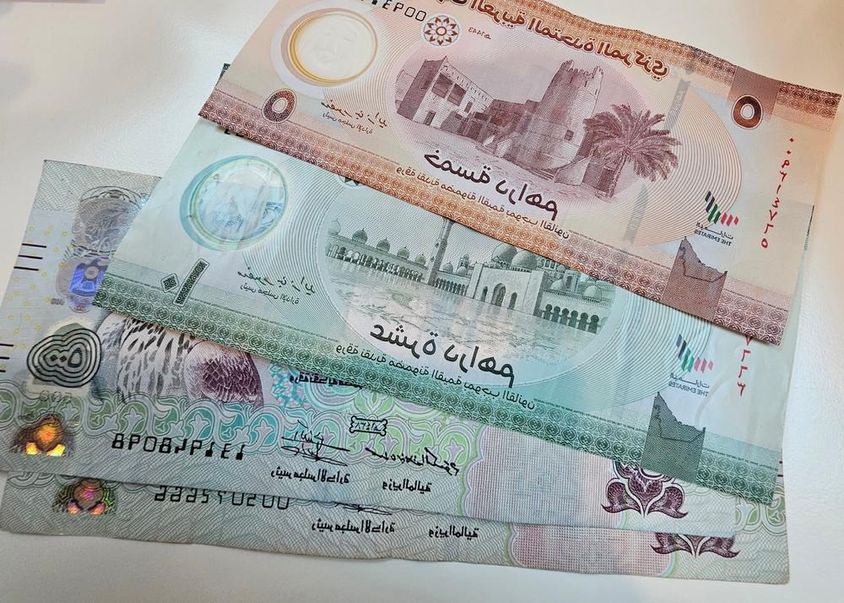
Strong Investor Interest in Emirati Bonds
The financial system of the United Arab Emirates has received increasing attention from global investors in recent years. The dirham-denominated government bonds issued in March 2026 have once again proven that this is one of the most stable and reliable economies in the region. At a recent auction, the country issued government bonds worth 1.1 billion dirhams, while the interest significantly exceeded the initial offering.
A total of 4.85 billion dirhams worth of bids were received at the auction, approximately a 4.4-fold oversubscription. This result clearly indicates that investors continue to place great trust in Emirati financial instruments, especially during times of geopolitical uncertainty in many regions worldwide.
What is a government bond and why is it important?
Government bonds are financial instruments issued by the state for financing purposes. When an investor buys a government bond, they are essentially lending money to the country. In return, the state pays interest at specified intervals and returns the original invested amount at maturity.
On global financial markets, government bonds are generally considered among the safest investments because they are backed by the full economic strength and budget of the country. This is particularly true for countries with strong financial reserves, low public debt, and stable economic growth.
The United Arab Emirates falls precisely into this category, which is why there is continuously high demand for dirham-denominated government bonds.
Two different maturity bonds
At the latest auction, two bonds with different maturities were offered to the market. One matures in September 2027, while the other has a longer maturity, expiring in January 2031. Investors showed significant interest in both structures.
The yield on the shorter-maturity bond stood at 3.73 percent to maturity. For the longer-maturity bond, the yield was around 3.85 percent. These values clearly demonstrate that investors anticipate stable, predictable returns in the Emirati economy.
The pricing of the bonds exceeded that of similar U.S. government bond yields by only a few basis points. This narrow margin indicates a very strong credit rating assessment and shows that global financial markets consider the country a highly reliable borrower.
The role of bonds in economic financing
Issuing government bonds is an important part of the country's financial strategy. The funds raised in this way are typically used for infrastructure development, economic programs, and various government investments.
In the case of the United Arab Emirates, these funds could contribute to new economic projects, technological developments, or even the expansion of transportation infrastructure. The goal is not only to secure financing but also to establish a stable and predictable financial market.
The Emirati economy has consciously strived over the past decade to diversify its sources of financing. This means that the economy does not depend on a single income source but ensures necessary financial stability through multiple channels.
Development of the domestic bond market
In recent years, the Emirati government has been consciously building the dirham-based bond market. The aim is to create a stable financial infrastructure allowing for financing and investing in local currency.
One important element of the bond program is the so-called yield curve formation. This means issuing government bonds of different maturities that serve as benchmarks for other financial products.
The yield curve plays a key role in the pricing of bank loans, corporate bonds, and other financial instruments. The more developed and stable this system, the more predictable the economic environment becomes.
Secondary market trading and liquidity
The issued bonds are listed on the Nasdaq Dubai stock exchange. This allows investors to not only purchase and hold the bonds to maturity but also trade them on the secondary market.
Secondary market trading increases liquidity, meaning investors can sell or purchase securities more easily. This factor is particularly important for institutional investors who manage large portfolios.
A liquid market also strengthens the role of the country as a financial center. In recent years, Dubai has made considerable efforts to become one of the leading financial centers in the Middle East.
Stable economic foundations
Several factors lie behind investor interest. The country has low public debt, manages significant sovereign wealth funds, and boasts strong fiscal reserves.
These foundations are especially important when the global economic environment becomes more uncertain. Geopolitical tensions often lead investors to turn to stable and reliable financial instruments.
In this environment, Emirati government bonds provide a safe haven for many investors.
Long-term financial strategy
The government bond program is not just a short-term financing tool but a part of a long-term economic strategy. The goal is to create a deep and stable capital market that supports economic growth and innovation.
Such programs also contribute to making the country's financial system more resilient. Diversified sources of financing reduce the impact of external economic shocks and strengthen the economy's resilience.
As one of the region's most stable economies, the United Arab Emirates continues to attract global investors. The results of the latest bond auction send a clear message to the markets: investors trust in the country's financial stability and economic future in the long term.
The strong demand for dirham-denominated government bonds shows that investors not only evaluate the current economic situation positively but also see significant potential in future growth opportunities. Thus, Dubai and the entire Emirati economy continue to strengthen their position on the global financial map.
If you find any errors on this page, please let us know via email.


