New Toll Gates Revolutionize Abu Dhabi Roads
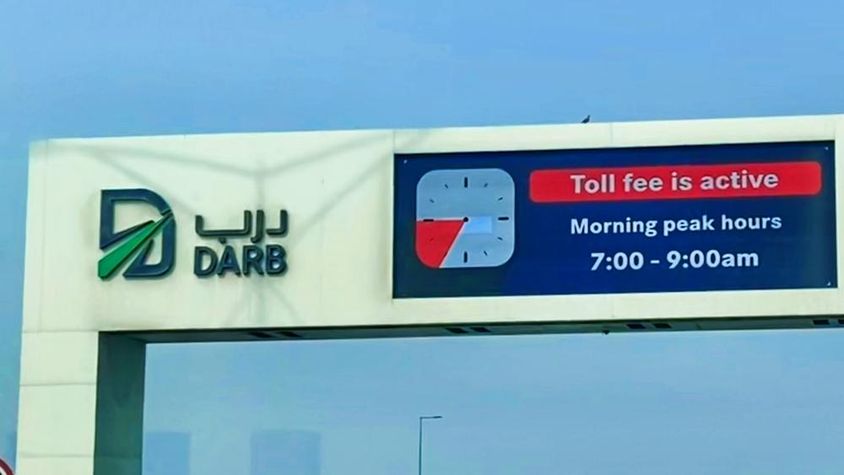
New Toll Gates in Abu Dhabi: Transforming Main Routes
The capital of the United Arab Emirates is making another significant step towards modernizing its transportation system. Abu Dhabi has announced that two new toll gates will join the Darb system, operating continuously, 24 hours a day, from May 4, 2026. The decision is not just about introducing another toll point but is part of a comprehensive strategy aimed at optimizing traffic flow, reducing congestion, and utilizing the road network more efficiently.
Expansion and Goals of the Darb System
The new gates will become part of the already functioning Darb Toll System, introduced in recent years to regulate traffic in the capital. The system's principle is simple: motorists pay a set fee for using certain road segments, encouraging the choice of alternative routes or modes of transport.
Serious traffic analyses back the announced expansion. Decision-makers considered traffic density, travel habits, and the availability of alternative routes. This means that the gates were not chosen randomly but placed where they can have the most significant impact on traffic.
Where Are the New Gates Located?
One of the new gates, the Ghantoot Toll Gate, will be located in the Ghantoot area on Sheikh Maktoum bin Rashid Road. This section is particularly important as it provides a direct link between Dubai and Abu Dhabi, used by thousands of commuters daily.
The other gate, the Al Qurm Toll Gate, will be located on Wahat Al Karama Street, at the entrance and exit of Sheikh Zayed Road. This is a crucial point for city traffic, often experiencing congestion during peak hours.
Alternative routes are provided at both locations. Around Al Qurm, Sheikh Rashid bin Saeed Street or Arabian Gulf Street offer detours, while in the Ghantoot area, Sheikh Mohammed bin Rashid Al Maktoum Road serves as an alternative.
How Much Does it Cost to Pass Through?
The passage fee at the new gates will uniformly be 4 dirhams for each crossing. This amount may seem low at first but can represent a significant monthly cost for daily commuters.
However, certain social groups continue to enjoy exemptions. These include the elderly, people with disabilities, low-income citizens, and retirees. For them, one vehicle remains toll-free.
This differentiated approach shows that the system is not merely a revenue-generating objective but also considers social aspects.
Connection to Dubai–Abu Dhabi Traffic
The introduction of new gates particularly affects those who commute daily between Dubai and Abu Dhabi. The E11 highway, one of the busiest routes in the country, is already under significant load.
Recently, several motorists have noticed new gate structures appearing on this route. One is located in the southern direction, towards Abu Dhabi, just after the city border, while another is in the northern direction, leading towards Dubai, positioned before an exit.
This indicates that authorities aim to regulate not only intra-city but also inter-city traffic actively.
What Does This Mean for Everyday Traffic?
In practice, the new gates can trigger several impacts. In the short term, many motorists may start looking for alternative routes, temporarily increasing traffic on other roads. In the long run, however, a more balanced traffic distribution may develop.
The system may encourage the use of public transport, especially among those commuting daily. Additionally, more flexible work arrangements, such as the increase in remote workers, could also contribute to traffic reduction.
Strategic Thinking Behind the Scenes
The current step fits well into the UAE's long-term transportation strategy. The goal is not only to address current issues but to establish a more sustainable, efficient transportation system.
Intelligent toll systems are playing an increasingly important role worldwide, and with this development, Abu Dhabi clearly aims to be among modern cities. The continuous analysis of traffic data allows the system to respond even more accurately to changing demands in the future.
Conclusion
The introduction of new toll gates is not just another payment obligation for motorists but part of comprehensive traffic reform. The objective is clear: reduce congestion, improve transportation efficiency, and create a more sustainable system in the long run.
While short-term adaptation is required from motorists, long-term, a more balanced and predictable traffic environment may emerge. The developments show that the transportation between Abu Dhabi and closely linked Dubai is evolving in a more conscious planning direction, supporting the region's economic and social growth.
If you find any errors on this page, please let us know via email.


