Lulu Retail's Bold GCC Market Expansion
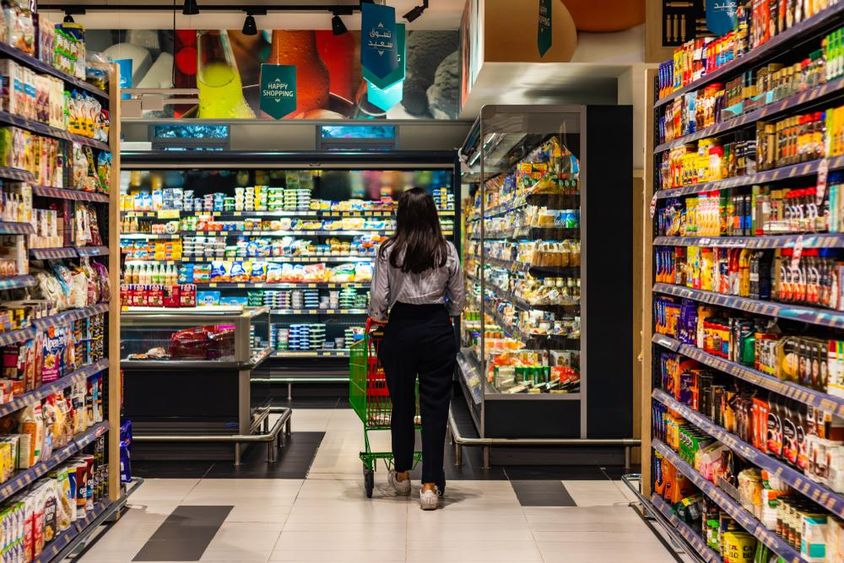
Lulu Retail: 50 New Stores, Regional Strengthening, and Digital Acceleration in the GCC Market
After a Record Year, A New Growth Cycle
In 2025, one of the leading retail players in the GCC region closed the strongest year in its history. The revenue of 29.1 billion dirhams not only marks a new peak but also provides a clear market signal: the scalable model, disciplined expansion, and digital focus are working. The annual growth of 4.1% reflects stable, organic expansion, not one-off effects.
During the year, 20 new stores opened, raising the number of units to 267. This alone represents strong network coverage in the United Arab Emirates, Saudi Arabia, Kuwait, and Bahrain. The announcement of 50 new units between 2026 and 2028 shows that the company is not slowing down but entering a new growth phase.
Multiple Formats, Flexible Market Entry
The expansion is not built on a single store type. The portfolio includes hypermarkets, express stores, and mini markets. This multi-format strategy is crucial in the GCC region, where urbanization patterns, residential density, and consumer habits can vary significantly from city to city.
A hypermarket serves a different function than an express unit integrated into a residential area. The former targets bulk shopping, family baskets, and volume, while the latter caters to quick, convenience shopping. The mini-market model provides direct accessibility in densely populated areas. This flexibility allows the company not only to be present but to operate in a locally optimized manner.
Job Creation and Regional Economic Impact
The opening of 50 new stores could create hundreds of new jobs in the GCC countries. This is not just a number but a multiplier effect. A new store means not only direct employees but also a supply chain, logistic expansion, warehouse capacity increase, and service demand.
In the GCC region, especially in the United Arab Emirates and Saudi Arabia, retail remains a cornerstone of non-oil economic diversification. Such significant network expansion reflects structural confidence in the stability of consumer demand.
E-commerce as a Growth Engine
One of the strongest elements of the 2025 results was online sales. E-commerce traffic grew by 38.6% year-on-year, with a 51.8% acceleration visible in the last quarter. In the fourth quarter, online channels accounted for 7.3% of total retail traffic.
This number is not yet dominant on its own, but the growth rate clearly indicates a transformation in consumer behavior. The company’s investments in its digital platform seem to be paying off: sales through its own channels grew nearly twice as fast as traffic through aggregator platforms.
Strategically, this is critical. The proprietary platform provides better data control, improved customer knowledge, and a higher margin. Long-term competitiveness depends not only on the number of stores but also on the quality of customer data and digital integration.
Private Label Products: Margin and Loyalty
The proportion of private label products rose to 29.8% of total sales. This is not just a marketing statistic but a profitability issue. Private label products typically offer higher margins while providing a competitive alternative for consumers even in price-sensitive periods.
Private branding is also a loyalty tool. If a shopper is attached to a particular chain’s own brand products, they become less price-sensitive to competitors. This is especially important in markets where several major international and regional players compete for the same consumer basket.
Profitability and Financial Stability
Net profit reached 753 million dirhams, slightly exceeding previous guidance. This reflects disciplined cost management and efficient operational structure. The company proposed a 3.5 fils dividend per share for the second half, resulting in a full 2025 payout of 7 fils per share, totaling about 724 million dirhams.
Net debt slightly decreased, moderating to 9.18 billion dirhams, while the leverage ratio improved on an IFRS 16 basis. This is especially important before an expansion cycle. Growth is sustainable when supported by strong cash flow and controlled debt levels.
The Essence of the Model: Disciplined Expansion
The 50 new stores are not aggressive, uncontrolled expansion but part of a three-year scheduled growth plan. The region’s consumption structure is stable, the population is young, purchasing power is strong, and modern retail infrastructure continues to evolve.
The question is not whether there will be demand, but who can serve it more effectively. The combination of physical networks, digital platforms, private brands, and financial discipline results in an integrated model that is hard to replicate.
The Future of the GCC is Organized Retail
Traditional, smaller-store-based commerce still exists in the region, but the trend is clear: the share of organized, scalable, technologically integrated chains is increasing. The next three years could be defining in this regard.
The 50 new units are not just a number. It's a direction. Those building networks now are preparing for the next consumer cycle. Those investing in digital infrastructure now are positioning themselves in the future of data-driven retail.
Thus, the record year of 2025 is not an end, but a starting point. The message of expansion is clear: growth has not stalled, but is structurally grounded. In the GCC market, the coming years will be about economies of scale, digital integration, and financial discipline. And in this race, the winner will not just open stores but build systems.
If you find any errors on this page, please let us know via email.