Gold's Future: Why 2026 Won't End the Rise
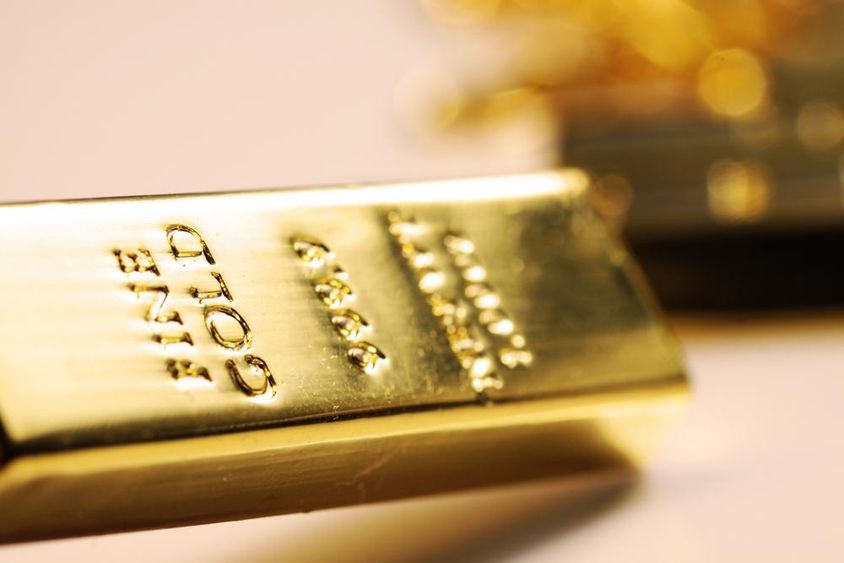
Gold Enters New Era: Future Rise Beyond 2026?
The gold market is experiencing another historic period in 2026. Despite a significant correction after the extreme rise at the beginning of the year, most international analyst firms and investment banks remain highly optimistic about the long-term future of the precious metal. The recent months' downturn surprised many investors, especially after the gold price briefly rose above $5500 per ounce. However, according to many experts, the current weakening does not signify the end of the bull market, but rather a natural correction phase amid a much larger global financial transformation.
The world's economic and geopolitical environment has significantly changed in recent years. Investors feel increasingly insecure about traditional financial systems, while central banks are purchasing gold in record amounts. This process is particularly important in financial centers like Dubai, where gold trade and physical precious metal investment have played a prominent role for decades.
After record highs came the correction
At the beginning of 2026, the gold price soared to astonishing levels. Amid geopolitical tensions, inflation fears, and global economic uncertainties, investors turned en masse to safe-haven assets. Gold traditionally fulfills this role, especially during crises.
In the first months of the year, the price reached historic highs, followed by a significant pullback. Several factors were at play in the background. Rising oil prices once again intensified inflationary pressures, U.S. Treasury yields significantly increased, while the dollar began to strengthen. These processes generally have a negative impact on gold as higher bond yields make interest-bearing investments more attractive.
Market sentiment was further deteriorated by the U.S. inflation proving more persistent than expected. As a result, some investors started fearing that interest rate cuts might come slower than previously thought, causing gold to lose several hundred dollars in value quickly.
Major banks remain extremely optimistic
Despite the correction, most leading financial institutions continue to expect significant increases in the gold market. According to several major banks, the upcoming years for gold could be even stronger than its current rally.
Some forecasts suggest that gold's price could reach as high as $6000–$6300 per ounce by the end of 2026. Several structural factors back this optimism. One of the most important is the continuous buying by central banks. More counties want to reduce their dependence on the U.S. dollar, thus allocating part of their reserves into gold.
This trend is particularly strong in Asian and emerging economies. For central banks, gold serves not only as an investment but also as a strategic security asset. In a world where geopolitical conflicts, sanctions, and financial uncertainties persist, gold has regained its pivotal role.
De-dollarization could accelerate gold demand
One of the most critical global economic developments in recent years is de-dollarization. More and more countries are trying to decrease the role of the dollar in international trade and reserves. While this does not mean the dollar will lose its dominance anytime soon, the global financial system is slowly transforming.
Gold could significantly benefit from this process. For many countries, physical gold is a neutral reserve asset, independent of Western financial systems and sanction mechanisms. This has become especially important due to Middle Eastern conflicts and strengthening international economic blocs.
In this environment, Dubai could further strengthen its role in global gold trading. The city is already one of the world's largest physical gold markets, where massive volume transactions occur daily. The increasing geopolitical significance of the Middle East could further highlight the region's financial centers.
Central banks' gold appetite intensifies
According to World Gold Council data, global gold demand continued to grow in the first quarter of 2026. Particularly noteworthy is the activity of central banks, which bought near-record amounts of gold.
Many of the world's central banks expect global gold reserves to continue increasing over the next 12 months. Almost no central bank plans to reduce its reserves. This is a crucial signal for the market, as central banks' long-term thinking typically provides a stable base for prices.
Asian countries are particularly active. The Chinese central bank, for example, is continually increasing its gold reserves. This strategy clearly indicates that the world's second-largest economy intends to give gold a significant long-term role.
Inflation remains a key factor
Inflation continues to be one of gold's driving forces. Price levels remain high in many countries worldwide, while rising energy prices and geopolitical conflicts can spark further inflationary waves.
Gold traditionally performs well during inflationary periods, as many investors view it as a value-preserving asset. When the purchasing power of fiat currencies decreases, precious metals often present a more stable alternative.
Middle Eastern conflicts particularly impact energy prices. If a new significant rise kicks off in the oil market, it could further increase global inflation. This, in the longer term, could again favor gold.
Short-term high volatility expected
Though long-term prospects are strong, experts suggest significant price fluctuations can be expected in the short term. Gold is currently highly sensitive to U.S. monetary policy, bond markets, and the dollar's movements.
If bond yields continue to rise, it could place further pressure on prices. A stronger dollar could also reduce international demand, as gold is denominated in dollars.
However, many investors already view corrections as buying opportunities. The current market sentiment seems more nervous and uncertain rather than panicky. This is a crucial difference, as the long-term fundamentals have not significantly changed.
Gold's role has strategically risen again
The world's financial system is undergoing transformation. Geopolitical tensions, increasing national debts, inflation, and de-dollarization together create an environment where gold again becomes a strategically significant asset.
Some investors no longer view gold merely as a commodity market product but as one of the last classic refuges of global financial stability. This paradigm shift can support prices in the long run.
For Dubai, this process could be particularly beneficial. The city has been a key player in international gold trading for decades, and increasing global economic uncertainty may further enhance its significance. The rising demand for gold can invigorate investors, the jewelry market, trade, and financial services.
Therefore, the gold rally has slowed, but according to most analysts, it is far from over. The current correction appears more like a temporary pause in a long-term process that could shape global financial markets for years to come.
If you find any errors on this page, please let us know via email.


