E-Scooter Speed Limits: Navigating Safety Risks
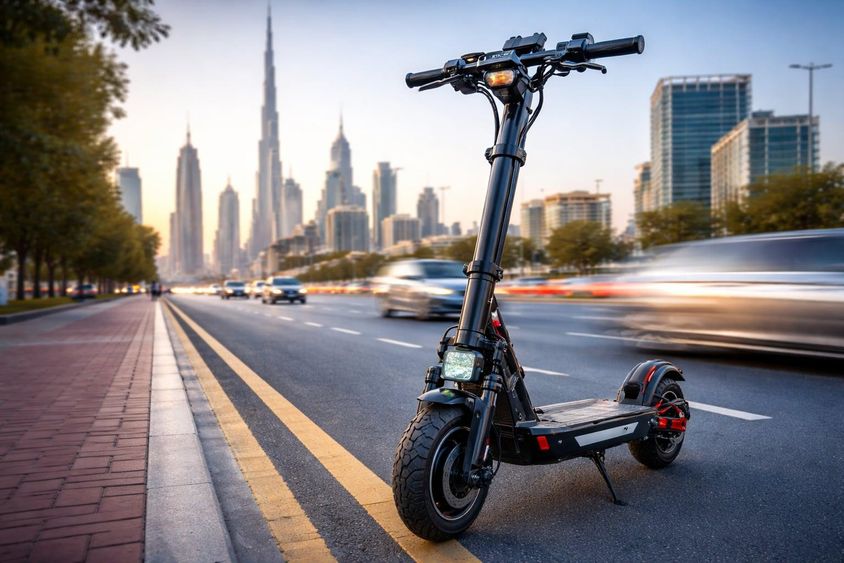
120 km/h e-Scooters: When Speed Becomes Life-Threatening
In just a few years, electric scooters have become one of the most important tools for modern urban transportation, especially in rapidly developing cities like Dubai. They are lightweight, practical, offer an eco-friendly alternative for short-distance travel, and fit perfectly into "last mile" solutions. However, as technology advances, increasingly dangerous trends are emerging - the most concerning of which is the spread of high-speed modified e-scooters.
Recently, there have been more and more reports of electric scooters being significantly modified to reach speeds of 100–120 km/h. This is not only a violation of regulations but also a clear life-threatening danger — not only for the user but for those around them as well.
Why is high speed particularly dangerous?
Electric scooters were originally designed as low-speed transportation for short distances. Their construction is not suitable for high speeds: there is no chassis, no protective zone, no safety cell. While in a car, passengers are protected by various passive safety systems, a scooter user is virtually unprotected.
A minor road imperfection, sudden braking, or an unexpected obstacle can cause a fall even at low speeds. At high speeds, however, these events can result in serious injuries or even fatalities. Falling at speeds over 100 km/h results in the body directly impacting asphalt or a hard object – such as a pole or a concrete wall.
The issue is exacerbated by the fact that many users do not wear proper protective gear. Without helmets, knee pads, or spine protectors, using such a device poses an extreme risk.
The tightening of regulations has become inevitable.
Authorities have already responded to the issue by introducing increasingly strict regulatory measures. Dubai Police has increased inspections and is punishing more and more offenders.
The current regulations, such as Executive Council's Resolution No. 13, already clearly define where and under what conditions electric scooters can be used. Total bans are in place on certain road sections, especially where the permitted speed exceeds 60 km/h.
However, the new proposals go even further. Mandatory registration of e-scooters, equipping them with license plates, and digital monitoring of their use have been considered. This would help not only enforce the rules but also reduce abuses – such as illegal modifications.
Technological solutions for safety
One of the keys to the future could be technological control. With so-called geofencing systems, the speed of e-scooters can be automatically restricted in certain zones. For example, in residential areas or densely populated urban districts, the vehicle could not exceed a predetermined speed.
Additionally, more and more manufacturers are incorporating intelligent control systems that detect dangerous use and can even intervene automatically. However, the problem remains that some users deliberately disable or circumvent these systems.
Therefore, it is important to complement technological solutions with legal and supervisory tools.
Responsibility is not just for the authorities
While regulation is crucial, safety does not depend solely on authorities. User responsibility is just as significant. An e-scooter is not a toy, especially not when it’s a modified, high-performance device.
The role of parents is also worth noting. It is becoming more frequent for youths to use such vehicles, often unsupervised. If a high-speed capable device ends up in the hands of an inexperienced user, it could lead to tragedy.
Increasing awareness, education, and responsible attitude are essential to ensure these devices do not become sources of danger.
Micromobility: Opportunity or Risk?
Electric scooters undoubtedly play an important role in modern urban transportation. They reduce traffic, lower environmental impact, and offer quick solutions for short distances. The future of micromobility is therefore promising.
However, current trends show that regulation and user behavior do not always keep pace with technological development. If high-speed modifications spread, it could fundamentally challenge the safe usability of e-scooters.
Dubai's example well illustrates that early intervention can prevent serious problems. The city has previously successfully managed several transportation safety challenges, and proactive steps are now being seen again.
Summary
The development of electric scooters has opened a new era in urban transportation, but irresponsible use of the technology carries significant dangers. Modified devices capable of 120 km/h speeds are not only unlawful but extremely hazardous.
The solution lies on multiple levels: stricter regulation, advanced technological control, effective oversight, and, importantly, conscious user behavior. Only by applying these combined can we ensure that e-scooters truly represent a safe and sustainable alternative for the cities of the future.
The question is no longer whether intervention is needed, but how quickly and effectively it can be implemented.
If you find any errors on this page, please let us know via email.


