Dubai's Real Estate Market Stays Strong
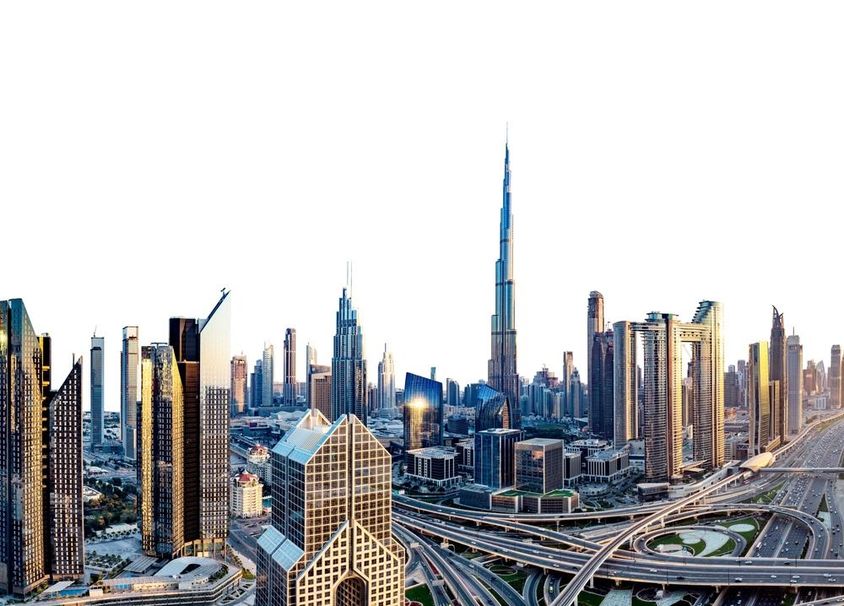
Dubai's Real Estate Market Remains Steady
In recent months, many speculated that Dubai's real estate market might undergo significant price corrections due to Middle Eastern uncertainties, higher financing costs, and a more cautious investor sentiment. Some expected panic sales, significant discounts, and forced sales to emerge. However, recent market data paints a very different picture. Rather than weakening, Dubai's real estate market has entered a more mature and balanced phase.
One of the key characteristics of the current situation is that buyers remain active, yet they make much more informed decisions. The market is no longer driven by rapid speculation or fear, but by value-seeking, thorough comparisons, and long-term considerations. This marks a significant difference from previous periods when real estate market fluctuations often prompted extreme movements.
Demand Remains Strong in Dubai's Most Popular Districts
Demand remains exceptionally high in Dubai's villa districts. This is especially true for communities that have become favorites among families, long-term expatriates, and wealthy investors over recent years. In areas like Dubai Hills Estate, Palm Jumeirah, and Arabian Ranches, demand still exceeds supply.
Most sellers in these districts have stable financial backgrounds. They are not pressured by credit demands or liquidity issues, and therefore are unwilling to make significant concessions just to close a deal quickly. This is one of the main reasons why the anticipated 'fire sale' type transactions have not appeared in the market.
Interest in premium villas remains particularly strong as Dubai's luxury market continues to attract global attention. The city's tax environment, infrastructure development, safety, and year-round business activity still draw international capital.
The Apartment Market Also Remains Active
Not only the villa segment shows stability. The Dubai apartment market also remains active, especially in the areas of Dubai Marina, Downtown Dubai, and Business Bay. One- and two-bedroom apartments continue to be extremely popular among both end-users and investors.
Although some flexibility in prices has appeared in the mid-range segment, this cannot be considered a market crash. Rather, it reflects the growing supply, allowing buyers to choose from more options, making negotiation once again a natural part of real estate transactions.
In recent years, properties in Dubai were often reserved almost immediately after being advertised. Now, buyers take more time to evaluate, compare multiple projects, and pay increased attention to developer credibility, construction quality, and long-term value retention.
The Market Has Become Much More Mature
According to experts, the current processes should not be interpreted as weakness. Quite the opposite: Dubai's real estate market has become much more refined. Buyers now analyze offers in more detail, compare prices, and negotiate more consciously.
The return of bargaining is actually a healthy phenomenon. On a stable market, it is natural for buyers to try to negotiate more favorable terms, while sellers price properties more realistically. The majority of current transactions still close relatively close to peak prices, indicating that values have not collapsed.
Thus, the market is not operating in panic mode but is normalizing. This could create a more sustainable environment for Dubai in the long run.
Investors Focus on More Than Just Price
One of the most interesting changes is that investor perspectives have significantly transformed. Previously, many buyers exclusively sought potential price growth, but now the real value of properties has become a priority.
Buyers now place significant emphasis on the location of the project, the associated infrastructure, the developer who builds it, and its livability in the long term. For off-plan projects, the reliability of the developer and the quality of past completions have become especially important.
In this environment, Dubai has remained competitive as the city offers modern infrastructure, an international business environment, high-level services, and a stable regulatory backdrop.
The Expected Price Drop Did Not Materialize
Due to recent geopolitical tensions, many market players anticipated a significant price drop. Several expected that the uncertain situation would drive owners to quickly offload their properties. However, this has not occurred.
One of the current defining features of the Dubai market is that most sellers are not in a forced position. This marks a significant difference from previous crisis periods. A significant portion of owners is well-capitalized, plans for the long term, and tends to wait for the right offer.
As a result, prices are still receiving stable support. Although moderate corrections or individual discounts may occur in some segments, there is no widespread market reduction.
International Demand Continues to Support Dubai's Market
Dubai remains a global investment destination, attracting European, Asian, and Middle Eastern investors while many buy properties for long-term residency due to the high quality of life and business opportunities.
Ongoing population growth, the influx of new businesses, and infrastructure developments continue to generate strong demand. Metro expansions, new community projects, waterfront developments, and modern urban services all contribute to sustaining Dubai's real estate market.
For investors, a crucial point is that Dubai continues to function as a rapidly developing global hub. This means not only short-term price growth opportunities but also long-term value retention potential.
A New Era May Begin in Dubai's Real Estate Market
The current situation suggests that Dubai's real estate market has entered a new phase. Excessive speculation is gradually being replaced by more conscious and sustainable practices. Buyers are more thorough, sellers are in more stable positions, and developers increasingly focus on quality and long-term value.
This process could result in a healthier market over the long term. The current environment still offers opportunities, but transactions are no longer driven by panic discounts or rapid speculation. Instead, real value, location, and quality have become the most important factors.
Thus, Dubai's real estate market is not retreating, but refining and adapting to the new global economic environment. This indicates that the city may remain a key player in the world of international real estate investments.
If you find any errors on this page, please let us know via email.


