Dubai's Autonomous Transport Revolution Takes Flight
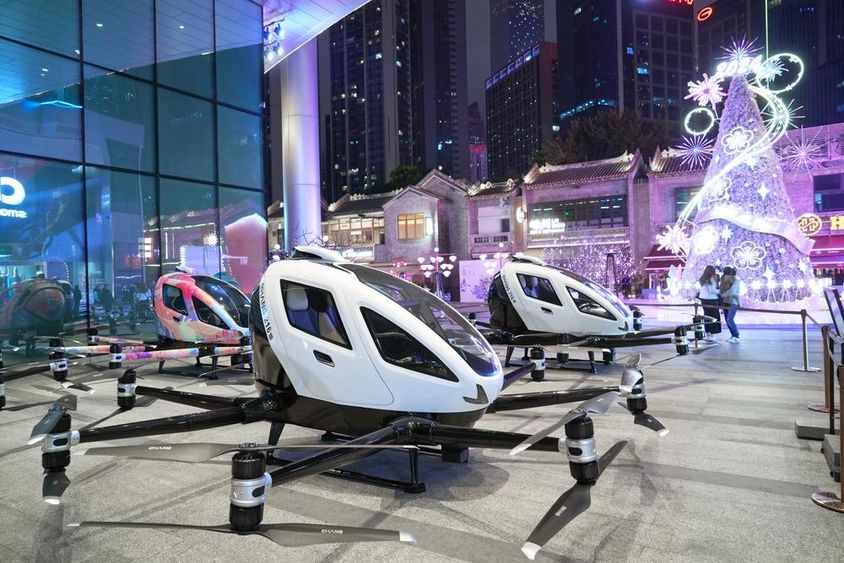
The Air Taxi Revolution: UAE's Driving Force
The United Arab Emirates, particularly Dubai, has become a global pioneer not only in technological advancements but in testing them in real-world environments over recent years. The future of mobility here is not a distant concept, but is becoming a reality: the first electric air taxis may be launched this year and the proportion of autonomous vehicles on the roads is steadily increasing.
Why has the UAE become the world's test laboratory?
The answer is simple, yet complex: the country's regulatory framework is both forward-thinking and flexible, with stringent transportation safety rules that do not hinder experimental projects. In 2016, Dubai's leadership set a clear target: 25% of transportation must be provided by autonomous systems by 2030.
Mattar Al Tayer, director of the Roads and Transport Authority (RTA), announced that they initially plan to start with 100 autonomous vehicles, which will soon expand to 1,000 cars. This strategy is not only a technological innovation but also a response to the challenges of climate change: the aim is zero emissions, reduced traffic jams, and lower transportation costs.
Revolution from the skies: air taxis attuned to Dubai
Joeben Bevirt, CEO of American Joby Aviation, stated that the first electric air taxi service could be launched in the UAE as early as 2026. Initially, the vehicles will be piloted, but automation will gradually play a larger role.
The UAE has a special advantage in this regard, as it has a low proportion of traditional air traffic, providing an ideal environment for aerial mobility experiments. This allows air taxis to operate in a real urban environment without jeopardizing existing systems.
Autonomous vehicles and robots: testing on the ground as well
Revolutionary changes are happening not only in the air. According to the CEO of Yango Group, a similar "sandbox" approach is used in land-based autonomous transportation: first, they test in small areas, then, if the technology is successful, they apply it more widely. For example, package delivery robots are already operating in certain districts of Dubai.
The emphasis is on gradualism: the city is not flooded with e-vehicles and robots all at once, but step-by-step, in close cooperation with the authorities.
What remains of the human factor?
As autonomous transportation evolves, many ask: if machines do everything, what will be the human role? The answer: crucial. While artificial intelligence and sensors are becoming more sophisticated, human oversight remains essential for decision-making, especially in extraordinary, unforeseen situations.
Moreover, public acceptance is indispensable. A couple of friendly robots might be interesting, but if thousands appear on the streets at once, it could provoke a considerable social reaction. Therefore, during planning, they also pay attention to "emotional" details, such as the "face" or voice of the robot. These are not needed for the technology, but for people – to help them get used to and accept them.
Dubai's vision: a leading role in global mobility
Dubai is not following the future, but shaping it. The RTA focuses not only on testing technologies but also on building a comprehensive mobility strategy: the goal is to create an urban system where transportation is fast, efficient, sustainable, and safe. Today, residents spend about 9% of their income on transportation, but the RTA aims to reduce this expenditure while improving livability.
Artificial intelligence is no longer just a technological tool but a cornerstone of urban transportation management. Infrastructure equipped with sensors, data-driven traffic management, and green technologies all contribute to the goal.
What can we expect in the coming years?
The next major milestone will be when the current piloted air taxis transform into a fully automated system. Parallel to this, more autonomous vehicles will appear on the roads, and robot delivery systems will operate in larger areas. Dubai's goal is clear: not just to be a technological showcase but a global example for the future of urban transportation.
Summary
The UAE, particularly Dubai, is in a unique position to test and develop various forms of autonomous transportation in real conditions. The forward-thinking regulation, technology-friendly environment, and gradual implementation strategy all show: the future of mobility is not just being tested here – it has already begun. The aim is not only for machines to drive cars or fly above the city, but for these systems to harmoniously integrate into people's everyday lives.
Imagine this future not ten years from now – but within a few months. Dubai is ready.
If you find any errors on this page, please let us know via email.


