Dubai Unifies Qurbani Prices for Eid
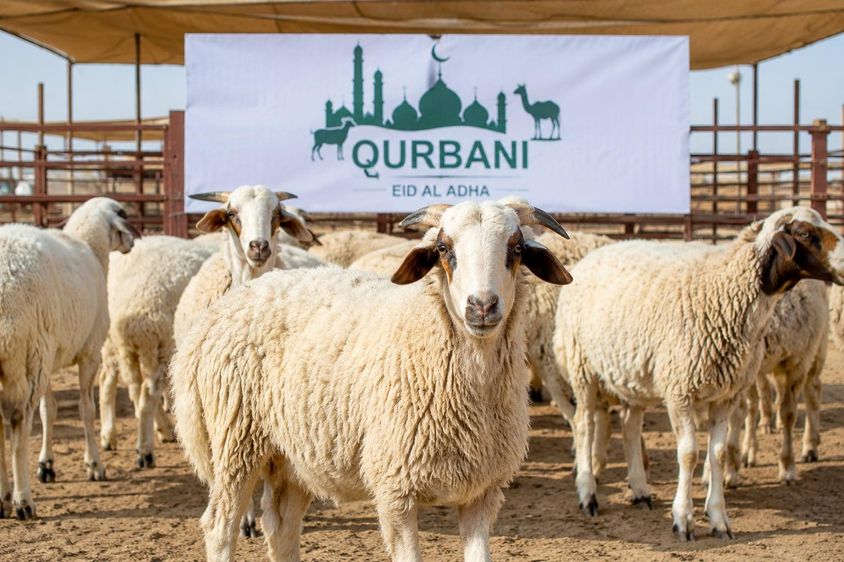
Dubai Unifies Qurbani Prices Before Eid Al Adha
As Eid Al Adha approaches, one of the most significant religious and community traditions resurfaces in the United Arab Emirates: Qurbani, the offering of a sacrificial animal. This year, Dubai has officially approved the Qurbani prices associated with the 2026 Hajj season, aiming not only to reduce price discrepancies but also to ensure transparency and the efficient functioning of the charitable system. The new pricing structure sends an important message to both local residents and Muslim communities abroad, highlighting support for those in need alongside religious obligations.
According to Islamic traditions, Qurbani performed during Eid Al Adha is a powerful symbol of faith, sacrifice, and solidarity. The meat of the sacrificed animals is distributed among the poor and needy, endowing the event with spiritual significance as well as substantial social and humanitarian impact.
Why was price standardization necessary?
The Dubai Authority for Islamic Affairs and Charitable Activities has emphasized making Qurbani services more predictable and consistent for the 2026 season. In recent years, significant differences have emerged among various charitable organizations and service providers, creating uncertainty for donors.
The newly adopted system aims for every approved charity to operate under the same framework. This not only aids in a fairer distribution of support but also ensures that funds reach the intended recipients. Dubai's leadership has strived to modernize digital and administrative processes in various areas, and the regulation of the Qurbani system fits into this trend.
The new structure is particularly important during Eid Al Adha, when tens of thousands of people wish to arrange donations quickly and reliably. Unified prices can reduce misunderstandings and the potential for misuse.
Approved Qurbani prices in 2026
The officially approved price list contains several categories depending on where the animal is slaughtered and the distribution of the meat. Prices differ significantly due to logistical costs, local supply chains, and transportation conditions.
The lowest option is 350 dirhams for Qurbani performed in the donor's country. In this case, the animal's slaughter and meat distribution occur within the same country.
The cost for Qurbani in Kenya is set at 490 dirhams. In this model, slaughter takes place abroad while distribution occurs within the UAE. A similar price range applies to Ethiopian Qurbani, also priced at 490 dirhams.
The highest-priced category is Somali Qurbani, costing 800 dirhams. Here, both slaughter and distribution take place within the UAE. Higher costs are primarily due to local operational and logistical expenses.
The price differences highlight the complexity of the charity services surrounding Eid Al Adha, involving a significant supply chain requiring animal procurement, transportation, cooling, processing, and coordination.
More donors choose official channels
Dubai authorities stress the importance of donors conducting the Qurbani process through officially approved charities this year. This has become a prominent issue for ensuring safety and transparency.
With the spread of digital platforms, many online services have appeared in recent years, but not all platforms have official approval. Donations through verified organizations ensure that the animal slaughter adheres to Islamic religious standards and that the meat reaches those in need.
Dubai's charity system has undergone significant modernization recently. Increasingly, services are accessible through mobile applications and online platforms, making the donation process faster and more convenient. This is especially important during the busy holiday season when many arrange their offerings in the final days.
When will Eid Al Adha be in 2026?
According to current astronomical calculations, Eid Al Adha is expected to begin on Wednesday, May 27, 2026. However, the Islamic calendar is based on lunar cycles, so the exact date depends on the sighting of the crescent moon.
In the UAE, the crescent moon observation that determines the start of the Dhul Hijjah month is scheduled for May 17. If the crescent moon is not visible that evening, the month's start will be delayed by a day, and Eid Al Adha could begin on Thursday, May 28.
This uncertainty is part of the Islamic holiday system every year, with the region's residents accustomed to finalizing dates only after official religious announcements.
The social role of Qurbani in Dubai
In recent years, Dubai has strengthened not only as an economic and tourism hub but also in its humanitarian and charitable engagements. The regulation of the Qurbani system exemplifies the emirate's commitment to sustainable and transparent community models.
The donations made during Eid Al Adha deliver vast amounts of food to families in need. Often, support extends beyond the UAE to international communities. This is particularly important in times when food prices are rising globally, and many families are struggling with livelihood challenges.
For Dubai, the Qurbani project is also a matter of reputation. A well-organized, monitored, and transparent system enhances the emirate’s international reputation while providing local communities with a stable and predictable framework.
Thus, Eid Al Adha 2026 will be not only a religious festival in Dubai but also a period of collective effort, charity, and modern organizational solutions appearing in everyday life.
If you find any errors on this page, please let us know via email.


