Dubai Real Estate Market Remains Steady
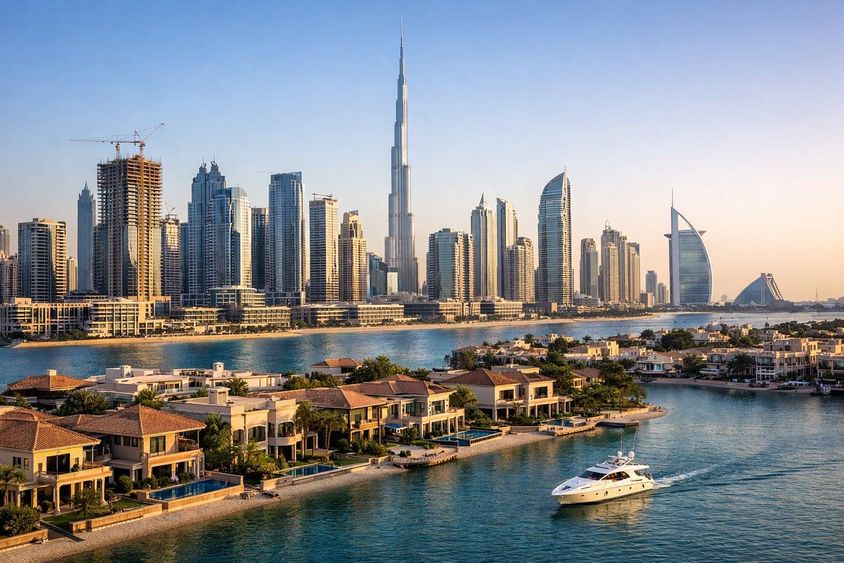
Dubai's Real Estate Market Resilient Amid Geopolitical Tensions
The Market Didn't Collapse – Expectations Changed
In recent weeks, speculation has increased about a potential significant price drop in Dubai's real estate market due to conflicts in the Middle East. Many have talked about "panic sales" and the emergence of low-priced properties, as if the market was suddenly on the verge of collapse. However, the reality paints a different picture.
Currently, Dubai's real estate market does not show signs of a classical crisis or "distressed" situation. There isn't a mass drop in prices, no widespread availability of low-priced properties, and payment plans offered by developers haven't radically changed. The market is much more stable, balanced, and surprisingly resilient.
This message is particularly important for those who were expecting quick, cheap entry opportunities due to uncertainty.
Strong Buyer Side: Demand Hasn't Disappeared
One of the most crucial factors keeping Dubai's real estate market stable is the continuous and active demand. It's not that buyers have vanished – quite the opposite.
Investors who think long-term and do not react to short-term price movements are still present in the market. This includes local buyers, investors from the region, and expatriates who have been living in Dubai for a long time and understand the market well.
This group of buyers does not panic; they wait and make conscious decisions. This behavior itself is stabilizing as it prevents the chain reaction that would lead to a real market crash.
Disciplined Developer Strategy
One key to Dubai's real estate market has always been the attitude of developers. In the current situation, it is particularly evident that major players are not overreacting to geopolitical events.
They are not lowering prices, not altering payment plans, and not trying to gain buyers with aggressive promotions. This is a conscious decision indicating that developers trust the market's long-term strength.
This kind of discipline results from past cycles' experiences. Dubai's real estate market has seen more severe downturns, and current players have learned from them. The focus now is much more on maintaining stability rather than chasing short-term sales figures.
Liquidity and Strong Fundamentals
One of the most important differences between the current situation and past crises is the issue of liquidity. Currently, there is no liquidity problem in Dubai's real estate market.
Developers are well-capitalized, with stable financial backgrounds, and are not forced to sell at depressed prices. This inherently excludes the formation of a classic "distressed" situation.
Moreover, investors also have capital. There is still demand for more serious, premium-category properties, indicating that the market's upper segment is particularly stable.
This combination – strong developers and solvent buyers – provides a foundation that can withstand short-term geopolitical shocks.
Stock Movements vs. Real Market
Many misunderstandings arise from confusing stock movements with the real estate market situation. Although certain real estate development companies' stock prices have decreased recently, this does not imply that the actual real estate market has collapsed.
The stock market always prices in advance. Investors react to news, uncertainty, and incorporate future risks into prices. This is a natural process.
The real estate market, however, reacts more slowly. Transactions, decisions, and prices here are much more based on actual supply-demand relationships. Therefore, one should not draw direct conclusions from stock prices.
This is a crucial difference that many investors overlook.
A More Mature Market, Less Speculation
One of the biggest changes in Dubai's real estate market in recent years has been the increase in maturity. There is much less speculative buying today, and far more conscious investors.
In the past, high leverage and hopes for quick profits were common. Today, a significant portion of buyers have stable financial backgrounds and plan for the long-term.
This means there is less chance of panic sales occurring during uncertain periods. The market does not "tremble" in response to a piece of news but is able to process changes.
Balanced Market: Patience and Selectivity
One of the most interesting features of the current situation is the balance. Sellers are not forced to make quick sales, so they wait. Buyers are selective, thoroughly examining opportunities but have not disappeared.
This balance keeps the market stable. There is no oversupply, no panic, and no price competition.
Those buying now are not looking for the "cheapest" option but the best value. This is one of the key characteristics of a mature market.
What Does This Mean for Investors?
For those waiting to enter the Dubai real estate market at favorable prices after a significant fall, the current situation conveys a clear message: such an opportunity is not visible now.
However, this isn't necessarily bad news. A stable market is more predictable and bears less risk. For those thinking in the medium- or long-term, this can be a particularly favorable environment.
The declines observed in the stock market, however, may open up different types of opportunities. Investors capable of differentiating between stock market and real estate movements may even find favorable entry points.
Dubai's Resilience Proven Again
The current situation is another test for Dubai's real estate market, and so far, it seems that the system is performing well.
The stable fundamentals, disciplined developers, active buyer side, and high liquidity together create a market capable of handling external shocks.
Dubai has already proven in the past that it can respond quickly to changes, and this is no different now. The market not only survives but also adapts.
This could further strengthen investor confidence in the long run, potentially resulting in an even more stable growth trajectory in the future.
If you find any errors on this page, please let us know via email.


