Dubai Metro: A Global Public Transport Leader
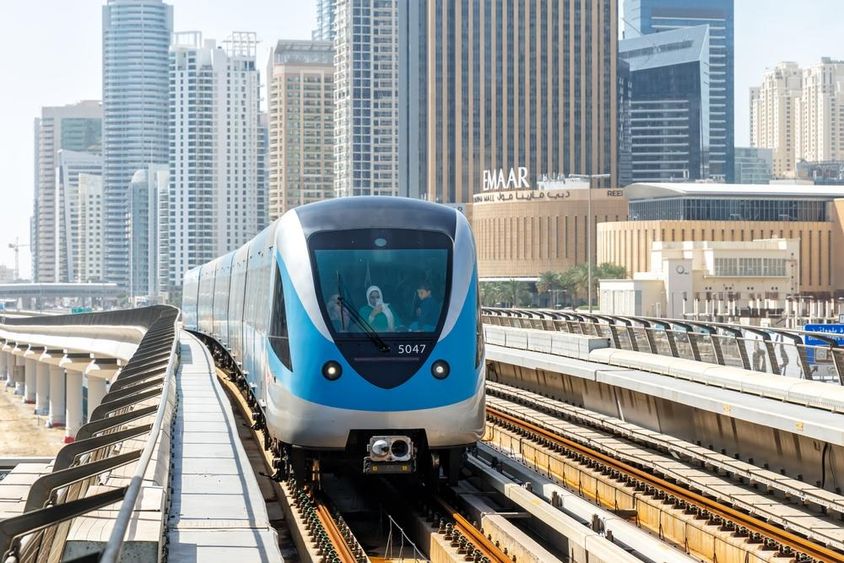
Every Third Passenger Chooses Dubai Metro – 802 Million in Public Transport by 2025
A Historic Peak in Urban Mobility
In 2025, Dubai's public transportation reached a level that no longer talks about mere growth, but instead a systemic transformation. The annual passenger count reached 802.1 million, marking a 7.4 percent increase compared to the previous year. The average daily passenger count rose to 2.2 million, clearly indicating that the city's residents and visitors are increasingly opting for an organized, integrated transport system instead of individual car use.
However, the numbers are not just about demographic growth. Dubai is consciously building a mobility ecosystem where the metro, buses, taxis, water transport, and shared services operate complementarily. The goal is clear: to establish a fast, predictable, and sustainable transportation structure.
The Dominance of Dubai Metro
Perhaps the most striking statistic is that every third passenger chooses the Dubai Metro. The driverless trains transported 294.7 million passengers along the red and green lines in 2025, a 7 percent increase from the previous year. This is impressive in itself, but its significance is truly understood when you consider that the metro accounts for 37 percent of the entire transport system's users.
The popularity of the metro is not coincidental. The combination of fast, congestion-free travel, a precise schedule, and direct access to central business, residential, and tourist districts offers a sustainable long-term alternative to cars.
Transfer stations play a particularly important role in this system. The BurJuman station, connecting the two lines, handled 17.8 million passengers in 2025, while the Al Rigga station accommodated 13.8 million. On the red line, Union, Mall of the Emirates, and Burj Khalifa Dubai Mall were the busiest stations. On the green line, Sharaf DG, Baniyas Square, and Stadium stations topped the list.
These details indicate that Dubai's transport map is increasingly organized along the metro lines.
Buses: Steady Growth in the Background
The public bus network transported 197.2 million passengers in 2025, reflecting a 5 percent increase. Buses represent 25 percent of the entire system, which continues to secure a key role for them.
The bus network serves as an alternative particularly in city areas where the metro isn't directly accessible. Developing transfer connections between the metro and buses is a crucial strategic step that contributes to the efficiency of the entire system.
Dubai's mobility model does not place modes of transport in competition; rather, it builds upon them.
Taxis and Premium Services: Slowing Share, Stable Demand
Taxis carried 209 million passengers in 2025, which marks a 4 percent increase. However, their share decreased to 26 percent from 27 percent the previous year, marking the third consecutive year of declining proportion.
This does not signal a decrease in taxi demand but rather that other modes of transport are growing faster. Premium limousine-type services catered to 23.6 million passengers, marking a 22 percent growth. This segment is particularly strengthening in tourism and business travel.
Taxis remain a significant part of Dubai's mobility, but they are no longer the exclusive choice.
Shared Mobility: The Fastest Growing Segment
The most dynamic growth is shown by shared mobility services. App-based vehicles, hourly rentals, and on-demand buses transported 72.9 million passengers, reflecting a 30 percent increase.
Their share was 6.2 percent in 2023, rose to 7.5 percent in 2024, and reached 9 percent in 2025. This continuous growth indicates that flexibility and digital accessibility are becoming increasingly important factors in passengers' decisions.
In this segment too, Dubai is consciously building: shared services do not compete with the metro or buses—they complement them.
Water Transport and Trams: Smaller Share, Stable Presence
Marine transport forms—including abras, water taxis, and Dubai Ferry—catered to 18.4 million passengers. This marks a 3 percent increase and accounts for 2 percent of the entire system.
The Dubai Tram transported 9.9 million passengers, a 5 percent increase. Though it holds a mere 1 percent share, its role in serving coastal areas is strategically significant.
Seasonal Peaks and Urban Dynamics
October 2025 was the strongest month, with 72.8 million passengers, closely followed by November and December. The remaining months saw traffic between 61 and 69 million.
The strengthening of the fourth quarter reflects Dubai's economic and tourist cycle well. The cooler period, events, and exhibitions all contribute to the increased mobility demand.
A Mature Transportation Model Image
The 802 million passenger count is not just growth but evidence that Dubai's transportation system has entered a mature phase. The metro's dominance, the stability of the bus network, the balanced role of taxis, and the dynamic expansion of shared mobility outline a complex yet well-organized structure.
Every third passenger chooses Dubai Metro, but the real success lies not in one single mode of transport but in the integration. Dubai has built a model where different mobility forms are not competitors but elements of a unified system.
The numbers make it clear: the city is not only following global trends but has developed its own well-functioning mobility strategy. And if the current growth rate persists, the role of public transport in Dubai's everyday life could reach even higher levels in the coming years.
If you find any errors on this page, please let us know via email.


