Dubai Air Traffic's Swift Comeback
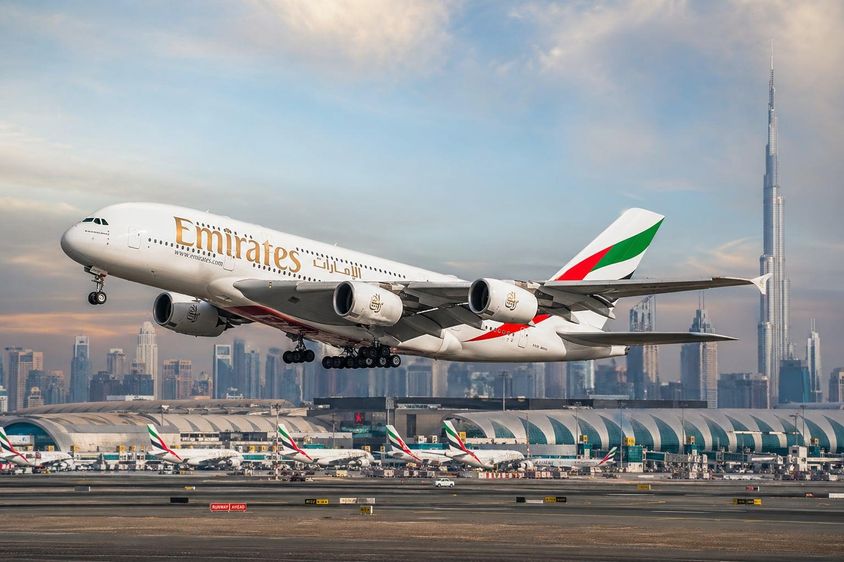
Rapid Return of Air Traffic Over Dubai
Recent events have once again highlighted how sensitive global air traffic is to geopolitical tensions and, at the same time, how quickly it can recover. The conflict in the Middle East caused a significant decline in air traffic, particularly in the United Arab Emirates, where international transfer traffic plays a key role. Now, however, a clear turnaround is visible: the daily number of flights has exceeded 1,000, which is not just a statistical figure but a strong signal to the market that the region is once again open and operational.
The first major milestone after the decline
Before the conflict erupted, the region's airlines operated with stable and high capacity, with the daily number of flights well exceeding one thousand. However, the immediate effects of the onset of fighting were evident: airspace closures, flight cancellations, and a sudden drop in travel demand. This was particularly detrimental to air traffic centered in Dubai, as the city is one of the world's most important transit hubs.
According to the current data, however, the daily number of flights has once again exceeded 1,000, marking the first such occurrence since the conflict began. This number is remarkable in itself, but more importantly, the total capacity is already approaching two-thirds of its previous level. This means that the return is not slow and gradual, but decisive and swift.
The role of airlines in the recovery
Four major airlines in the region play a key role in this process. These companies together provide the vast majority of flights and have consistently increased their capacity over the past weeks. Operating hundreds of flights daily is not only a technical and logistical challenge but also a significant issue of trust: passengers need to believe that travel is safe.
In the case of Dubai, it is particularly important that the flagship airline has once again approached its previous performance. The more than 400 daily flights indicate that demand is returning swiftly, and transfer traffic is also strengthening. This is crucial not only for tourism but also has a positive impact on the entire economy.
The rapid return of demand
One of the most sensitive indicators of air travel is passenger traffic, which closely follows the evolution of security and political conditions. During the conflict, many passengers postponed or canceled their trips, especially those planning to travel through the region. However, after the announcement of the ceasefire, a rapid turnaround occurred.
The return of travel enthusiasm is partly due to the airlines' quick response in restarting previously suspended flights. Additionally, prices have adapted to the situation, which also encouraged an increase in demand. The increasing occupancy of flights to and from Dubai indicates that passengers once again trust the stability of the region.
Airspace closures and regional impacts
One of the biggest impacts of the conflict was on airspace usage. Several countries temporarily closed their airspace, causing significant detours and delays. This not only increased travel time but also costs, as longer routes require more fuel.
In the past few days, however, several countries have begun reopening their airspace, significantly improving the situation. This is particularly important for flights to and from Dubai, given the city's geographical location and the numerous routes that pass through the region. The easing of restrictions thus directly contributes to the increase in the number of flights.
Dubai as a global transportation hub
Dubai's role in global air traffic is indispensable. The city is not only a destination but also one of the most important transit points between Europe, Asia, and Africa. This position makes it particularly vulnerable during crises yet provides substantial advantages during recovery.
As the security situation stabilizes, transit traffic almost immediately returns. For passengers, Dubai continues to offer quick and efficient transfer opportunities with modern infrastructure and high-level services. This is one of the main reasons why the city's air traffic is able to regenerate so quickly.
Future prospects
Based on current trends, further strengthening of the air traffic sector is expected. Although full recovery may take time, the current data is encouraging. The increase in daily flight numbers, capacity expansion, and rising passenger traffic all indicate that the market is returning to its previous trajectory.
For Dubai, this is not only an economic issue but also of strategic importance. The city's goal is to remain one of the world's leading transportation hubs, and the current recovery strengthens this aim. Rapid responses, flexible operations, and continuous improvements all contribute to making the system even more resilient in the future.
Summary: faster return than expected
The air traffic of the United Arab Emirates has clearly demonstrated that it can quickly adapt and recover even after significant challenges. Reaching over 1,000 daily flights is not just a statistic but a strong message to the world: the region is operational again and ready for further growth.
Dubai plays a key role in this process, as every change is magnified due to its global significance. The current recovery shows that the city not only survives crises but can also quickly return to the path of growth.
If you find any errors on this page, please let us know via email.


