Airfares in UAE: Headed for a Surge?
Rising Airfare Prices Across UAE and GCC: Up to 30% Increase Possible
Travel has once again become a natural part of daily life in the UAE and the Persian Gulf region in recent years. Air travel plays a particularly crucial role in this region, as international business relationships, tourism, and family visits all heavily rely on flights. However, recent geopolitical tensions have posed new challenges for the aviation industry. Due to these conflicts, the price of oil has increased, directly affecting the cost of airline tickets. Forecasts suggest that travelers in the UAE and GCC countries could face ticket prices as much as 30% higher in the upcoming period.
The Key Role of Fuel Prices in Air Travel
One of the largest expense items in airline operations is aircraft fuel. Under normal circumstances, the price of kerosene accounts for about one-third of total operating costs. When the global price of oil rises sharply, the cost of aircraft fuel follows this trend, immediately impacting airlines' financial balance sheets.
Recently, due to regional military tensions, the price of oil has begun to rise rapidly. The uncertainty in the global energy market has led to an increase in aircraft fuel prices worldwide. This change affects not only Middle Eastern airlines but also European and Asian service providers.
Airlines often try to compensate for the increasing costs with a fuel surcharge. This is a separate fee in the ticket price that reflects changes in fuel prices. In recent days, several regional and Asian airlines have already announced increases in this surcharge.
Why Airfares Are Increasing Now
The rise in airline ticket prices comes at a particularly sensitive time. The Eid Al Fitr holiday is traditionally one of the busiest travel periods for the UAE and the entire GCC region. Many residents travel home to their families during this time or take short breaks in surrounding countries.
Due to the holiday period, demand is already higher, which can elevate ticket prices by itself. When this higher demand is combined with increased fuel surcharges, the result can be quick and significant price hikes. Prices have already noticeably risen on some routes, and analysts suggest further increases are not out of the question.
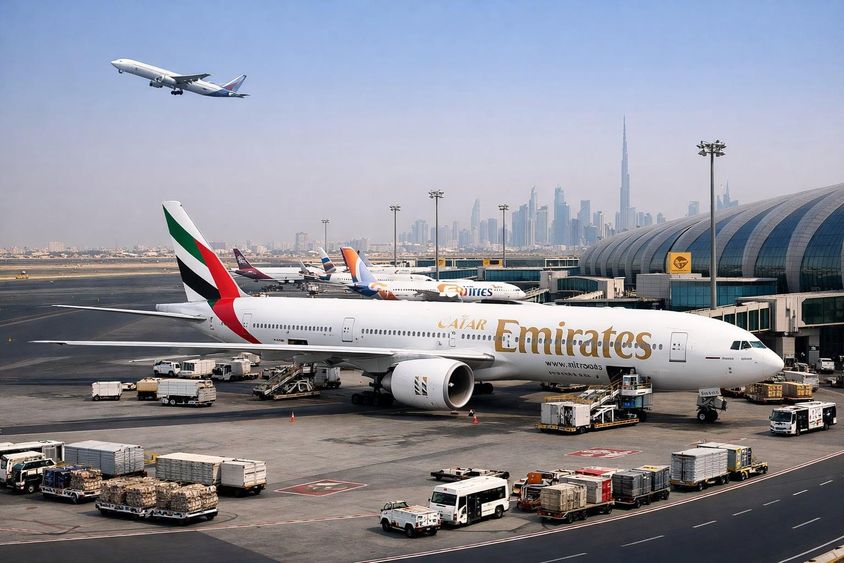
Dubai's airport, functioning as a tourism and business hub, is particularly affected by this process. The city is one of the world's busiest air traffic hubs, with hundreds of international flights arriving and departing daily. If ticket prices rise, it could impact the travel market across the entire region.
Airlines' Response Measures
One of the biggest challenges for airlines is managing costs. Rising fuel prices can quickly erode profits, especially if ticket prices cannot be increased immediately. As a result, many providers employ various strategies.
One solution is optimizing flights, meaning airlines make better use of aircraft capacity and temporarily cut back on less busy flights. In other cases, they modify flight schedules for more efficient operations.
Another common step is introducing or increasing the fuel surcharge. This fee appears as a separate item in the ticket price, allowing airlines to partially pass on the cost increases to passengers. While this may help maintain financial stability in the short term, it results in higher prices for travelers.
Airports Continue Stable Operations
Despite Middle East tensions, UAE airports continue to operate, and most international flights remain available. Aviation authorities and airport operators strive to maintain normal operations even if temporary changes occur on certain routes.
In recent periods, several airports have gradually returned to normal operations from restricted modes. Airlines have resumed major routes, and the region remains an important hub for travel between Europe, Asia, and Africa.
This is particularly important for Dubai, which is not only a tourist hub but also a global business gateway. The city's airport plays a key role in international aviation, so stable operations are significant for the region's entire economy.
Travelers' Reactions
Rising ticket prices naturally impact travelers' decisions. Many passengers become more flexible regarding travel dates or seek alternative routes. Others book tickets in advance to avoid further price increases.
UAE residents form a particularly mobile community, as many expatriates work in the region, traveling regularly back home or to other countries. Therefore, airline ticket prices directly affect everyday life and family relationships.
From a tourism perspective, the situation can also be interesting. If ticket prices remain high, some travelers might plan shorter trips or choose closer destinations. However, because of Dubai's global allure, demand for the city is likely to remain strong.
Outlook for the Upcoming Months
The future of airline ticket pricing largely depends on oil prices and geopolitical conditions. If oil prices stabilize, fuel surcharges might decrease, which could lower ticket prices. However, if tensions persist, airlines might continue to face high costs.
It seems certain that the aviation industry is extremely sensitive to global economic and political changes. Therefore, travelers from the UAE and GCC countries might encounter more significant price fluctuations in the upcoming period.
Nevertheless, Dubai remains one of the world's most important aviation hubs. The city's infrastructure, airports, and airlines quickly adapt to changing conditions, meaning that although prices might occasionally rise, travel options will remain widely accessible both in the region and globally.
If you find any errors on this page, please let us know via email.


